Surat Man-Made Textile Industry Faces Pressure From Rising Polyester Costs
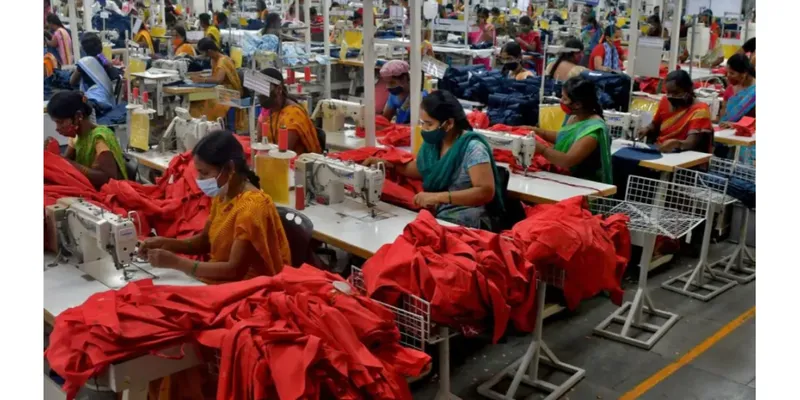
Higher polyester yarn prices add to cost pressures as weak demand weighs on margins ahead of the festive season
Surat’s man-made fibre textile industry is facing increased cost pressure following a sharp rise in polyester raw material and yarn prices, while manufacturers continue to deal with weak demand and higher operating costs. The price increase comes ahead of the festive season, when textile businesses typically expect demand to improve.
According to the Southern Gujarat Chamber of Commerce & Industry (SGCCI), the latest increase has added around ₹20 per kg to the cost of polyester yarn, comprising approximately ₹7.92 at the MELT stage and ₹12 at the POY stage. The chamber has described the increase as an abnormal rise in polyester yarn costs.
Manufacturers Face Margin Pressure
Manufacturers are facing difficulties in passing the higher costs on to buyers amid sluggish demand. Absorbing the increase, meanwhile, could put additional pressure on already-thin margins.
The Surat textile industry has an estimated annual turnover of around ₹1.50 lakh crore and the man-made fibre segment accounts for a significant part of the sector. The industry directly employs approximately 12 lakh people and generally sees an increase in demand ahead of the festive season.
In a letter to Union Textiles Minister Giriraj Singh, SGCCI has sought measures to support competitive pricing, ensure adequate availability of polyester raw materials and yarn, and address concerns affecting downstream MSMEs.
SGCCI Seeks Polyester Price Monitoring
Ashok Jariwala, President, SGCCI, has called for a mechanism to monitor polyester prices and for MELT, POY, FDY and DTY prices to be benchmarked against international input costs.
“It is an artificial price rise. It is a cartel,” Jariwala alleged while speaking to FE, adding that buyers were unwilling to accept the higher prices. “We want a committee to monitor prices,” he said.
The comments reflect the chamber's concerns over the recent movement in polyester yarn prices and their impact on downstream manufacturers.
Festive Demand Remains Uncertain
Suresh Patel, Secretary, South Gujarat Texturising Association, said the increase could affect the industry's festive-season outlook.
“The yarn prices have increased one-and-a-half times compared with what they were on March 1 this year,” he said, questioning whether buyers would be willing to absorb the increase. “If it is a hike proportionate to the hike in crude oil prices then we can understand. But this hike is one and a half times,” he said.
Manufacturers have also reduced purchases as demand remains subdued, although production units continue operating to meet daily overheads and fixed expenses.
“Normally, we start getting festive orders from August. The demand is sluggish this time. Buyers are waiting and watching,” said Ashish Gujarati, textile industry leader and former president of SGCCI.
Gujarati also expressed concern that the Diwali period may not generate the level of demand seen in some other retail segments.
Industry Seeks MEG and PTA Duty Relief
The industry has also sought a six-month exemption from Basic Customs Duty (BCD) on monoethylene glycol (MEG) and purified terephthalic acid (PTA), along with a possible further six-month extension.
The request comes as manufacturers face higher raw-material costs and uncertainty around demand.
Flood Losses Add to Industry Challenges
The latest polyester price pressure follows losses suffered by Surat's textile industry during two successive floods in July.
The flooding affected nearly 30 textile markets and around 1,000 shops and godowns, damaging finished goods and raw materials. Industry estimates put the resulting losses at more than ₹200 crore.
With higher raw-material prices, subdued demand and the impact of recent flooding adding to cost pressures, Surat's man-made textile units are entering the festive season amid continued uncertainty over margins and order volumes.