Superhydrophobic Medical Textiles Market to Reach $3.48 Billion by 2034
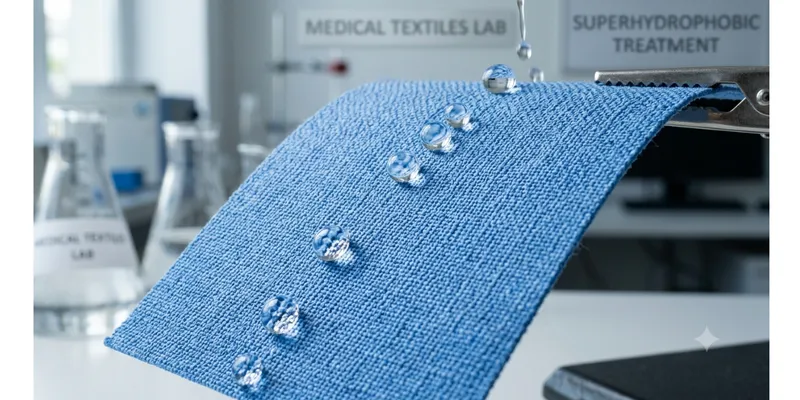
Market projected to grow from USD 1.40 billion in 2025 to USD 3.48 billion by 2034, driven by demand for protective and multifunctional healthcare fabrics
The global superhydrophobic medical textiles market reached USD 1.40 billion in 2025 and is projected to reach USD 3.48 billion by 2034, expanding at a CAGR of 10.6% from 2026 to 2034. Growth is being linked to increasing awareness of healthcare-associated infections (HAIs), rising surgical procedure volumes and growing demand for high-performance medical fabrics.
Superhydrophobic medical textiles are gaining attention as healthcare providers and textile manufacturers seek materials with improved resistance to water, biological fluids, contamination and microbial attachment.
Demand for Protective Healthcare Fabrics Supports Market Growth
Growing emphasis on infection prevention and occupational safety is supporting demand for high-performance medical textiles. Applications including surgical gowns, drapes, masks, protective apparel, bedding and other healthcare fabrics can benefit from surfaces designed to resist liquid penetration and contamination.
Superhydrophobicity can also be combined with antimicrobial technologies. Recent research has examined medical textiles that integrate superhydrophobic surfaces with photodynamic antimicrobial functionality, with the potential to reduce bacterial adhesion while supporting microbial control.
Surface Engineering Advances Enable New Textile Applications
Developments in nanotechnology, surface chemistry, silica-based structures, polymers and spray-based finishing methods are creating new approaches to textile functionalisation.
Research is increasingly focused on durable and multifunctional surfaces that combine liquid repellency with properties such as antibacterial performance, self-cleaning and UV resistance, rather than relying solely on conventional water-repellent finishes.
Medical Applications Continue to Expand
Superhydrophobic medical textiles have potential applications across hospitals, clinics, laboratories and specialised healthcare environments.
Protective gowns and surgical apparel are important application areas, as resistance to liquid penetration can provide an additional barrier against exposure to bodily fluids. The technology can also support advanced wound-care materials and healthcare fabrics where moisture, contamination and microbial attachment need to be controlled.
Multifunctional textile coatings are receiving attention as manufacturers look to deliver several performance characteristics through a single treatment.
Durability and Commercialisation Remain Key Challenges
The market faces technical and commercial challenges despite its growth potential. Maintaining superhydrophobic performance after repeated washing, sterilisation, abrasion, bending and prolonged use remains an important consideration for medical applications.
Other factors affecting commercialisation include coating adhesion, breathability, flexibility, biocompatibility, manufacturing complexity and cost.
Fluorine-free alternatives may require further optimisation, as some systems continue to face limitations related to durability and resistance to low-surface-tension liquids.
Fluorine-Free Technologies Create New Opportunities
The move towards environmentally responsible textile chemistry is creating opportunities for fluorine-free superhydrophobic coating technologies. Concerns surrounding PFAS and other persistent fluorinated substances are driving research into alternatives based on silicones, polyurethanes, bio-based compounds and other chemistries.
This transition could create opportunities for companies developing medical textiles that combine liquid repellency, biocompatibility, durability, comfort and lower environmental impact.
Recent research into bio-based polyurethane coatings demonstrates progress towards durable, fluorine-free superhydrophobic fabrics.
Multifunctional Smart Textiles Emerging
Another area of opportunity is the integration of superhydrophobic properties with antimicrobial, sensing, self-cleaning and responsive technologies.
Such multifunctional materials could provide several performance characteristics within a single textile and support the development of next-generation medical textile applications.
Competitive Landscape
Key companies identified in the market include:
- 3M Company
- DuPont de Nemours, Inc.
- Toray Industries, Inc.
- Freudenberg Group
- Kimberly-Clark Corporation
- Medline Industries, LP
- Cardinal Health, Inc.
- Molnlycke Health Care AB
- Berry Global Group, Inc.
- Ahlstrom Oyj
- Hollingsworth & Vose Company
Future Outlook
The future of the superhydrophobic medical textiles market is expected to be influenced by developments in advanced surface engineering, sustainable chemistry, antimicrobial functionality and durable textile manufacturing.
Research is increasingly focused on coatings that maintain performance while addressing environmental concerns. As healthcare institutions place greater emphasis on infection control, worker protection, sustainability and high-performance materials, demand for multifunctional medical textiles is expected to increase.
Continued development of fluorine-free, durable, comfortable and clinically suitable solutions could further expand commercial applications through 2034.