SUPERHOUSE LIMITED FINANCIAL AND BUSINESS ANALYSIS REPORT

- INTRODUCTION
A) Brief Introduction of the Company
Beginning operations in Kanpur, Superhouse Limited produces leather-based merchandise alongside textiles and shoes. Its production units span multiple locations within India, supporting both homegrown buyers and overseas demand. Though rooted locally, much of its effort targets international trade channels. Listed publicly, it holds positions on the BSE as well as the NSE. While exports take up a major share of activity, local supply remains part of daily function. Based out of UttarPradesh, the firm maintains a presence shaped by decades in material crafting.
B) Industry Overview
Leather and footwear sit at the core of India’s industrial output. Among nations, few produce or ship more leather items than India. Jobs multiply because of this field; so do foreign exchange returns. Rising international appetite - for style-focused wear, protective shoes, or carry goods - opens paths forward for firms here. Still, hurdles appear: supply costs shift unpredictably, overseas rivals press hard, while buyer needs abroad evolve constantly.
C) Purpose of the Analysis
This report aims to assess how well Superhouse Limited has performed financially and where it stands in the market. Revenue trends take center stage here, shaping much of what follows. Profitability comes under scrutiny next, revealing patterns across multiple fiscal periods. Strength shown in the balance sheet adds context to operational results. Financial ratios play a role too, offering insight when viewed together over time. What emerges is a picture built on actual figures rather than assumptions. Years of data feed into conclusions drawn about stability. Performance indicators help frame expectations going forward. Each metric contributes, though none act alone. Understanding begins with numbers but extends beyond them.
- COMPANY OVERVIEW
A) Background and History
Beginning life in 1980, Superhouse Limited started by working with leather before branching out. Its journey saw it grow beyond basic processing into making shoes and related goods. Step by step, production sites multiplied across different locations. Along the way, ties formed with overseas clients became central to operations. Time brought both scale and deeper global connections.
B)Business Model
Starting at the source, the firm handles its own leather processing before moving into making goods like shoes and bags. From there, items move overseas using global supply routes. Because every stage connects internally, oversight stays tight across manufacturing steps. Cost management becomes more predictable when operations are linked under one structure.
C)Key Products / Services
Superhouse manufactures a wide range of products including:
- Leather footwear
- Safety shoes and industrial footwear
- Leather garments
- Bags, belts, and wallets
- Textile products
Fresh from local shelves, some items also reach buyers overseas. While others stay within national borders, a share travels abroad. Originating at home, they appear in distant stores too. Not confined by region, their path splits - some circulate locally, while the rest cross oceans. From kitchen cabinets here to foreign distributors there, movement goes two ways.
D)Market Position
Though tiny on the scale of listed firms, Superhouse fits into India's leather production landscape. With a valuation sitting near ₹150–170 crore, it lines up beside local rivals making similar goods. Competition comes mainly from homegrown players focused on shoes and related items
- PROMOTER / FOUNDER INTRODUCTION
A) Name of Promoter(s) / Founder(s)
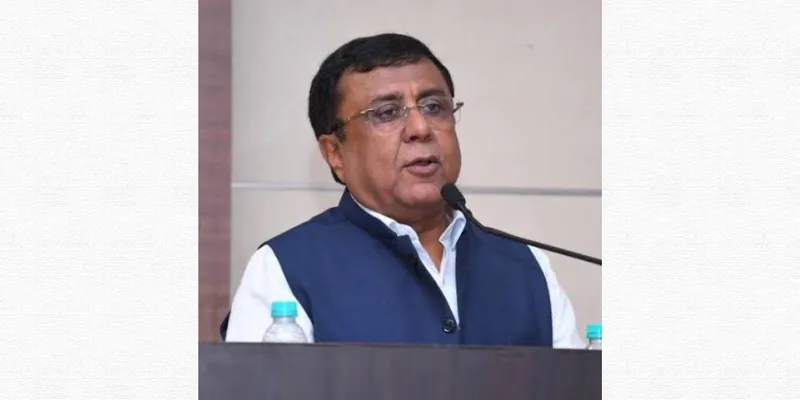
Founded under the guidance of Mr. Mukhtarul Amin, Superhouse Limited emerged through efforts led by him alongside relatives. Though names may shift in records, the core role of his kin remains central to its origin story.
B)Professional Background
With deep roots in the leather industry, the founder shaped a manufacturing venture aimed at overseas sales. Thanks to his direction, expansion followed into foreign markets, bringing clients from around the world.
C)Role in Company Growth and Strategic Decisions
With guidance from the founders, production capabilities grew while offerings branched into new categories. Thanks to well-timed moves, export status rose - especially for shoes and carry goods made of leather.
- FINANCIAL STATEMENT ANALYSIS
Year | Revenue (₹ Cr) | Net Profit (₹ Cr) | Total Assets (₹ Cr) | Operating Cash Flow (₹ Cr) |
FY2023 | 766 | 27 | 669 | 24.75 |
FY2024 | 665 | 12 | 622 | 34.47 |
FY2025 | 665 | 9 | 655 | 13.39 |
A) Income statement analysis
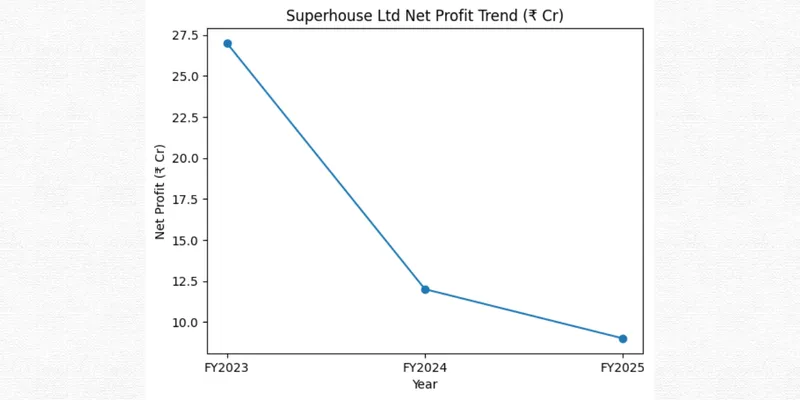
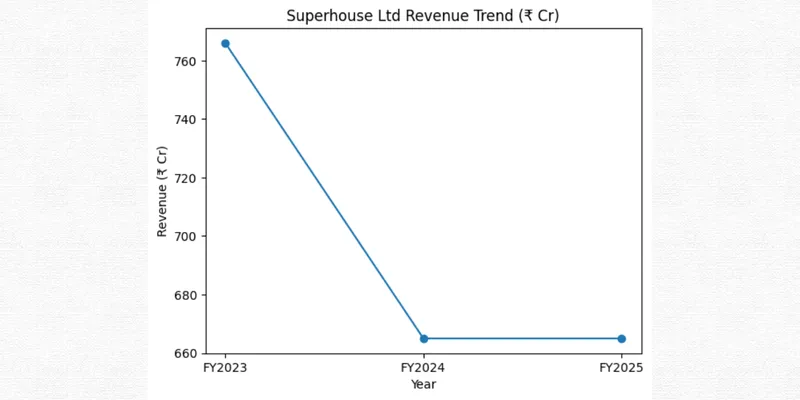
Financial Year Revenue Net Profit FY2023 766 27 FY2024 665 12 FY2025 66 59
Following FY2023, revenue began to fall as global orders shrank alongside broader sector difficulties. Profitability has weakened steadily since then, reflecting tighter margins and declining efficiency in operations.A peak in revenue occurred during FY2023, after which levels settled near ₹665 crore. Despite fluctuations earlier, the figure held steady at that amount afterward.
Falling profits since FY2023 reveal shrinking room between revenue and costs. Despite earlier stability, the gap narrowed under rising expenses. A shift began once overheads climbed without matching income growth. Now, each dollar earned keeps less value than before. Pressure built gradually, then became clear in recent statements.
B) Balance sheet analysis
As shown on the combined balance sheet:
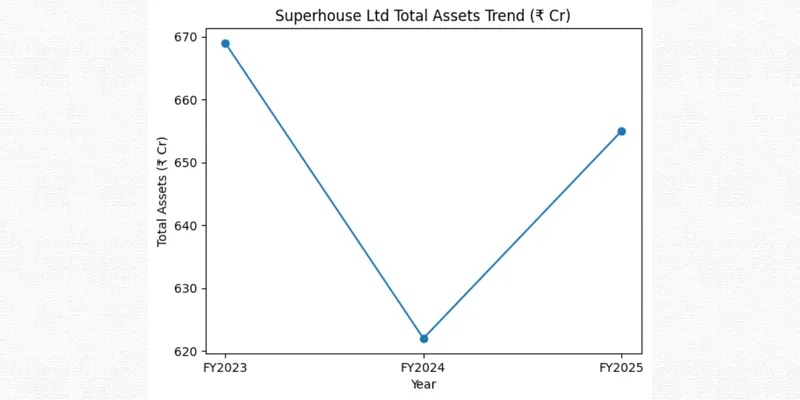
Year Total Assets ₹ Cr Shareholders Funds ₹ Cr FY2023 669 374 FY2024 622 381FY2025 655 393
Equity shows slow improvement, tied to steady expansion in shareholder funds despite little change in overall assets. The company carries a total debt of approximately ₹138 crore - this figure reflects a balanced level of borrowing when viewed within the context of typical manufacturing firms. While not overly stretched, its financial structure shows reliance on credit that aligns with industry norms seen across similar enterprises.
C) Cash Flow Statement analysis
Looking at how money moves reveals these patterns:
Year Operating Cash Flow ₹ Cr FY2023 24.75 FY2024 34.47 FY2025 13.39
Despite steady revenue, FY2025 saw a dip in operating cash flow - suggesting less cash came out of daily activities than before.
D) Key Financial Ratios
Profitability Ratios:
- Net Profit Margin around 2.6 percent for Fiscal Year 2025
- A figure near 2 to 3 percent reflects Return on Equity, this level tends to be seen as modest when compared across sectors. While not striking, it does suggest room for improvement in how capital generates profit
Liquidity Ratios:
A solid buffer of cash and goods supports daily operations at the firm. Its stock and liquid resources stay balanced to meet short-term demands.
Leverage Ratios:
With a debt-to-equity ratio near 0.36, financial structure shows balanced borrowing tendencies.
Efficiency Ratios:
Fair asset turnover alongside operating margins suggests some efficiency - yet profits stay below rivals. Despite movement in resource use, financial gains lagbehind industry peers.
5) KEY INSIGHTS AND INTERPRETATION
Strengths
Established exporter in the leather industry
Diversified product portfolio
Integrated manufacturing facilities
Stable asset base and manageable debt
Weaknesses
Declining profitability over recent years
Low return on equity compared to industry standards
The last few years saw weak sales expansion. Growth stalled across multiple reporting periods
Risk Factors
Dependence on export markets
Raw material price fluctuations
Currency exchange risks affecting export revenue
Future Outlook
Despite rising interest in fashion-forward designs, stricter safety standards also push expansion in the leather and footwear sector globally. Growth ahead forSuperhouse could depend less on market trends and more on how well operations are streamlined while reaching overseas regions.
6) CONCLUSION
Though rooted in years of operation, Superhouse Limited operates as a traditional exporter and maker of leather goods. Its balance sheet shows consistent assets alongside manageable borrowing, creating a cushion against market shifts. Yet profit margins have tightened over time, while income expansion trails expectations - this trend draws attention. Stability exists, certainly - but performance lags where momentum matters most. Looking at money matters, the firm seems steady yet must sharpen attention on margin growth while boosting customer interest to build lasting results. Though current finances hold up, progress depends more on pricing power than just sales volume going forward.
- 7) REFERENCES
- Superhouse Limited. (n.d.). Superhouse Group official website. Retrieved March 8, 2026, from https://superhousegroup.com/
- Screener. (n.d.). Superhouse Ltd consolidated financial statements. Retrieved March 8, 2026, from https://www.screener.in/company/SUPERHOUSE/consolidated/
- Moneycontrol. (n.d.). Superhouse Ltd financial results and company information. Retrieved March 8, 2026, from https://www.moneycontrol.com/india/stockpricequote/leather-products/superhouselimited/SHL
- Trendlyne. (n.d.). Superhouse Ltd financial overview and company details. Retrieved March 8, 2026, from https://trendlyne.com/equity/about/1320/SUPERHOUSE/superhouse-ltd/
- Goodreturns. (n.d.). Superhouse Ltd company history. Retrieved March 8, 2026, from https://www.goodreturns.in/company/superhouse/history.html