SUPER TANNERY ( SUPTANERY) LIMITED FINANCIAL AND BUSINESS ANALYSIS REPORT

1) INTRODUCTION
A) Brief Introduction of the Company
Based in India, Super Tannery Ltd makes and ships leather along with related goods. Leather that has been fully processed comes out of their production lines regularly. Footwear forms part of what they build, alongside clothing items. Accessories also appear in their output mix. Some of these go to local buyers. Others move overseas through export channels. Their work serves customers at home as well as abroad
B) Industry Overview
Operating across leather and textiles, the business relies heavily on international markets shaped by shifting consumer needs. Though India ranks among topsuppliers of leather goods worldwide, regulatory pressures around ecological impactcreate ongoing hurdles. Market volatility adds another layer of complexity, influencing costs and margins unexpectedly. Competition from abroad further tightens space for domestic producers aiming to maintain presence overseas.
C) Purpose of the Analysis
One aim behind this document involves checking how Super Tannery Ltd manages money matters, runs its daily activities, while also looking at room it holds for expanding later on.
2) COMPANY OVERVIEW
A) Background and History
Founded in 1953, Super Tannery Ltd has remained active in the leather sector for decades. Across its operations, it spans areas such as footwear, apparel, and accessories. Over time, these units have developed distinct roles within the company's structure.
B)Business Model
The company follows a manufacturing and export-oriented business model:
- Production of leather and finished goods
- Export to global markets (US, Europe, etc.)
- B2B supply to industrial and retail buyers
C)Key Products / Services
- Finished leather
- Safety and lifestyle footwear
- Leather garments and accessories
- Industrial and equestrian products
D)Market Position
A tiny player on global markets, Super Tannery specializes in leather goods while facing pressure from local workshops alongside overseas giants. Though sized like a minnow among sharks, its exports keep it relevant across borders where homegrown rivals also scramble for space.
3) PROMOTER / FOUNDER INTRODUCTION
A) Name of Promoter(s) / Founder(s)
Promoted by Ehsan Kareem and Family
B)Professional Background
With years spent shaping leather goods, the founders know export markets well. Their background includes running large-scale production units. Operations across industries mark their professional journey. Experience built over time guides every decision they make.
C)Role in Company Growth and Strategic Decisions
Playing a major part has been their contribution within
- Expanding export markets
- Modernizing production facilities
- Maintaining international quality standards
4) FINANCIAL STATEMENT ANALYSIS
A) Income statement analysis
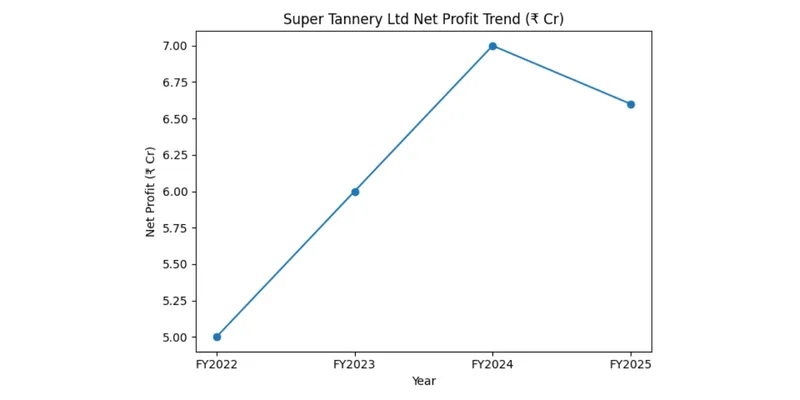
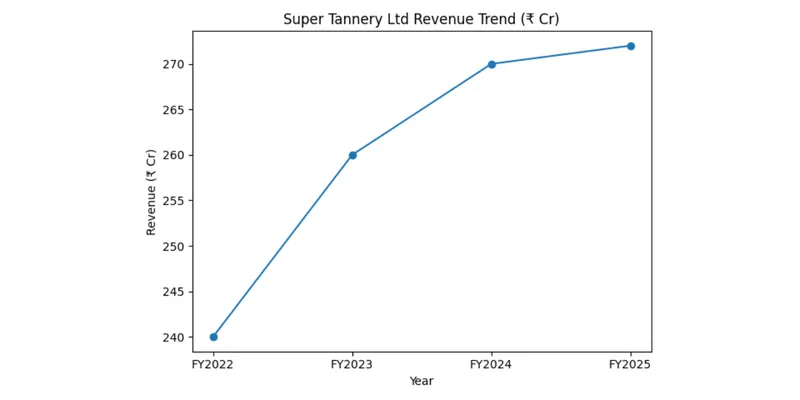
A small rise in earnings brought them close to ₹272 Cr, yet gains held steady without notable change. Despite higher income, bottom-line figures saw little movement over the period.
Analysis
- Though modest, income trends upward without interruption. Over time, gains build steadily despite limited speed. Progress remains gradual yet reliable throughout each period observed
- Profit margins remain low
- Shows a steady pace without rapid expansion
Year | Revenue (₹ Cr approx) | Net Profit (₹ Cr) |
FY2022 | 240 | 5 |
FY2023 | 260 | 6 |
FY2024 | 270 | 7 |
FY2025 | 272 | 6.6 |
B) Balance sheet analysis
Key observations:
- Debt-to-equity ratio around 0.59 (moderate debt)
- Company has improved its debt position over time
- Primarily, assets consist of production facilities along with funds used for daily operations
C) Cash Flow Statement analysis
- Money moves because of goods sold abroad
- Because of stock levels and money owed by customers, firms need more working funds. Inventory ties up cash that could go elsewhere. Receivables delay income flow, increasing financial pressure. Cash sits idle instead of being reinvested. Managing these elements shapes how much capital stays locked in operations
- Cash flows fluctuate with global demand
D) Key Financial Ratios
Ratio | Value |
ROE | ~6–7% |
ROCE | ~8–9% |
P/E Ratio | ~9–10 |
Debt-to-Equity | ~0.59 |
Interpretation:
- Low ROE indicates limited profitability
- Moderate leverage
- Fair value seems modest when set beside sector norms
Year on Year Comparison Minimum Three Years
Year | Revenue | Profit |
FY2023 | 260 | 6 |
FY2024 | 270 | 7 |
FY2025 | 272 | 6.6 |
Growth continues without shrinking - yet shows little strength. Still expanding, though momentum remains modest. Progress holds steady, even if pace stays low. Not collapsing, but far from surging forward.
5) KEY INSIGHTS AND INTERPRETATION
Strengths
- Strong export presence
- Diversified product portfolio
- Low valuation (undervalued stock)
Weaknesses
- Low profitability ratios
- Slow revenue growth
- Limited scale compared to competitors
Risk Factors
- Dependence on global demand
- Currency fluctuations
- Environmental and regulatory risks
Future Outlook
The company has potential to grow if:
- Export demand increases
- Operational efficiency improves
- New markets undergo exploration
6. CONCLUSION
Despite steady operations, Super Tannery Ltd grows at a modest pace within the leather export sector. Its reach spans globally, yet earnings reveal limited expansion and narrow profit margins. A solid lineup of products supports its position, though results lag behind market leaders. International markets remain accessible, still returns stay under pressure. Strength in manufacturing exists; however, financial gains do not reflect that advantage. Average performance marks this business as stable yet slow-growing, operating reliably without major upsides. Still, refining how resources are used could lift profit margins over time. Though consistent, current methods leave room for gains through sharper execution.
.
7) REFERENCES
- Super Tannery Ltd. (n.d.). Financial statements and ratios. https://www.screener.in/company/523842/consolidated/
- Super Tannery Ltd. (n.d.). Annual reports and financial disclosures. https://supertannery.com