Strategic Cotton Import Duty Waiver a Relief for the Indian Textile Industry
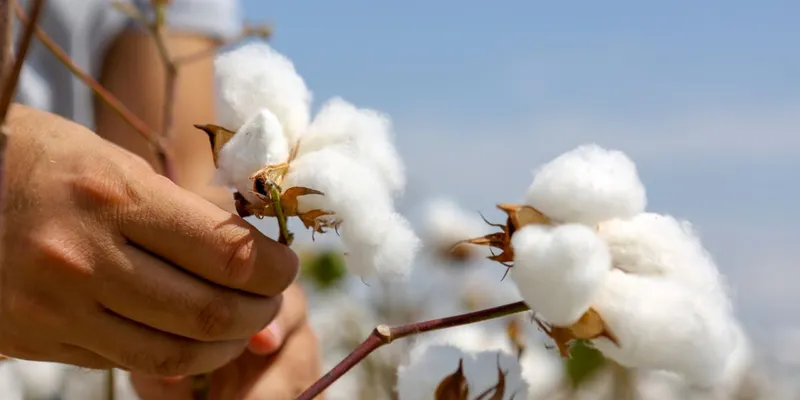
'Make in India' and Farmer Prosperity Go Hand-in-Hand

By Dr Vidhu Sekhar P
The Indian textile industry has received significant support from the Ministry of Finance to withstand the global volatility to bridge the demand-supply gap. It is the 2nd biggest relief after the RoDTEP revival announced. The government has announced a temporary exemption of all Customs duties on cotton imports from June1, to 31st October 2026. It was earlier set at 11% and the new waiver is widely welcomed as a measure for industries to cross the complex trade barriers.The extension for a five-month period is a major help for the textile Industry as it is to immediately stabilise the textile value chain.
The duty cut is to lower the input cost of yarn, fabric and garments. If transferred effectively, this cost advantage can be beneficial for both manufacturers and the end customers in terms of prices. Accessible and high quality cotton has always strengthened Indian manufacturers in the global market. But the cost factor worried them. However, the small and medium enterprises and export oriented units are all set to revive their international orders that might have been lost due to high input cost of cotton.
Brands prefer specialised imported cotton to meet their quality standards. Unfortunately high-quality varieties are often not produced domestically. This policy can help the Indian manufacturers to meet the exact specifications of global brands without replacing local cotton. To keep the 45 million people employed with the textile and apparel value chain, a continuous supply of raw material is essential. This policy stands in support to prevent factor layoffs and encourage further Industrial stability that align with the Make in India initiatives of Modi Government to speed up the production of higher-value garments.
In the wake of the 11% cotton import duty exemption, the question of its impact on domestic farmers is being addressed by the government through several strategic safeguards designed to ensure their financial security. The government has always protected the interests of Indian farmers through the Minimum Support Price (MSP) mechanism, operated by the Cotton Corporation of India Ltd. (CCI). For the 2026-27 marketing season, the Cabinet Committee on Economic Affairs has significantly increased the MSP for cotton by ₹557 per quintal. The new rates are fixed at ₹8,267 per quintal for medium-staple cotton and ₹8,667 per quintal for long-staple cotton. This ensures that even with duty-free imports, domestic farmers are guaranteed a fair and profitable price for their produce.
Because imports are largely focused on specialized varieties for niche export requirements, they do not directly compete with or depress the market for the standard cotton grown by the majority of Indian farmers.
The extension of the duty waiver until October provides a much-needed window of stability for the textile industry, allowing it to plan production cycles with greater certainty. By balancing the need for competitive manufacturing inputs with record-high support prices for farmers, the government is fostering a resilient ecosystem that can thrive in a fragmented and protectionist global market. This strategic intervention ensures that India remains a global powerhouse in textiles while securing the livelihoods of millions of rural workers and farmers.(Author is Assistant Professor at National Institute of Fashion Technology, Daman Campus)