Stitching India’s Apparel Export Strategy: From Farm to Foreign
Dr Vidhu Sekhar P
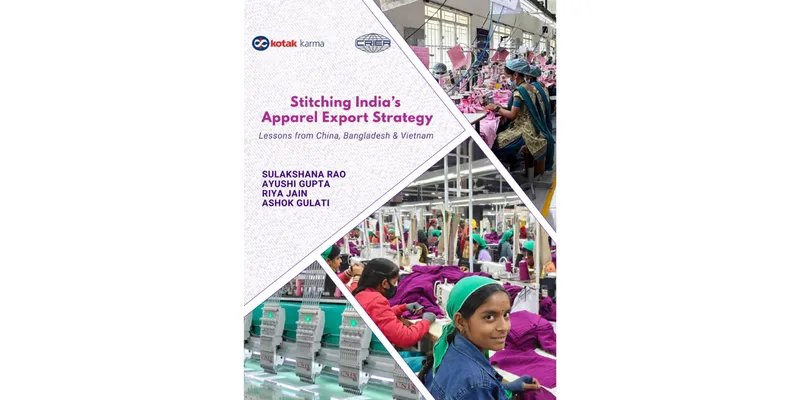
Stitching India’s Apparel Export Strategy: From Farm to Foreign, edited by Sulakshana Rao, Ashok Gulati, and Rohit Kansal, is a comprehensive and timely volume that charts India’s path to becoming a globally competitive apparel exporter. What makes the book meaningful is that industry leaders have contributed individual chapters, bringing in real-world insights alongside policy analysis. The book follows the entire value chain from the cotton farm to the foreign retail shelf and it presents apparel as an integrated ecosystem rather than isolated segments.
The central idea put forward in the book is that India’s apparel export potential remains under-utilized because the value chain is fragmented. While the country is strong in fiber, yarn, and fabric, it lags in garmenting, branding, and speed to market. The editors and contributors argue that “farm to foreign” must focus not just on volumes, but on integration, compliance, agility, and scale. The book positions apparel exports as a national priority that requires coordinated action across agriculture, industry, skilling, and trade policy.
The book begins with agriculture and traces the journey through spinning, processing, and garment manufacturing. Contributors highlight that India’s upstream strengths do not automatically translate into downstream export success. Issues like lead times, productivity, labor availability, and lack of large-scale integrated units are identified as key bottlenecks.
Several chapters benchmark India against Bangladesh, Vietnam, and China. The book notes India’s advantages in raw material security, design heritage, and a large domestic base. It also flags gaps in logistics cost, compliance, FTA access, and ease of doing business. The analysis is data-driven yet practical, making it useful for both policymakers and exporters.
The volume examines key government initiatives such as PM MITRA Parks, PLI for Textiles, RoSCTL, and state-level textile policies. Industry contributors stress that while the policy direction is right, execution and infrastructure at the cluster level will determine outcomes. The book advocates for plug-and-play facilities, anchor investors, and better inter-ministerial coordination.
A strong section deals with ESG and global buyer requirements. With regulations like EU due diligence and growing demand for traceability, the book argues that “compliance is the new tariff.” Contributors call for digital traceability from farm to factory, investment in recycling, and a shift toward circularity themes that align closely with current industry discourse.
The book also addresses the human aspect of apparel. It highlights the sector’s potential as a large-scale job creator, especially for women. Chapters on skilling, formalization, and safe factory ecosystems make the case that labor reform and training are essential to realize India’s export ambitions.
The book very well connects agriculture to exports in a single framework. Contributions from industry leaders make the recommendations grounded and actionable. By weaving together policy frameworks, economic analysis, and industry insights, the book serves as a hands-on strategy roadmap for 2026 and beyond. If India’s ambition is to move from being a raw material exporter to a fashion exporter, this book shows exactly how that transition can be achieved.
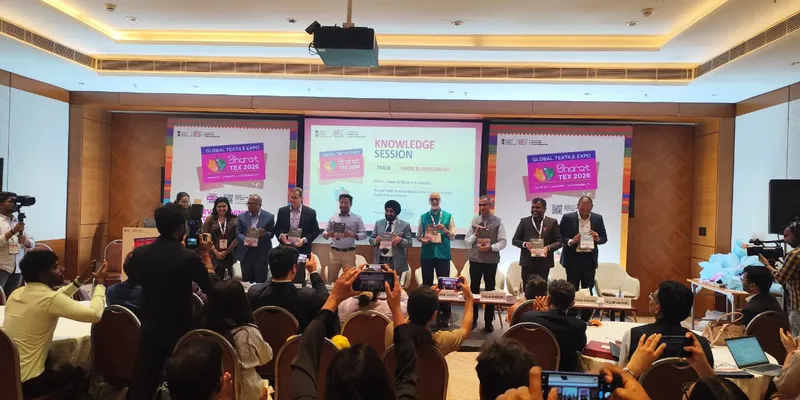
The release of the book took place at a special function held as part of the Knowledge Session of Bharat Tex 2026, themed “Beyond Tariffs: Building Global Competitiveness in India’s Textile & Apparel Sector.” (Author is Assistant Professor at National Institute of Fashion Technology, Ministry of Textiles, Govt of India, Daman Campus)