Market Research, Technology
Stability, precision, and variety – the needle quality makes the difference
Published on
Author: DISHA PRAFUL SUKHANI
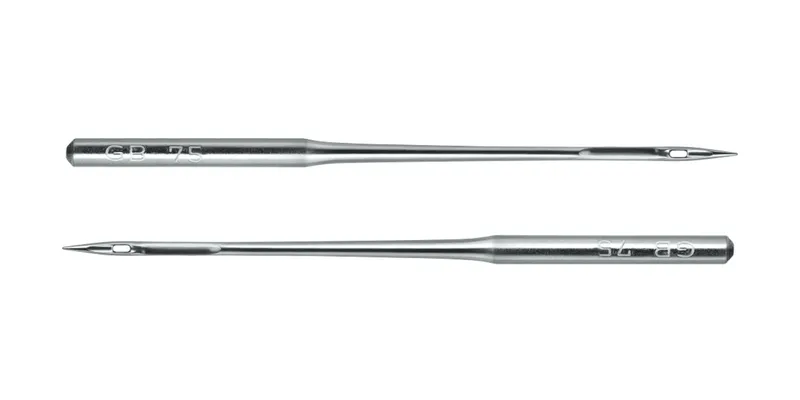
Groz-Beckert embroidery machine needles optimize industrial embroidery processes
Industrial embroidery stands for high-quality textile finishing – combined with ever-increasing demands for precision, speed, and process stability. Groz-Beckert meets these challenges with a comprehensive range of embroidery machine needles, specially developed for single- and multi-head embroidery machines. The Groz-Beckert DBxK5 needle system is a well-thought-out portfolio with precise solutions that improve overall results.
Groz-Beckert, the world's leading supplier of industrial machine needles, provides solutions that enhance quality and efficiency in the embroidery process. The needle system DBxK5 impresses with its special technical features and broad variety of versions – and in its latest version, DBxK5 LGR, offers a reliable solution even for complex applications such as 3D embroidery.
Technically refined for demanding embroidery processes
Needle system DBxK5 has been specifically engineered for industrial machine embroidery. It ensures stable stitch formation even at high machine speeds. The large eye facilitates the smooth gliding of embroidery threads, significantly reducing the risk of thread breakage and skipped stitches – even when using thick or effect threads. The standard RG point provides excellent penetration across a wide range of textile materials without damaging them.
Another key feature is the needle’s high resistance to deflection, achieved through an optimized geometry. This ensures reliable loop formation and helps to prevent skipped stitches, thereby contributing to high process reliability. Additionally, a specially designed scarf minimizes contact between the needle and the hook – protecting the hook, extending needle life, and ultimately enhancing the quality of the embroidery.
Application-specific variants for maximum flexibility
The various versions of the DBxK5 system enable precise adaptation to specific embroidery applications. For example, the DBxK5 KK variant was developed with a shortened shank for use in machines equipped with raised needle plates or integrated sequin devices. The reduced shank length prevents collisions with these components. When embroidering thick materials, it also ensures that the shank does not penetrate or damage the fabric.The DBxK5 SS variant is primarily used in sequin embroidery. Featuring an even shorter shank, it prevents sequins or other delicate appliqués from being damaged by the shank’s penetration during stitching.
Developed for very fine sequins
When embroidering very small and delicate sequins, there is an increased risk of damaging them during the embroidery process. To address this challenge, the DBxK5 SAN™ 15 version was developed. It features an even shorter shank compared to the KK and SS versions, as well as a cylindrical blade design. This results in a maximized cylindrical working area on the needle—slim enough to apply even the smallest sequins reliably and without damage.
Even when stitching sequins onto thicker embroidery grounds, the particularly slim geometry of the SAN™ 15 needle ensures that the sequins remain intact throughout the process.
Sequin embroidery
Robust and precise – perfect for resilient materials For particularly demanding applications – such as embroidering caps, felt, or leather – Groz-Beckert offers the special application needle DBxK5 SAN™ 1. Its reinforced blade provides significantly enhanced needle stability, reducing deflection and effectively preventing needle breakage and skipped stitches. This is complemented by an optimized geometry in the area between the scarf and the eye, which improves loop formation, minimizes the risk of skipped stitches, and protects the hook.
An additional advantage of the SAN™ 1 needle is the GEBEDUR™ (titanium nitride) coating, which offers increased wear resistance – especially in the highly stressed eye and point areas. The needle’s profile is rounded out by an enlarged eye that not only facilitates easier threading but also enables the processing of thicker embroidery threads.
The new solution for 3D embroidery with thick foam materials
3D embroidery presents a unique challenge: foam elements – commonly known as puffy materials – are used to create raised, three-dimensional effects. During the embroidery process, the needle must penetrate deeply into the foam, placing significant stress on the embroidery thread. With particularly thick foam materials, there is an increased risk of the thread becoming pinched between the needle and the foam – often resulting in thread breakage and skipped stitches.
The needle deeply penetrates into the foam