Sri Lakshmi Saraswathi Textiles (Arni) Limited
1. Introduction
The Indian textile industry is currently experiencing a "perfect storm." Due to a volatile combination of rising raw material costs, shifting global demand, and an influx of low-cost foreign imports, even the most established players have reached their limits. For Sri Lakshmi Saraswathi Textiles (Arni) Limited (SLSTL), the 2023–2025 fiscal year has been a severe stress test of the company's very existence rather than merely a market cycle.
Incorporated in 1964, SLSTL is a legacy constituent of the South Indian textile cluster. However, decades of history provide little shelter in a post-pandemic economy defined by high inflation.
When we examine the company's recent performance, we find that it is struggling due to mounting losses and diminished equity. This report assesses whether the company's strategic actions, such as diversification and restructuring, are sufficient to guarantee survival or whether the "material uncertainty" mentioned by its auditors indicates an inevitable conclusion.
2. Company Overview
SLSTL has evolved from a traditional regional spinner into a diversified entity attempting to find footing in a low-margin commodity market. Based in Arni Taluk, Tiruvannamalai District, the company’s operations are deeply rooted in the Tamil Nadu industrial belt.
Business Model and Strategic Assets
The company operates a dual-revenue stream. Its primary focus is the manufacture of various yarns (woven and knitted) for domestic and international apparel markets. In an attempt to mitigate the volatility of the textile sector, the company moved into the production of surgical face masks. To combat rising energy costs—a primary overhead in spinning—SLSTL utilizes windmills for captive electricity consumption. This vertical integration is a critical strategic lever, though it has proven insufficient to offset the broader macroeconomic headwinds.
3. Promoter / Founder Introduction
In the world of distressed small-cap companies, "Promoter Skin-in-the-Game" is often the only thing standing between a company and insolvency. At SLSTL, the leadership has moved beyond strategic oversight to become the company’s primary financial lifeline.
- Sri Balakrishna S (Managing Director & CEO): An MBA with nearly 40 years of experience. He has led the company since 1986, steering it through multiple economic shifts.
- Sri R. Padmanaban (Joint Managing Director & CFO): A Bachelor of Engineering with over a decade of experience in textile finance and operations.
Strategic Role and Financial Support
The survival of SLSTL is currently sustained by the promoters. As of March 31, 2025, the company’s debt includes ₹21.28 Crore from Sri R. Padmanaban and ₹75.60 Lakhs from Sri Balakrishna S. This ₹22.07 Crore in personal funding represents a massive concentration of risk for the leadership. Simultaneously, they are navigating a complex "Scheme of Demerger" through the National Company Law Tribunal (NCLT), a process that has faced multiple revised orders (October 2024 and February 2025), reflecting the prolonged nature of their legal restructuring.
4. Financial Statements
The 2023-2025 period was not merely a downturn; it was a fundamental erosion of the company's financial base. We are observing a business that is technically insolvent, surviving on borrowed time and promoter capital.
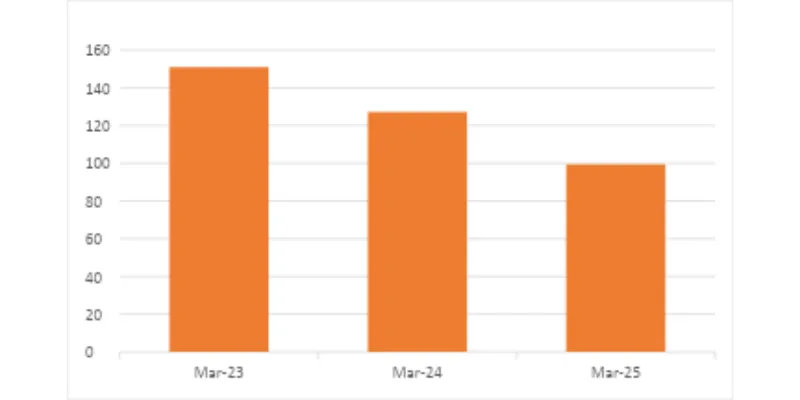
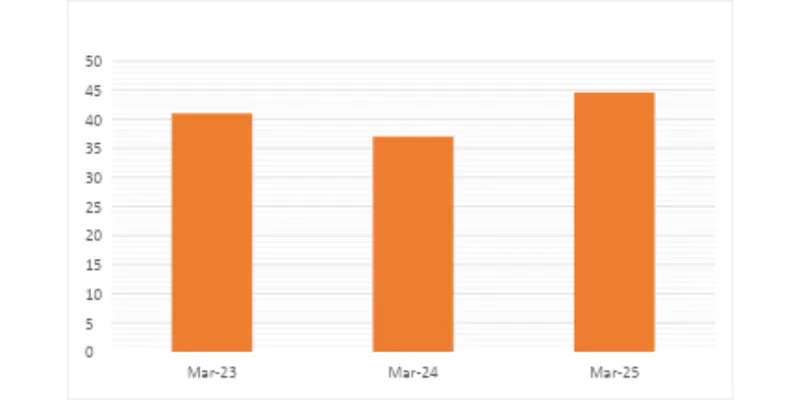
Metrics (Rs. in Crores) | Mar 2025 | Mar 2024 | Mar 2023 |
Revenue from Operations | 99.54 | 127.12 | 151.00 |
Operating Profit (EBITDA) | -14.18 | -14.31 | -14.88 |
Net Profit (Loss) | -20.71 | -20.19 | -20.48 |
Total Assets | 44.61 | 37.00 | 41.00 |
Total Liabilities | 105.63 | 88.00 | 72.00 |
Net Worth | -68.58 | -51.00 | -31.00 |
The "Red Flag" Analysis
How does a company survive when its net worth has been entirely wiped out? SLSTL’s net worth reached a staggering -₹68.58 Crore in March 2025. Revenue has plummeted by 33% since 2023, driven by cotton prices hitting ₹115,000 per candy and "dumping" from Chinese synthetic yarn exporters.
Beyond the top-line contraction, we have identified several critical "red flags":
- Statutory Defaults: The company has defaulted on ₹147.37 Lakhs in PF, ESI, and TDS payments. Failing to meet obligations to employees and the government is a definitive signal of an acute liquidity crisis.
- Asset Quality Risks: Auditors have highlighted ₹86.07 Lakhs in long-outstanding advances and a lack of balance confirmation for ₹43.20 Lakhs. These are likely candidates for future write-offs, which will further damage the balance sheet.
- Cash Flow Crisis: Cash flow from operations was -₹19 Crore in 2025. With a "Days Payable" ratio jumping to 248 days, the company is effectively forcing its suppliers to act as its involuntary lenders.
5. Insights
The central conflict at SLSTL is the "Going Concern" paradox—the question of whether the company can stay in business. Management expresses optimism, claiming they can generate profit in the "foreseeable future." Conversely, auditors maintain a "qualified opinion," explicitly stating that "material uncertainty exists" regarding the company's survival.
SWOT Analysis
- Strengths: 61-year legacy; captive wind power providing a thin energy cost shield.
- Weaknesses: Completely eroded net worth (-₹68.58 Cr); persistent statutory defaults (₹1.47 Cr); extreme reliance on promoter debt.
- Risk Factors: Chinese synthetic yarn dumping; cotton price volatility; sluggish European and North American demand due to geopolitical conflicts.
Future Outlook
The company’s survival now rests on two external pillars. First is the government’s Quality Control Orders (QCO), which serve as a defensive moat against cheap Chinese imports. Second is the successful execution of the NCLT demerger. While the surgical mask venture was a noble attempt to mitigate textile volatility, it has not been sufficient to stop the bleeding in the core yarn business.
6. Conclusion
The financial health of Sri Lakshmi Saraswathi Textiles (Arni) Limited is Critical. While we must acknowledge the tenacity of the promoters who have sustained operations through personal loans, the structural reality is grim.
At the moment, the business is insolvent. A successful NCLT restructuring, stable raw cotton prices, and the effectiveness of government anti-dumping measures are all external factors that are necessary for a turnaround. The company continues to be a high-risk case study in industrial resilience under extreme duress until these pillars are secured.
Data Source: SLSTLQ Annual Report 2024-2025 and Screener.in Financial Database.