Sportswear Growth: From Performance to Everyday Fashion

Milind Khangan
Marketing Manager,
Vertex Market Research & Consulting
Sportswear has changed considerably in the last few years. Running jackets, training trousers, performance tops and athletic footwear are now used beyond traditional sports.
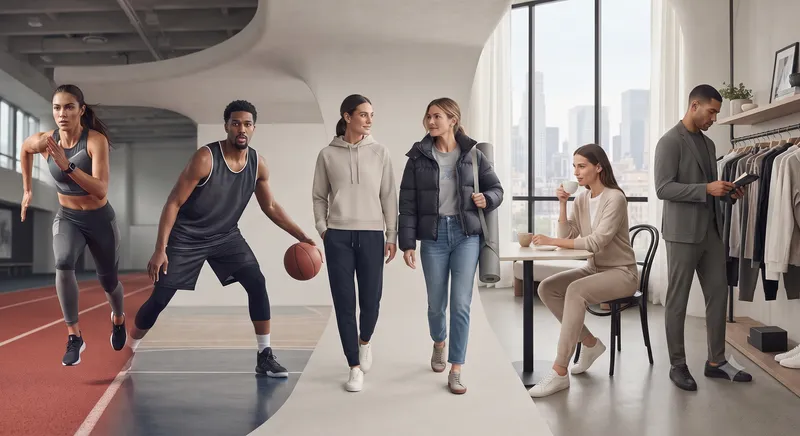
Fashion is moving in the other direction too. Designers are borrowing technical fabrics, sporty silhouettes and familiar athletic details. As a result, the distinction between sportswear and casual fashion is becoming less important at the retail level.
As per Vertex Market Research, the global sportswear market was valued at around USD 400 billion in 2025. It is expected to grow at around 6% CAGR from 2026 to 2030 and cross USD 500 billion by 2030. The Indian sportswear market stood at around USD 9 billion in 2025. The Indian market is expected to grow at an estimated CAGR of about 10% and reach around USD 14 billion by 2030.
The numbers tell only part of the story. Consumer behaviour is changing as well. Athleisure remains a major influence, but running, fitness, women's participation in sport, youth culture and social media are also shaping demand. Textile innovation is also playing an important role in this transformation.
Sportswear Fashion Trends: Functionality Takes a Fashion Direction
Sporting influences are visible in fashion collections. British Vogue highlighted “mode sportif” as a notable trend, with tracksuits, athletic jackets, shorts and trainers appearing in contemporary designer styling.
The trend is not simply a return to older sportswear. Designers are mixing periods with newer silhouettes, pairing technical layers with oversized jackets, retro sneakers with tailoring, and Y2K-inspired styles with updated proportions.
Fabric selection is changing too. Mesh and lightweight knits support breathability, while nylon-spandex and poly-spandex provide stretch and moisture management. Bright athletic shades are appearing alongside softer neutrals and earthy colours. Sportswear can look technical without being limited to training.
Athleisure and Everyday Fashion
Athleisure is now part of everyday dressing. Consumers do not always buy performance products for exercise. Comfort, mobility and versatility can matter just as much. A running jacket may become a casual outer layer. Technical trousers can be useful while travelling, while running shoes can move from workouts to weekend outings. That behaviour is changing product development. Brands are no longer designing around one sport. Products also need to work across the consumer's routine.
Sportswear Brands, Startups and Competitive Dynamics
Leading sportswear companies remain influential, but specialist performance brands, fashion collaborations, athlete-led businesses and digital companies are competing too.
Adidas had a strong Q2 2026. Currency-neutral revenue increased 14% to a record €6.7 billion, DTC sales rose 25%, and its Performance business grew 39%, led by Football and Running. The result shows potential in performance categories and Adidas' lifestyle business.
On has taken a more focused approach. Q2 2026 net sales reached CHF 850.3 million, up 21.6% on a constant-currency basis. DTC sales rose 34.3%, while apparel sales increased 56.2%. The result shows On becoming less dependent on footwear.
PUMA has described 2026 as a transition year after its 2025 reset, focusing on Football, Running, Training and Sportstyle. Nike is carrying out its Pace transformation across NIKE Sportswear, Jordan Brand and Greater China.
Smaller players are using direct channels, faster development and greater manufacturing control. India's Agilitas Sports is building a vertically integrated platform covering manufacturing, brands, retail and technology.
Performance Fabrics and Innovation
A significant part of the sportswear proposition begins with the fabric. Consumers expect garments to handle sweat and movement. Temperature management, comfort and durability also matter.
Textile companies are developing engineered mesh and knit structures, lighter constructions, functional finishes and improved stretch systems. The aim is better performance with everyday comfort.
Elastane alternatives are also being developed. Under Armour's HeatGear Elite, introduced with NEOLAST technology, is one example. Under Armour positions NEOLAST as an alternative to conventional elastane, designed for stretch and shape retention while addressing recyclability and solvent-use concerns.
These developments create scope for higher-value products. Polyester and nylon remain important, but engineered fabrics can provide differentiation when technical benefits are demonstrated.
Fashion Meets Sports
Football, tennis, running, basketball and motorsport continue to influence mainstream fashion. Athletes are also taking a more active role in product development rather than appearing only in advertising campaigns.
The H&M × LOTTO collaboration in May 2026 drew on LOTTO's football heritage through loose football shirts, relaxed shorts and streetwear pieces.
Rick Owens' Spring/Summer 2027 Paris show offered a different interpretation. Owens collaborated with adidas on apparel incorporating Climacool technology and sports-inspired construction.
India is seeing similar activity. Agilitas appointed Smriti Mandhana as a ONE8 co-creator in April 2026, while Anushka Sharma joined as an investor and co-creator of One8 Yoga. Streetwear brings these influences into mainstream consumption through jerseys, track jackets, retro sneakers and sporting logos.
Sportswear at Fashion Weeks
Fashion weeks continue to show the close relationship between sport and fashion. “Mode sportif” featured in Spring/Summer 2026 styling.
Miu Miu's Spring/Summer 2027 collection in Paris on October 4, 2026 continued the theme, placing sportswear alongside knitwear, leather, vintage pieces, tailoring and eveningwear. Its collaboration with New Balance reworked the RC150 racing sneaker in technical mesh, while the Miu Miu × Wrangler project reworked heritage denim.
The examples show sport entering fashion.
Women's and Youth Sportswear
Women's activewear remains an important product area, with greater attention to fit, support, comfort, coverage and body-specific construction. Brands are moving beyond adaptations of men's products.
Mandhana's role with ONE8 reflects the growing influence of athletes in product development and brand direction.
Younger consumers are changing how sportswear is discovered and purchased. Gen Z and younger millennials often encounter products through creators, digital communities and social platforms. TechnoSport launched on Slikk in January 2026 with more than 150 activewear styles and a 60-minute delivery proposition, highlighting quick commerce's role in youth-oriented retail.
Sustainable Sportswear
Sustainability is moving beyond recycled content toward durability, textile waste and recycling. Adidas reported that 99% of its polyester was third-party certified recycled in 2025. It has also set a 2030 target for 10% of its polyester to come from recycled textile waste.
PUMA's RE programme uses factory off-cuts, faulty products and pre-loved polyester clothing as feedstock for new textiles.
Recycling sportswear remains difficult because stretch fabrics often contain blends, while coatings and trims add complexity. Product construction therefore matters. Durable garments can remain in use longer, while mono-material approaches may simplify recycling in some applications. Repair, traceability and fibre-to-fibre recycling are also gaining importance.
India is developing supporting infrastructure through the government's 2026 Tex-Eco Initiative, focused on textile waste management, recycling, recycled fibres and new materials through industry, startups and research institutions.
Digital and Retail Growth
Digital channels have changed sportswear marketing. Brands can demonstrate performance through athlete testing, reviews, training content and creator campaigns. They can also support running groups, fitness challenges and product launches.
DTC remains important. Adidas reported 25% growth in Q2 2026, while On recorded 34.3% constant-currency growth. Physical stores are also shifting toward brand experience.
Logistics is also becoming more important. TechnoSport opened a 64,000-square-foot warehouse in Bengaluru in July 2026, increasing its controlled warehousing capacity by more than 130%. Faster fulfilment and inventory availability can influence customer experience.
Market Opportunities and Business Growth
The sportswear opportunity spans advanced fibres, functional fabrics, knitting, finishing, garment engineering, testing and manufacturing, along with sourcing, warehousing, fulfilment and recycling.
India has a substantial base. Its sports-goods manufacturing industry was estimated at around US6.7billionandisexpectedtoreachapproximatelyUS11 billion by 2030. An established export base and rising domestic demand provide further support.
Agilitas raised ₹225 crore from Nexus Venture Partners and Rainmatter in June 2026 to support manufacturing, brands, retail, technology and product development.
TechnoSport announced a ₹4.5 crore, three-year investment with IIT Delhi in September 2026 to establish T-CREST, a research and incubation centre for high-performance sports textiles, prototyping and sport-specific products.
Bharat Tex 2026 attracted 6,090 international buyers and participants from 138 countries, strengthening India's visibility as a sourcing destination. Manufacturers have room to move beyond basic apparel into technical clothing, performance fabrics and sustainable materials.
Nike's October 1, 2026 announcement of a new Bengaluru campus further highlights India's strategic relevance. Nike described it as a long-term investment in capabilities and talent. The site will support Nike, Jordan Brand and Converse as part of the Pace transformation and supply-chain modernisation.
Case Studies and the Outlook
Different companies are approaching the market in different ways. Adidas is combining performance categories with lifestyle products and DTC. On is extending its running position into apparel. Under Armour is using material innovation to address performance and sustainability requirements.
Fashion partnerships provide another route. H&M × LOTTO brings football heritage into mainstream clothing. Rick Owens × adidas places sports technology within high fashion, while Miu Miu × New Balance brings a racing-inspired sneaker into a luxury setting.
In India, Agilitas connects manufacturing, brands and retail, while TechnoSport is investing in logistics and sports-textile research.
The bigger change is in consumer use. Sportswear is now part of travel, leisure, workday dressing and personal style. Fabric makers must balance performance with comfort, brands need designs that work away from the track, and retailers and manufacturers face greater demands for fulfilment and specialised, sustainable products. Sportswear remains rooted in performance, but its commercial reach is wider. Strong businesses will combine performance with products that fit everyday life.