Skill Development and Education
B.Basu
&
Harshal Ramteke
HOD. Dept. of Textiles
Sasmira
Introduction
Once Swami Vivekananda said, “The Aim of each Education system should be to build a perfect Man”. The meaning of the perfect man is having an excellent character with honesty, being well-behaved with manners, being integrated, having good morality, maturity with emotional sense, having enough knowledge to understand the situation, and also being able to earn his/her own bread & butter. He is considered to be a flawless human, willing to work hard for himself and for the Nation (Organization). He must have the justifying characteristics to know the difference between “Do and Don't Do”. He must have the capacity to accept his own fault rather than to find the fault of others. He must realize the work habit so that others do not feel disturbance for his activities. Well, no one is found to be a one-hundred percent perfect man, but one can possess the maximum qualities by which he can be considered as a true gentleman in society.
People learn the best part of these aspects right from their childhood days from their parents, teachers, and in touch with similar types of people. A highly educated man with so many sophisticated degrees may not always be a perfect man! It grows in his heart from his own thought processes. A perfect educator, a teacher, can insert good thoughts into the mind of a child at such a stage, when it is just soft and pure! And that can be called a perfect education system.
1. Method of Education
It should be empowered with learning methods and with more knowledgeable Skills. It must not be simple bookish Knowledge only to pass the examination. Their learning age and their critical thinking should be considered while imparting knowledge, and it is necessary to show them real-world problem-solving.
[1.1] Active Learning: It is more like an interactive way in a classroom. The teacher must have a good capacity to convey thoughts among the students. The students are motivated by their interesting way of teaching the subject very well. The skills will improve by showing practical aspects of life. For example, while teaching about the Solar System in 2nd/ 3rd Standard, it is better to explain them in a live telecast on the screen inside the classroom.
- It can be project-based learning. Let the students create, and let them be encouraged.
- There should be more interactive discussions and hands-on practices. It should be all application-oriented.
- Let the students raise more questions with natural curiosity.
- Collaborative learning: Let the students form small groups for teamwork, form strong communication networks, enhance general knowledge through group discussions, and conduct debates by allotting marks that will boost their positive thoughts.
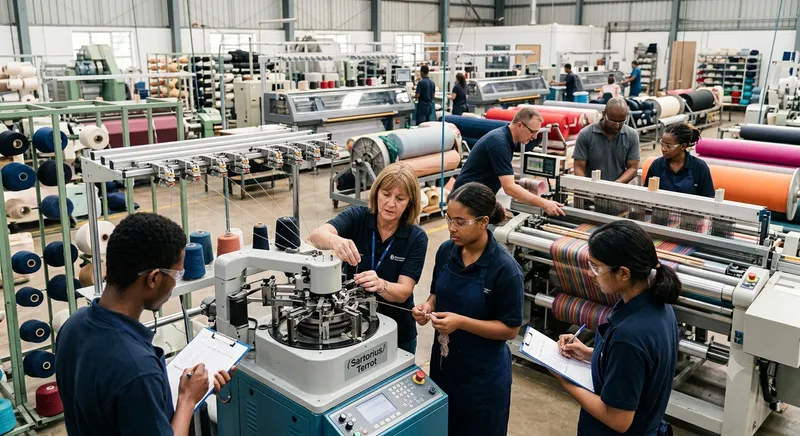
[1.2] Vocational Training: It can be hands-on practice and let the students gain practical skills and be prepared for the real–world challenges in their chosen fields. The schools must have the proper infrastructure to provide hands-on practice. They must have collaborations with local industries or with other educational Institutions having similar facilities.
[1.3] Introduction of Artificial Intelligence into the Education System: It can be introduced at the higher secondary level, mostly after 12th standard, for certain end uses. It will bring to the students automation systems, robotic systems, and high manpower utilization methods. In this age of high-speed machines, power-saving techniques, Industry – 4 and that of 5, this will be highly helpful in building up their career.
[1.4] The Problem-Solving Classes: The problem-solving training can be given to the students right from the 4th Standard itself to understand the issues, brain storming session, must have analytical power with statistical figures wherever applicable. It will create a big change in their mind.
[1.5] To Grow With Positive Approach: Should be trained about the uses of plastic or recycled materials. To be trained in innovation ideas for recycled items for edibles, or in other things. Must not litter the environment and must prevent others from doing so. To make the good habit of throwing waste in the dustbins for wet and dry items. To be conscious about noise pollution also.
[1.6] Jigsaw Technique of Education: It is a cooperative learning method where the students can teach each other in a constructive manner. They can exchange their views, can discuss a common topic among them, and any student is having more knowledge in one subject can communicate it to others in the same group and vis-a - vis. In this way, they will be better equipped with good knowledge.
2. The Teaching Methods
It is very obvious that a good teacher always adopts good methods of teaching with his up-to-date knowledge, technique of teaching, is a good communicator, has patience, and does not try to hush up the matter.
The students should feel comfortable with the teacher and consider him as “Guru”. The institutions can invite the industrial Experts on the particular subjects to minimize the gap between the educational institutions and those of Industries. The learning should be application-based.
3. The Quality of a Good Teacher
In this age of modern education, there are the needs of the good teachers who can lead the students to their destination. The skills in theoretical and practical subjects will be enhanced with the performance of the right teacher in the right places.
The teacher, the pathfinder, the future creator, the master, must have the quality of expression in a perfect way. He must not lose patience so easily. Should be actively involved in the student’s multiple efforts. He should be a good listener as well as a good communicator. He must not be biased towards any students. His attitude makes him respectful to the students. Should have in-depth knowledge of the subject matter, which is his area of study. Must be engaged in active technology and knowledge. He should be a self-disciplined man with zeal. Should be aware of the class room managements.
4. Skill Developments
The students, right from their boyhood days, should be active in skill development, and that starts from their school days itself. The education should be application-based.
Skill development is a process or technique by which anyone can complete the job with their own hands or by their own methodical approach. It is personal growth by which one can earn his own bread & butter. It will improve one's ability to solve any problem in a compatible way. It can be acquired by any formal education, on- the-job experience, and self-learning. All these start from the school days with the guidance from the experts, who can be the teachers or can be any Industrial expert.
Any skill development improves one's career progress and career changes. Any management notices to go the extra mile, with a higher capacity to work with a problem-solving attitude.
All the types of skills are explained in the table -1, below. All those positive skills can be acquired from the education system itself.
The Soft skills include leadership quality, communication, team building, negotiation capacity, critical thinking, and problem solving are all of which are discussed in the subject itself.
Figure 1 shows skill development in the education system.
-800x615.webp?2026-09-18T12:08:20.005Z)
Table – 1
-1-800x466.webp?2026-09-18T12:08:38.696Z)
Fig – 1: Skill development in education.
5. Conclusions
- Skill development arises from the type of education itself.
- It must be application-based. Simply bookish knowledge will not be very helpful for future action.
- Today, our teaching system should be much with practicality, and the teachers should also be knowledgeable about the latest technology.
- A student leaving school must have confidence in him with more positive direction.
- They should also be taught about social responsibilities and be conscious of pollution (Air, earth, and noise).