Siddheswari Garments Limited

1. Introduction: Setting the Stage
In the world of Indian equity, small-cap firms often act as a barometer for localized economic resilience. Analyzing a company like Siddheswari Garments Limited is a fascinating diagnostic exercise; it allows us to look past the high-level growth of the textile sector and understand how individual micro-entities manage their resources and regulatory obligations. This report serves as a health check, moving beyond balance sheet totals to find the "pulse" of the organization.
The company is headquartered in Kolkata. The aim is to assess the company’s performance during the 2024–2025 financial year and compare it with the results of the previous year.
2. Company Overview: The Operational Blueprint
A business model is essentially a company’s survival manual. To an analyst, this is a critical blueprint that helps them forecast the firm's response to economic headwinds. Siddheswari Garments is currently in its 31st year in operations. This is a great achievement for any small-cap firm. The company is listed on both the Bombay Stock Exchange (BSE) and the Calcutta Stock Exchange (CSE).
However, a closer look at the operational identity reveals a striking anomaly. Despite the name "Siddheswari Garments," the company’s recent financial filings reveal that the company did not earn any revenue from the sale of garments. For two consecutive years, net sales have remained at zero. This suggests that the firm is currently operating more as an asset-holding or investment entity rather than a functional manufacturer. This distinction is the core of our diagnostic: we aren't just looking at a garment firm; we are looking at a legacy entity living off its secondary income streams.
3. Leadership Profile: The Human Element
In small-cap companies, leadership composition is a "soft" indicator that often predicts "hard" financial results. The human element at Siddheswari Garments is a blend of long-term continuity and family-oriented governance. Mr. Sanjay Kumar Shah leads the day-to-day as the Whole Time Director and CFO, providing the necessary link between financial reporting and strategic oversight.
Mrs. Riti Poddar is also on the board. She is a Non-Executive Director. Management says that Mrs. Poddar's "creative bend of mind" is what makes the company able to think outside the box. She has a B.Sc. (Hons) degree. Interestingly, the "human" side of this board is underscored by familial ties; Mr. Abhishek Poddar, another director on the board, is Mrs. Riti Poddar’s brother-in-law. This family-centered leadership style is common in small-cap companies based in Kolkata. These companies often put long-term stability and trust within the company ahead of aggressive growth.
4. Financial Statement Deep-Dive
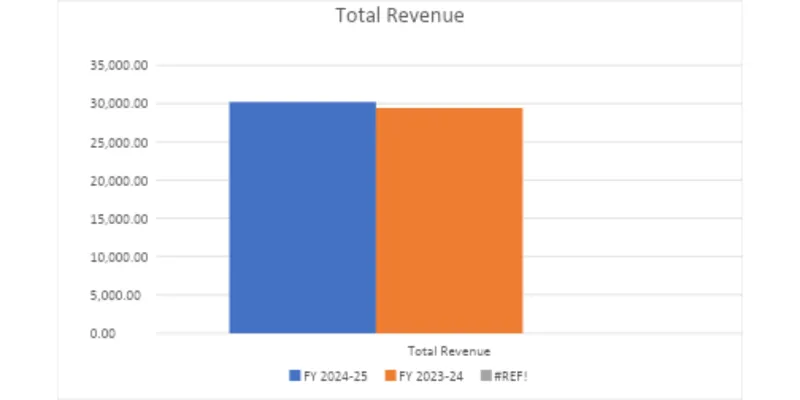
To understand the true health of Siddheswari Garments, we must look at the source of its income and the efficiency of its spending. Note that all figures below are expressed in "Hundreds," meaning the reported Total Revenue of 30,205.13 is approximately ₹30.2 Lakhs.
Financial Results Comparison (Values in Hundreds)
Category | FY 2024-25 | FY 2023-24 | % Change |
Net Sales | 0.00 | 0.00 | 0.0% |
Other Income | 30,205.13 | 29,428.36 | +2.64% |
Total Revenue | 30,205.13 | 29,428.36 | +2.64% |
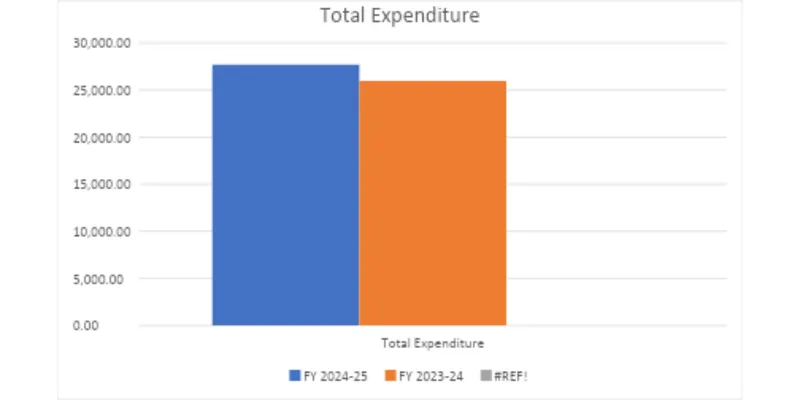
Total Expenditure | 27,710.13 | 25,963.22 | +6.73% |
Net Profit (PAT) | 422.41 | 1,339.45 | -68.46% |
Total Comprehensive Income | 376,746.26 | 370,605.59 | +1.66% |
The "So What?" of the Margin Squeeze
The most glaring data point is the 68.46% drop in Profit After Tax (PAT). As an analyst, I look at the Expense-to-Revenue ratio to find the "why." In 2024, the company spent 88.2% of its revenue on expenses; in 2025, that jumped to 91.7%. This 350-basis-point increase in spending—while core sales remained non-existent—is the primary driver of the margin squeeze.
Furthermore, the Total Comprehensive Income is nearly 385 times higher than the actual Net Profit. This is due to a massive "Other Comprehensive Income" figure (376,323.85), likely representing revaluation gains on assets. This confirms that the company's "value" is tied up in its balance sheet assets rather than its operational profitability.
Key Financial Ratios
Ratio | FY 2024-25 | FY 2023-24 |
Net Profit Margin | 1.40% | 4.55% |
Revenue Growth | 2.64% | - |
Expense-to-Revenue | 91.74% | 88.23% |
To preserve capital for future growth, the Directors have refrained from recommending a dividend. This reinvestment strategy is a clear signal that management is focused on finding new operational avenues.
5. Insights
A SWOT analysis reveals the delicate balance the company is trying to maintain:
- Strengths: A massive buffer in "Other Comprehensive Income" and a "strong" internal financial control system suggest the company is not at risk of insolvency.
- Weaknesses: Lack of operational revenues (NIL sales) and a fall in profit margins.
- Risks: The resignation of Company Secretary Mr. Vinay Kanodia could have resulted in friction, but the appointment of Mr. Rajarshi Ghosh as the new Secretarial Auditor for a five-year term is a positive step towards stability in regulatory affairs.
The Directors are optimistic, stating they are "constantly searching for new opportunities." For a company with zero sales, this search isn't just a growth strategy—it is a necessity for long-term survival.
6. Conclusion:
Siddheswari Garments Limited is a study in contradiction. It is a stable, 31-year-old "ongoing concern" with a balance sheet buoyed by massive asset revaluations, yet its core business is currently a ghost. The financial health of the firm is characterized by high asset value but very thin operational efficiency.
Data Source: Siddheswari Garments Limited 31st Annual Report (2024-2025) & Screener