Shenzhou International (F.Y. 2024-25)

Executive Summary
It has been four years since Shenzhou International Group Holdings Limited (SZ), one of the largest apparel companies in the world, started making garments for famous global brands in sports, casual, lingerie, and knitwear. The company boasts a list of big-league clients and manages to grow at a rate of 8.1% in 2025. While times are tough due to surging wages and economic uncertainties, the company has a plan up its sleeve: launching new international factories and with a focus on technology and automation to improve its competitiveness.
Company Overview
Shenzhou International Group Holdings Limited began in 1990 and became a public company on the Hong Kong Stock Exchange in 2005. The apparel giant now has factories in China, Vietnam, and Cambodia. They produce sportswear, casual wear, lingerie, and knitwear, expanding their clothing line quite a bit. These products go to well-known fashion brands around the world. Shenzhou International has over 108,000 employees and a huge production ability. What they make is shipped off to Europe, the US, Japan, and beyond. The firm is famous for its global manufacturing and supply network.

Industry overview
In the year 2025, the situation of the textile and apparel industry will be at risk due to increasing geopolitical tensions, increased wage levels, etc. and market demand is also decreasing. Slow recovery is expected in the textile and apparel industry in 2025 due to the shift in production to South-East Asia which includes cities like Vietnam, Cambodia, Laos, Myanmar and Thailand. Sports clothes and everyday wear are big hits though. To keep up with the game, the industry focuses on tech and automation to boost efficiency. Going green is getting more focus too. The government helped companies in export sectors modernize their factories and invest in new technology in order to become more competitive and reach new markets abroad.
Financial Performance (Year ended 31 December 2025)
Particulars | 2025 (RMB’000) | 2024 (RMB’000) |
REVENUE | 30,993,732 | 28,662,938 |
Cost of sales | (22,828,372) | (20,608,041) |
Gross profit | 8,165,360 | 8,054,897 |
Other income | 1,431,111 | 1,234,771 |
Selling and distribution expenses | (250,272) | (276,283) |
Administrative expenses | (2,095,323) | (1,938,336) |
Finance costs | (335,348) | (375,348) |
Other (expenses)/gains, net | (254,259) | 458,775 |
Share of profits of associates | 4,506 | 5,302 |
PROFIT BEFORE TAX | 6,665,775 | 7,163,778 |
Income tax expenses | (840,513) | (923,197) |
PROFIT FOR THE YEAR | 5,825,262 | 6,240,581 |
Attributable to: Owners of the parent | 5,825,262 | 6,240,581 |
Source :- Annual Report 2025 of Shenzhou International
Key Financial Ratio (For the year ended 31 December)
Particulars | 2025 | 2024 |
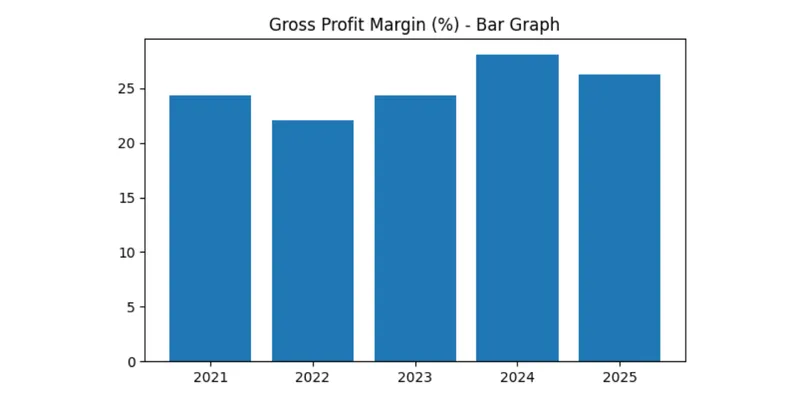
Gross profit margin (%) | 26.3 | 28.1 |
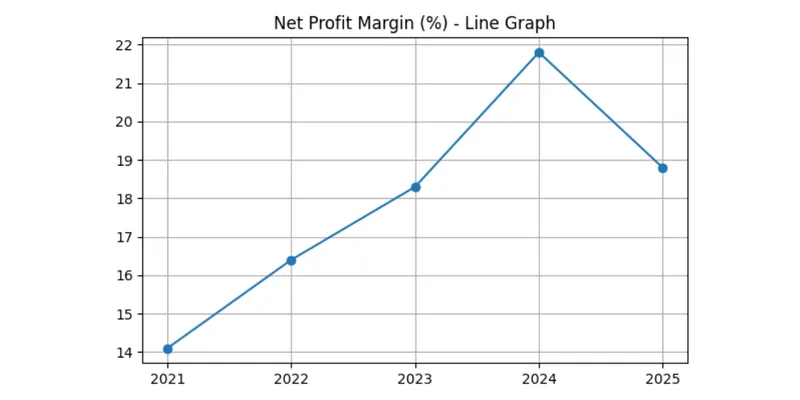
Net profit margin (%) | 18.8 | 21.8 |
Gearing ratio (%) | 39.5 | 35.8 |
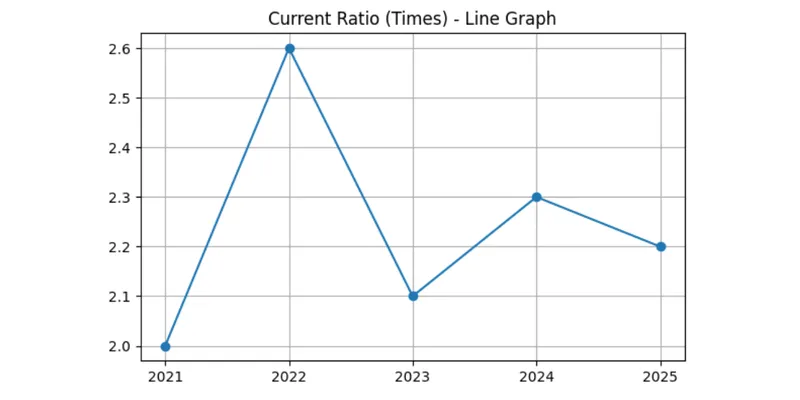
Current ratio (Times) | 2.2 | 2.3 |
Accounts receivable turnover period (days) | 77 | 73 |
Inventory turnover period (days) | 109 | 116 |
Source :- Annual Report 2025 of Shenzhou International
SWOT Analysis
Strengths 1.The company is a leading apparel manufacturer with operations in China, Vietnam, Cambodia. 2.The company is investing in automation, digitalization, and product innovation. | Weaknesses 1.The company highly depends on international markets. 2.Profit margin is affected because of rising labour costs and increasing operating expenses. 3.During 2025, the revenue from China has declined. |
Opportunities 1.The company is growing in global demand for sportswear, functional fabrics, and sustainable apparel. 2.The company is expanding its production facilities in Vietnam, Cambodia, and planning to invest in Indonesia. | Threats 1.There is low consumer demand internationally and there is high competition in the textile industry. 2.There can be geopolitical tensions, trade restrictions, and changing tariff policies. |
Conclusion
Shenzhou International Group Holdings Limited is a leading apparel manufacturer internationally. The company has a strong business model, extensive production capacity, well-positioned in international markets. The company faces challenges such as weak global demand, rising in labour costs, and uncertainties in trade. During 2025, the company has strong financial performance. The company is investing in automation, digital transformation and product innovation. The company focus on efficiency, sustainability, and global market development