Shaju Thomas on Popees Baby Care’s new growth path, national expansion and global ambitions
The TVC Media team had the privilege of speaking with Shaju Thomas, Managing Director, Popees Baby Care India Ltd.
Popees is an Indian baby and kidswear brand established in 2003 by Shaju Thomas. The company specialises in clothing and essential care products for newborns, infants and growing children, with a portfolio that includes babywear, kidswear, diapers, wipes, toiletries, accessories, maternity wear and other childcare essentials. Built around quality, comfort and thoughtful design, Popees has grown from a homegrown brand into a business serving families across India and beyond.
Shaju Thomas is the Founder and Managing Director of Popees Baby Care, an Indian baby and kidswear brand established in 2003.
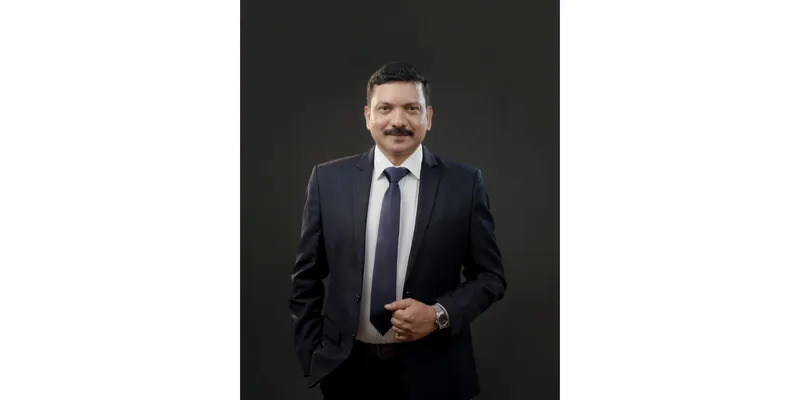
Shaju Thomas
Founder and Managing Director,
Popees Baby Care India Ltd
- Popees has spent more than two decades building a presence in the baby care and kidswear market. At this stage of the company's journey, how do you define the next chapter of growth?
The next phase for us is about taking what we have built over the years to a much larger market without losing the trust that brought us here.
Popees started in 2003 with a simple understanding of what parents need: products that are comfortable, reliable and reasonably priced. Over time, we have expanded from clothing into a wider range of baby and childcare products. That experience has given us a strong foundation, but the opportunity ahead is much larger.
Our focus now is on reaching more families across India, strengthening our retail and distribution network and making the brand more accessible across different channels. We also see opportunities beyond India, particularly in markets where there is familiarity with Indian brands and products.
However, growth has to be managed carefully. For me, success is not simply about becoming bigger. It is about building a stronger organisation, maintaining product quality and ensuring that a customer has the same confidence in Popees whether they encounter us in Kerala, North India, online or eventually in an overseas market.
- India's baby care market is attracting both established companies and new specialist brands. What do you believe will differentiate Popees as competition intensifies?
Competition is good because it forces every company to become better. Parents today have more choices, more information and higher expectations. A brand cannot depend only on its history or name.
I believe our strength is our understanding of the customer and the fact that we have developed Popees as a broader baby and childcare brand rather than focusing on just one category. A young family has many needs, from new-born clothing and everyday essentials to hygiene products, maternity products and other items.
At the same time, a broad portfolio alone is not enough. The products have to offer value, be available when customers need them and meet the quality standards that parents expect.
Trust will remain the biggest differentiator in this category. Parents are making decisions for their children, and that creates a responsibility for every brand. We have to earn that trust repeatedly through the quality of our products and the experience we provide.
- You have built manufacturing capabilities across multiple states. How important is an integrated manufacturing base as Popees prepares for wider national expansion?
Manufacturing capability is an important part of our growth strategy because expansion requires a dependable supply base.
As a brand grows into more markets and categories, consistency becomes increasingly important. We need to be able to plan production, maintain quality and respond to changing demand without creating unnecessary delays or inefficiencies.
Our manufacturing network across Kerala, Karnataka and Tamil Nadu gives us a strong foundation. It allows us to support our existing business while preparing for wider expansion.
The real advantage, however, is not simply the number of facilities. It is how effectively the entire system works together, from sourcing and production to inventory, distribution and retail.
As we grow, we will continue to improve coordination and planning across these functions. Our objective is straightforward: customers should be able to find the products they want, when they want them, while receiving a consistent level of quality.
- Popees is aiming to expand beyond its traditional South Indian base. What does it take to transform a strong regional brand into a genuinely national one?
The first thing is to recognise that India is not one uniform market. Consumer preferences, price expectations, climate and shopping behaviour can vary significantly from one region to another.
A successful regional brand cannot simply copy and paste its existing model into a new geography. We need to understand the local customer, identify the right product mix and determine the retail or distribution model that makes sense for that market.
At the same time, we do not want to lose the core identity of Popees. The challenge is to remain consistent as a brand while being flexible enough to respond to local needs.
National expansion will therefore be a process of learning as well as growth. We will study markets carefully, build the right presence and adapt where necessary.
The opening of our outlet in Chandigarh is part of that broader journey of taking the brand beyond its traditional markets and understanding how Popees can connect with families across different parts of India.
- What role do physical retail stores play in your growth strategy at a time when consumers are increasingly comfortable shopping online?
I do not see this as a choice between physical retail and e-commerce. Both have important roles to play.
Online shopping gives customers convenience, information and access. It allows a brand to reach consumers beyond the immediate catchment area of a physical store. But in our category, stores continue to have a very important role because many parents want to see and feel a product, understand the fabric and get assistance with sizing or product selection.
A physical store also allows us to build a more direct relationship with customers and understand their needs and feedback.
Our approach is therefore to make the different channels support each other. Whether a customer shops in one of our stores, through our own digital channels or through an online marketplace, the experience should be dependable and consistent.
The future of retail, in my view, will be increasingly connected. Customers should be able to choose the channel that is most convenient for them without compromising on confidence in the brand.
- You have spoken about opportunities in international markets, including the GCC. What would be your approach to taking Popees beyond India?
We see international expansion as an opportunity, but it has to be approached with preparation and discipline.
The GCC is an interesting market for us for several reasons, including the strong presence of Indian communities. But we should not assume that a successful product or retail model in India will automatically work elsewhere.
Every market has its own customer expectations, competition, pricing dynamics and regulatory requirements. We need to understand product standards, labelling, distribution and the role of local partners before making major commitments.
My preference is to begin with a focused strategy rather than trying to enter a market with everything at once. We need to identify where Popees can genuinely add value and then build from there.
The objective is not simply to put the brand in another country. It is to establish a sustainable business that understands the local market and can grow over the long term.
- Popees has built its business around products for families at different stages of the parenting journey. How important is customer lifetime value to the company's long-term strategy?
It is very important. A family's relationship with a baby care brand should not necessarily begin and end with one purchase.
The needs of parents change as their child grows. There are newborn products, clothing, everyday essentials, hygiene products and many other requirements over different stages. If we can serve those needs well, we have an opportunity to build a longer and more meaningful relationship with the customer.
That is also why we have expanded our product portfolio over time. But customer loyalty cannot be created simply by offering more products. Each product has to justify the customer's trust.
For us, the long-term objective is to become a brand that parents feel comfortable returning to because they know what to expect from Popees in terms of quality, value and reliability.
If we can maintain that relationship as the family grows, then growth becomes more sustainable than simply focusing on acquiring a new customer for every transaction.
- Popees Baby Care India has approved a Rs 511.33-crore share-swap transaction to acquire a 99.31% stake in Popees Baby Care Products. How significant is this transaction for the company's future growth plans?
This is an important milestone in the next phase of Popees' journey.
The proposed transaction is designed to bring the Popees brand and its operating business under the listed entity, creating a stronger platform for the company's future expansion. Popees Baby Care Products reported revenue from operations of Rs 161.93 crore in FY26, representing growth of 19.7% over the previous financial year, which demonstrates the progress the business has been making.
As we look ahead, we see significant opportunities to take the brand to a wider national market beyond South India and to explore international opportunities, including the GCC. Our target is to build a network of 1,000 stores over the next four years.
The important point is that we already have an established manufacturing foundation, with facilities across Kerala, Karnataka and Tamil Nadu. This gives us a platform to support expansion without an immediate requirement for major additional capital expenditure purely to create new manufacturing capacity.
The proposed alignment with the listed entity also gives the business access to the capital markets as we plan for the next stage of growth. Of course, the transaction remains subject to shareholder and applicable regulatory approvals.
For us, this is about building the right structure for the future. We have spent more than two decades building the Popees brand, and the next objective is to take that foundation to more families across India and, over time, into international markets.
This version is deliberately more strategic and corporate than the original Q&A, making it suitable for a business publication, mainstream newspaper or financial media interview.