Shahi Exports Partners Innovo Fiber to Scale Fibre52® Cotton Technology
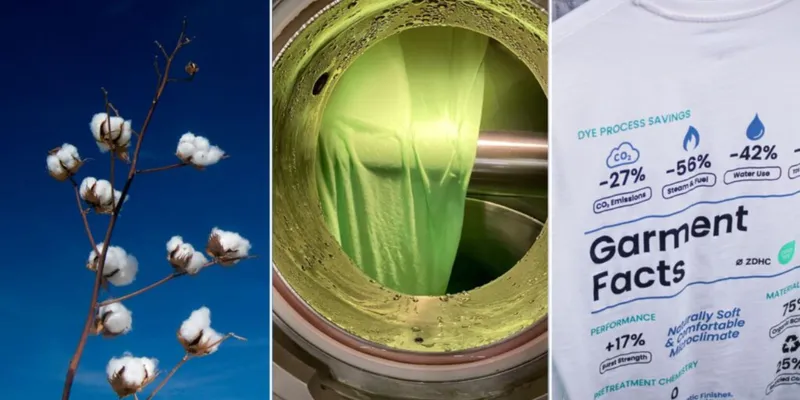
The collaboration combines Fibre52®’s patented biochemistry platform with Shahi’s manufacturing capabilities to support more resource-efficient cotton processing in large-scale production.
Cotton pretreatment is a resource-intensive stage in textile manufacturing. Fibre52® technology introduces a low-temperature, drop-in pretreatment system using chemistries compliant with ZDHC MRSL v3.1 and OEKO-TEX® standards. The process is designed to retain the natural wax and softness of cotton fibres while removing the need for caustic soda and reducing overall resource usage compared to conventional methods.
Since early 2024, Fibre52® has conducted trials at Shahi through a phased validation process involving 5MT, 20MT, and 100MT fabric volumes. These trials recorded reductions of approximately 25% in water consumption and 49% in steam consumption compared to standard pretreatment systems.
Under its scale-up plan, Shahi aims to transition around 25% of its knit processing capacity to the Fibre52® system, equivalent to nearly 3,000 tons per annum. This phase represents a move from pilot testing to industrial adoption within a vertically integrated manufacturing setup.
Both companies are continuing the collaboration as part of a long-term platform, focusing on expanding applications, integrating across product categories, and supporting scalable approaches to lower-impact textile manufacturing.
Laura Thornquist, President of Innovo Fiber, Fibre52®’s parent company, said:
“What makes this partnership unique is not just the technology, but the alignment of vision. Shahi and Fibre52® came together with a shared commitment to rethinking cotton processing at scale. When innovation capability and manufacturing discipline work in sync, real transformation becomes possible.”
Anant Ahuja, Director of ESG & Sustainability, Shahi Exports, said:
“This collaboration reflects the value of close partnership. The Fibre52® team brought a different approach, and Shahi focused on how it could work within our production environment. Together, this has progressed from early validation to measurable production outcomes. It is encouraging to see how sustainability and performance can come together at an industrial scale.”