Sentire System Introduces Objective Fabric Measurement for Technical Textiles
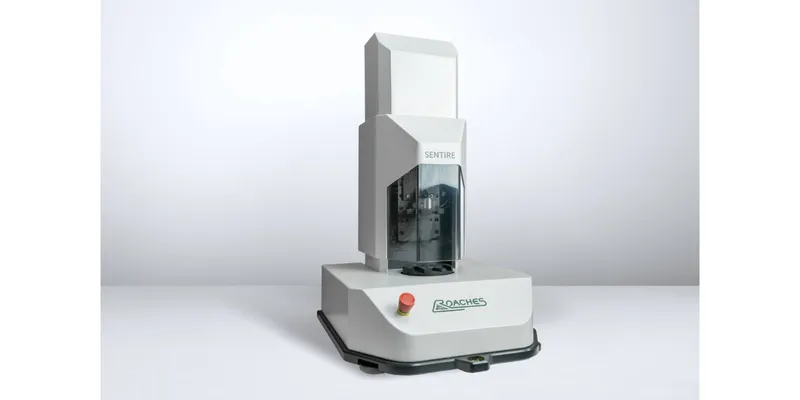
A new system designed to measure fabric handle objectively is being introduced for the technical textiles sector. Developed by Roaches International, the Sentire system aims to standardise the evaluation of tactile properties. The technology will be presented at Techtextil in Frankfurt from April 21–24.
Technical textiles are required to meet defined performance standards and specifications, with fabric handle characteristics often linked to their functional properties. Traditionally, the assessment of fabric feel has depended on subjective human evaluation, which can affect consistency across production and supply chains.
Roaches International has developed the Sentire system to address this challenge by introducing an objective approach to measuring tactile properties. The system will be demonstrated at the Techtextil exhibition in Frankfurt from April 21–24.
“No two people will describe how a fabric feels in the same way, so Roaches recognised the need to develop for a universal common language to describe fabric tactility challenges across complex supply chains,” says Roaches marketing executive Seth Seagraves. “Being able to translate the fabric handle and objectively measure qualities like softness, smoothness, creasability and stiffness into communicable data that can be compared between batches and to other fabrics, is key to ensuring the consistency of how these fabrics handle and perform. Sentire performs the testing and analyses the data that enables this to ensure technical fabrics are consistent from product to product. ”
The Sentire system applies four test methods designed to replicate human touch and quantify key tactile characteristics. Data collected through these tests is analysed using established principles of fabric physics, providing reproducible results. The system also supports real-time monitoring during production, helping identify variations and reduce rework.
In addition, the system can detect changes resulting from finishing processes, coatings, or laundering, offering manufacturers data on product performance and durability.
The Sentire evaluation system was developed in collaboration with specialists from the University of Leeds. It defines tactile properties in a structured format, similar to how colour is standardised through digital colour charts or warmth is measured using Tog values.
Fabric samples are tested within the system under controlled conditions, generating data profiles that can be compared across samples and shared digitally across supply chains.
“This technology has the potential to impact the technical textiles supply chain in a similar way to the spectrophotometer for the communication of colour,” says Seagraves. “We believe its possibilities are huge, especially as communication becomes increasingly digitised.”
Commenting on industry developments, BTMA CEO Jason Kent stated, “From the careful handling of ultra-high value yarns to the forensic inspection of finished fabrics, the BTMA members at Techtextil and Texprocess this year collectively represent a complete chain of innovation spanning processing, monitoring and quality assurance. Whether through reducing yarn waste, extending component lifetimes, enabling novel polymer development, automating inspection or refining testing efficiency, each company is contributing to a more resilient and resource-efficient technical textiles sector.”
BTMA members participating at Techtextil and Texprocess include Airbond (Hall 12.0, stand E31), Ascotex (Hall 12.0, stand C75), Dent Instrumentation (Hall 12, stand E61A), FET (Hall 12.0, stand A78), James Heal (Hall 12.0, stand B66), Roaches International (Elmatex Pavilion, Hall 12.0, stand D05), SDC Enterprises (Hall 12.0, stand B65), Shelton Vision (Hall 12.0, stand E86), and VeriVide (Hall 8, stand B79).