SeaCell Algae Textile T-Shirt Market to Surpass USD 2.1 Billion by 2033 Amid 14.8% CAGR Growth
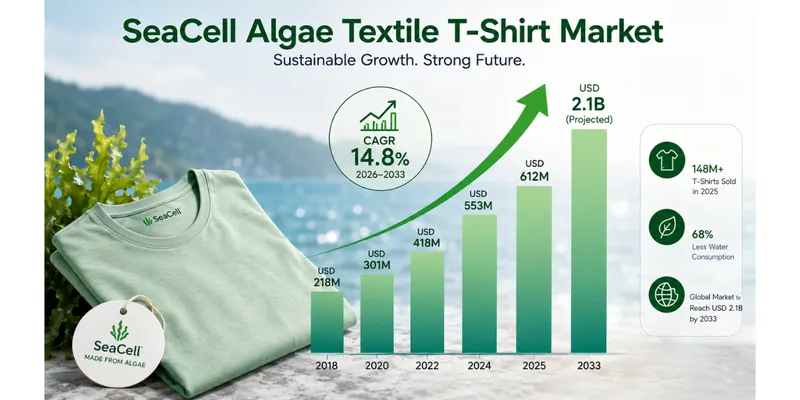
The global SeaCell Algae Textile T-Shirt Market is witnessing accelerated growth as sustainable fashion adoption rises across Europe, North America, and Asia-Pacific. According to recent insights highlighted by Marketintelo, the market was valued at approximately USD 612 million in 2025 and is projected to reach USD 2.1 billion by 2033, expanding at a CAGR of 14.8% during 2026–2033.
SeaCell fibers, developed using renewable seaweed cellulose blends, have gained traction due to their biodegradable composition, moisture management properties, and reduced carbon footprint. In 2025 alone, over 148 million SeaCell algae textile t-shirts were estimated to be sold globally, marking a 21.4% year-over-year increase compared to 2024.
The sustainable textile industry accounted for nearly 11.2% of global apparel investments in 2025, up from 6.8% in 2020. SeaCell algae fabrics are increasingly adopted by premium activewear and eco-fashion brands seeking alternatives to polyester and cotton-intensive materials.
Key Numerical Highlights
• Global market value reached USD 612 million in 2025
• Forecast market size projected at USD 2.1 billion by 2033
• CAGR estimated at 14.8% from 2026 to 2033
• Europe held 38.6% market share in 2025
• Asia-Pacific demand rose 24.2% YoY in 2025
• Sustainable apparel sales exceeded USD 11.4 billion globally in 2025 • Seaweed-based textile production crossed 92,000 metric tons in 2025 • Organic textile investments increased by 18.7% between 2023 and 2025 • Average production cost declined by 12.5% since 2021
• Online eco-fashion retail penetration reached 44% in 2025
Historical Market Performance Shows Rapid Expansion
The SeaCell Algae Textile T-Shirt Market has shown consistent expansion over the past decade. In 2018, the market size stood near USD 218 million, increasing to USD 301 million in 2020, representing a two-year growth rate of 38%.
During the pandemic years, sustainable apparel purchasing behavior changed significantly. Between 2020 and 2022, eco-conscious clothing sales surged by 29.4% globally. By 2023, the market crossed USD 470 million, supported by growing consumer awareness regarding microfiber pollution and water-intensive cotton cultivation.
Production volumes also increased sharply:
Year | Market Value (USD Million) | Production Volume (Million Units) |
2018 | 218 | 42 |
2020 | 301 | 61 |
2022 | 418 | 94 |
2024 | 553 | 128 |
2025 | 612 | 148 |
The average retail price of premium SeaCell algae textile t-shirts declined from USD 42 per unit in 2019 to nearly USD 34 in 2025, making the category more accessible to mid-income consumers.
Europe Leads the SeaCell Algae Textile T-Shirt Market
Europe dominates the SeaCell Algae Textile T-Shirt Market, accounting for nearly USD 236 million revenue in 2025. Germany, Sweden, Denmark, and the Netherlands collectively represented 52% of European demand.
The European Union allocated over USD 1.8 billion toward circular textile innovation programs between 2021 and 2025. Approximately 61% of European consumers surveyed in 2025 stated willingness to pay at least 10–15% premium for biodegradable apparel products.
North America held around 27.3% market share in 2025. The United States accounted for over USD 128 million in SeaCell apparel revenues due to rising adoption by athletic and wellness-focused clothing brands.
Asia-Pacific is emerging as the fastest-growing regional market. The region recorded 24.2% annual growth in 2025, led by China, Japan, South Korea, and India. Textile sustainability investments across Asia-Pacific exceeded USD 3.4 billion during 2023–2025.
Rising Sustainability Regulations Fuel Market Growth
Government sustainability regulations are reshaping apparel manufacturing. More than 37 countries introduced textile waste reduction policies between 2021 and 2025.
SeaCell algae textiles require nearly 68% less freshwater consumption compared to conventional cotton t-shirts. Carbon emissions associated with SeaCell fiber manufacturing are estimated to be 32–38% lower than synthetic polyester production.
In 2025:
• Over 73% of Gen Z consumers preferred sustainable fashion brands • Nearly 58% of apparel retailers expanded eco-friendly product lines • Biodegradable textile patent filings increased by 19.6% YoY
• Recycled and algae-based fiber investments surpassed USD 5.7 billion globally
The growing popularity of vegan and marine-derived fabrics is further supporting demand for SeaCell algae textile t-shirts in premium fashion categories.
Competitive Landscape and Industry Statistics
The SeaCell Algae Textile T-Shirt Market remains moderately consolidated, with leading sustainable textile manufacturers controlling approximately 46% of global production capacity.
Major apparel companies increased R&D spending on bio-based fibers by 22% in 2025. Luxury sustainable fashion collections incorporating algae textiles grew by 31% year-over year.
Online direct-to-consumer sustainable clothing sales accounted for 48% of total SeaCell algae t-shirt revenue in 2025. Subscription-based eco-fashion platforms also expanded by 17.2% annually.
Additionally, manufacturing automation improved operational efficiency by nearly 14%, reducing average lead times from 61 days in 2021 to 43 days in 2025.
Future Outlook Through 2033
The future of the SeaCell Algae Textile T-Shirt Market appears highly promising as sustainability targets intensify globally. By 2030, biodegradable apparel is expected to represent 19% of the global premium fashion segment, compared to just 7% in 2022.
Global annual production of SeaCell-based t-shirts is forecast to exceed 410 million units by 2033. Asia-Pacific is projected to contribute nearly 34% of total future market expansion, while Europe is expected to maintain leadership in sustainable textile innovation.
According to projections referenced by Marketintelo, the market could surpass USD 2.1 billion by 2033, driven by rising environmental regulations, consumer sustainability preferences, and rapid advancements in algae-based textile manufacturing technologies.
Read A Full Report: https://marketintelo.com/report/seacell-algae-textile-t-shirt-market