Scaling Up Nonwoven Production: Global Market Trends and the Supporting Role of BTRA for India’s Nonwoven Sector
Introduction
Nonwovens, as a distinct class of fabric, were developed only in the middle of the 20th century. Initial nonwoven items were produced by utilising adhesives or heat to attach webbed fibres; efficient commercial manufacture started to gather pace after World War II, with methods like wetlaid, spunbond and needle-punched processes. The industry progressed from standalone technical applications (tea bags, filters) to hygiene, medical disposables, geotextiles and technical and consumer applications.
Nonwoven fabric is a fabric-like material made from staple fibre (short) and long fibres (continuous long), bonded together by chemical, mechanical, heat or solvent treatment. They are flat, porous sheets that are made directly from separate fibers or from molten plastic or plastic film. There are different non-woven fabrics mainly defined by the method that the fibers are bonded together: Mechanical bonding (fiber entanglement), chemical bonding (fibers are chemically bonded together with glue-like compounds), or thermal bonding (where low-melt fibers are used and heat is used to melt the fiber to each other). Most non-woven fabrics are used for a single-use application. But there are also advantages to the use of non-woven fabrics given their versatility and inexpensive production costs. Non-woven materials are used in numerous applications, including:
Medical: Isolation gowns, surgical gowns, surgical drapes and covers, surgical masks, surgical scrub suits, caps, medical packaging: porosity allows gas sterilization, gloves, shoe covers, bath wipes, wound dressings, drug delivery, plasters
Filters: Gasoline, oil and air – including HEPA filtration, water, coffee, tea bags, pharmaceutical industry, mineral processing, liquid cartridge and bag filters, vacuum bags, allergen membranes or laminates with non-woven layers
Geo textiles: Nonwoven geo textile containers (sand bags) are used for soil stabilizers and roadway underlayment, foundation stabilizers, erosion control, canal construction, drainage systems, geo membrane protection, frost protection, pond and canal water barriers, sand infiltration barrier for drainage tile, landfill liners
Others: Diaper stock, feminine hygiene, and other absorbent materials, carpet backing, primary and secondary, composites, marine sail laminates, table cover laminates, chopped strand mat, backing/stabilizer for machine embroidery, Packaging where porosity is needed, Shopping bags, Insulation (fiberglass batting), Acoustic insulation for appliances, automotive components, and wall-paneling, pillows, cushions, mattress cores, and upholstery padding, batting in quilts or comforters consumer and medical face masks, mailing envelopes, tarps, tenting and transportation (lumber, steel) wrapping, disposable clothing (foot coverings, coveralls), weather resistant house wrap, clean room wipes, potting material for plants
Current trends
Hygiene & medical leadership (leading rolling driver). Single-use hygiene products and medical disposables' demand call for R&D and capacity creation.
Sustainability & recycled feedstocks. Recyclability, low-energy production (e.g., post-consumer recycled PET in particular spunbond / spunlace applications), and recycled and bio-based fibres are driven by payers and regulators.
Process innovation — growth in meltblown, spunbond, spunlace. Increase in meltblown capacity (mission-critical for filtration/PPE) and spunlace (technical wipes, consumer wipes); nonwoven texturing and composite laminates' texturing speeding up.
Technical, value-added uses. Automotive, filtration, geosynthetics and construction materials embrace higher-value nonwovens (functional finishes, multi-layer structures).
Regional supply-chain adaptations. Pandemic-post supply resiliency and waves of reshoring have spurred regional capacity investment in Asia, including India.
Market snapshot (global + India)
Global: Analysts vary by methodology, but recent industry forecasts show robust growth: many reports estimate the nonwovens market in the tens of billions USD and steady mid-single to low-double digit CAGR depending on the segment — for example one respected forecast projects strong growth to 2030 driven by hygiene, medical and technical segments.
India: The India nonwoven market has been growing fast as shown in the chart (Figure 1). several market studies (2024) put India’s market value in the low billions USD and forecast mid-single digit to high-single digit CAGR through 2030 as disposable hygiene, medical and industrial uses scale up. Domestic investments (new plants, IPOs) show investor appetite in this space.
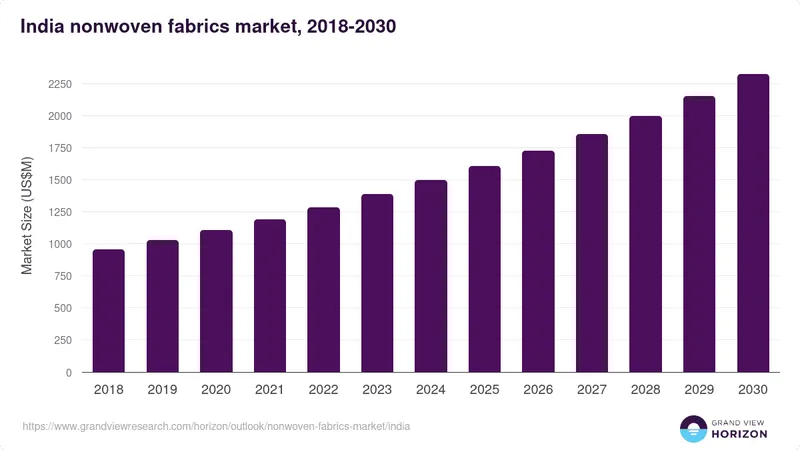
Figure 1: India nonwoven market 2018-2030
Capacity additions and capital markets interest. Indian players are adding spunbond / meltblown and hygiene manufacturing lines; recently smaller nonwoven firms have entered public markets/raised capital (example: Spunweb Nonwoven’s SME IPO activity illustrated investor interest).
Localisation of PPE & filtration supply chains. India has continued to build domestic meltblown and filtration capacity to reduce import dependence after the 2020 PPE demand shock.
Sustainability and new entrants. New startups and established mills are trialing recycled polymers and blends, and some are targeting exports of higher-value spunlace and specialty nonwovens.
Application diversification. Increased activity in geotextiles, agro-nonwovens (mulch mats, erosion control), and industrial filters — sectors where India has both demand and export potential
Non-Woven Fabrics Market Overview
Non-Woven Fabrics market size has reached to $19.85 billion in 2024 Expected to grow to $29.07 billion in 2029 at a compound annual growth rate (CAGR) of 7.8% Growth as shown in the Figure 2. Key driver for this growth will be the rising healthcare demand.
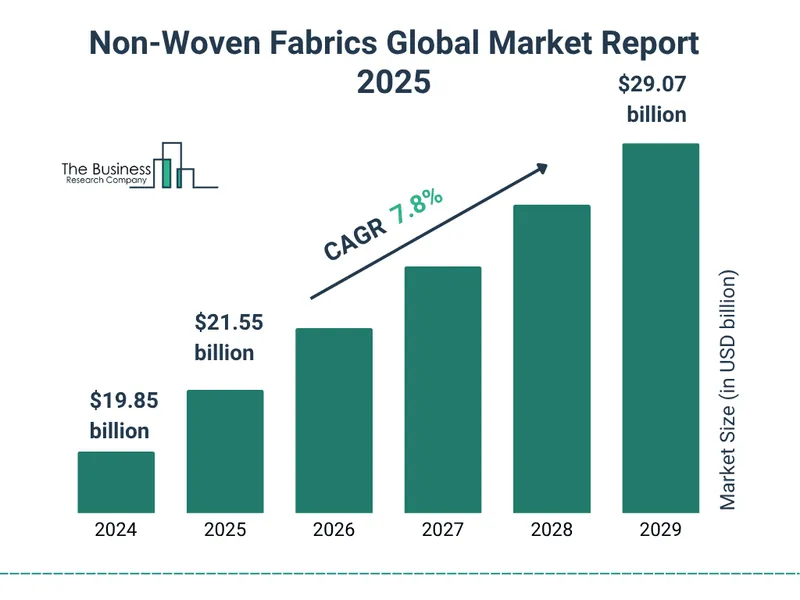
Figure 2: Global market trend in nonwoven sector
Role of The Bombay Textile Research Association (BTRA) in the field of nonwovens
What we do: BTRA is an old and established textile research association in India that offers testing, R&D, and technical services to the textile and nonwoven sectors.
Research & product development: There are multiple diversified projects are being executed by scientists of BTRA on functionalization of nonwoven fabrics such as flexible conductive polymeric material, in-situ synthesized nonwoven/aerogel fabric for thermal insulation, antibacterial and antiviral fabrics for medical application
Testing capability: BTRA's testing division provides a comprehensive range of tests for dyes, auxiliaries and finished textile products and meets international standards such as GOTS, OEKO-TEX and REACH where required. For nonwovens in particular BTRA have assisted design for development of canal liners, geotextiles, industrial filters and other nonwoven applications since the last two decades and offer troubleshooting and specification compliance testing to manufacturers.
Value to industry: The following are applications of BTRA by manufacturers: product performance testing (tensile, abrasion, filtration efficiency, hydrostatic head, permeability), chemical testing and conformance to standards, trouble-shooting of processes, and development assistance with new nonwoven constructions. Their accreditation and extensive history serve them well as a convenient partner for Indian nonwoven companies interested in achieving export or regulatory compliance
For manufacturers: invest in spunbond/meltblown lines if you serve medical/filtration or hygiene applications — emphasize quality control and testing collaboration (e.g., BTRA) up front.
For product developers: concentrate R&D on recyclable feedstocks and constructions; document compliance with standards (GOTS/OEKO-TEX/REACH) for export markets.
For regulators/industry bodies: support testing infrastructure (accreditation, faster turnaround) to reduce time-to-market for new nonwoven products.
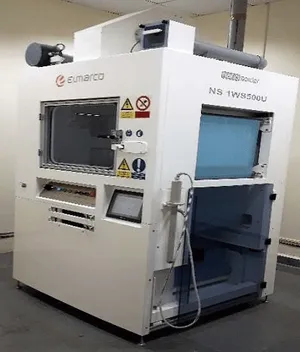
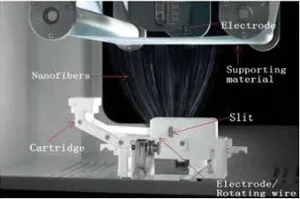
Figure 3. Nanofiber spinning pilot facility at BTRA
The nanofiber spinning machine at BTRA shown in Figure 3 is a needle less solution spinning system from ELMARCO. The electrodes in the machine are wire type. Maximum width of the deposition is 50cm. Using this machine, we can spin continuously roll to roll. paper, woven, nonwoven and knitted fabric can be used as substrate in the form of roll of 50cm wide.
Pilot scale product development at BTRA in past
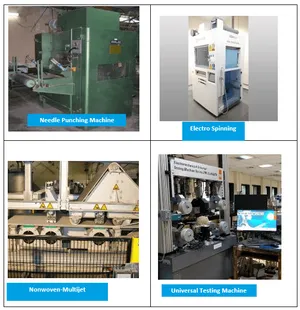
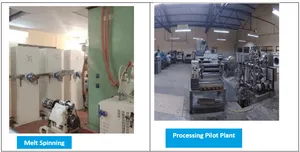
Development of different types of non-woven products such as industrial filters, geo-textiles, canal liners, waddies, blankets/carpets, etc. for specific applications. BTRA has developed different non-woven products at its modern pilot plant on request. Some of the products developed by BTRA are as follows:
- Needle punched non-woven using 100 % polyester fibre for the specific application of collecting the metals from seawater for Bhaba Atomic Research Centre, Trombay.
- Nursery bags from jute needle punched non-woven for PSG Technical Institute, Coimbatore.
- Banana/cotton blended needle punched non-woven fabric for the in-house project.
- Non-woven fabrics from Oxipan fibres (equivalent to carbon fibres) from IPCL, Baroda.
- Non-woven blankets from polypropylene waste fibres.
- Polyester needle punched non-woven printed blanket.
Conclusion
Recent trends in sustainability will drive major new product and process innovations in nonwovens. Also there is a huge scope for new developments in durable nonwovens may emerge as the next generation of technical textiles for many critical applications.
The future nonwovens will not be conventional, and will be different from nonwovens in use today. The future of nonwovens promises to be interesting and potentially very technical with multi functionality.
SNEHAL B DHAMDHERE
Head -Sales & Marketing
The Bombay Textile Research Association