Salem Integrated Textile Park Dyeing Unit Decision Triggers Demand for Long-Term Clarification
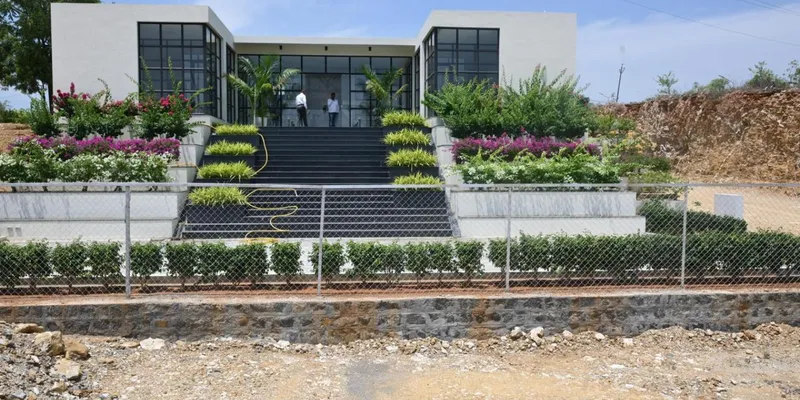
Residents and farmers seek clarity on the Tamil Nadu government's assurance that dyeing and processing units will not be established at the Integrated Textile Park in Jagir Ammapalayam.
Following the announcement by Salem District Collector K. Elambhavath that dyeing and processing units will not be permitted at the Integrated Textile Park, farmers and residents have called for further clarification on the government's decision.
The previous DMK government had identified 119 acres of land at Jahir Ammapalayam in Salem to establish an Integrated Textile Park at a cost of ₹880 crore. Under the original plan, dyeing units were to operate as the Salem Yarn Colouring Park (SYCP) alongside the Common Effluent Treatment Plant (CETP).
Concerned that the proposed colouring park could affect groundwater and agriculture in nearly 40 surrounding villages, farmers and residents had staged protests over the past year. As a result, work on the project was halted, with only the administrative office being completed.
On Friday, the District Collector announced that the Tamil Nadu government had issued a new Government Order (G.O.) stating that permission would not be granted for dyeing units in the park and that the land would be reserved exclusively for textile-related industries. The Collector also said that alternative land would be identified for dyeing units.
While many residents and farmers in villages around Jagir Ammapalayam welcomed the announcement, they also raised questions regarding its long-term implementation.
Social activist K.V. Suseendra Kumar, who had opposed the project since the beginning, questioned whether the government's position would remain unchanged in the future if textile companies operating in the park later sought permission to establish dyeing units.
He also stated that land in the locality is sold for around ₹3,000 per sq. ft., whereas the government had allotted the land at ₹210 per sq. ft. on a 99-year lease.
Mr. Kumar suggested that the proposed textile park should instead be shifted to Bhavani or Erode, where more textile manufacturing units are already functioning. He further said that the land should be handed back to the Department of Mines and that the State government should sell the available magnesite reserves to generate revenue.
Salem Neer Aathara Pathukappu Iyakkam coordinator S.K. Moorthy said that although there were certain doubts regarding the government's announcement, the decision should be welcomed. He noted that resolutions opposing the project had been passed in gram sabha meetings held across 13 villages surrounding the proposed park.
Mr. Moorthy also stated that the land had been allotted at a comparatively low cost and questioned the response received to RTI applications filed on the issue. He further asked what action would be taken if textile business owners sought approval for dyeing units after five or ten years, adding that discussions would be held with villagers and the Salem West Constituency MLA to determine the future course of action.