SAITEX 2024 Report: Decarbonization & Circular Progress
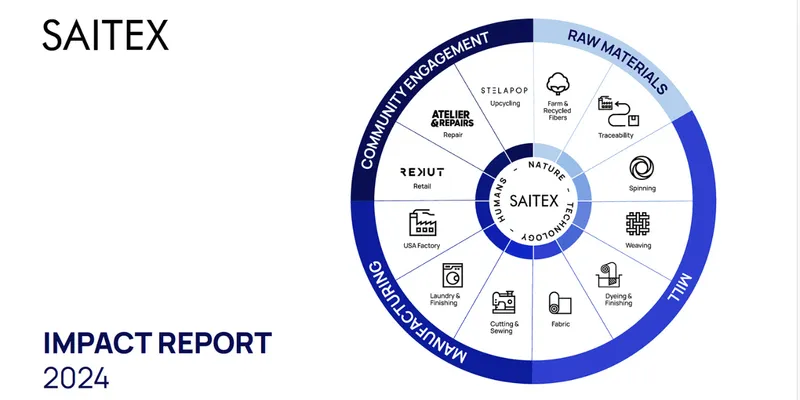
SAITEX, the Vietnam- and U.S.-based sustainable apparel and denim manufacturer, has released its 2024 Impact Report, highlighting major progress in scaling net-zero operations, renewable energy, water recycling, and social programs. Despite production growth of 25% in apparel manufacturing and 124% at its denim mill, the company reduced carbon emissions per garment and per meter of fabric by 18% and 16% respectively.
“Our mission has never been about incremental change, but about systemic transformation,” said Sanjeev Bahl, Founder and CEO of SAITEX. “Our 2024 results prove scale and sustainability are not in conflict. We’ve shown that growth can align with measurable reductions in carbon, water, and waste. As a vertically integrated ecosystem, we remain committed to sharing our progress transparently.”
Since its founding in 2001, SAITEX — often called the “cleanest denim factory in the world” — has evolved from an apparel manufacturer into an ecosystem that includes operations in Vietnam and the U.S., a denim mill with spinning, the STELAPOP upcycling lab, REKUT workforce inclusion program, and Atelier & Repairs. Together, these initiatives redefine how denim is made and reused.
Impact Report 2024 Highlights:
- Apparel Manufacturing (Vietnam): Output rose 25% with emissions cut by 18% per garment; planted 8,647 trees in 2024 with Gaia Nature Conservation; water recycling maintained at 98%.
- Denim Mill (Vietnam): Output surged 124% with 18% emission cuts per meter; achieved 70% renewable energy mix; gained bluesign® System Partner status.
- Human & Community Impact: Expanded outreach programs by 60%, reaching 13,245 people; continued inclusion of disabled workers via REKUT; launched employee-led Gaia sustainability initiatives.
- Traceability & Data: Advanced LCAs with Made2Flow; expanded digital product passports for partner brands.
Next Steps & Goals:
- Transition to 100% renewable energy by 2027.
- Introduce closed-loop wastewater systems at the mill by 2025.
- Scale STELAPOP circular materials and achieve net-zero by 2030.