RLF Limited

1. Introduction
RLF Limited, established in 1979, presents a compelling case study of a traditional manufacturing entity attempting to navigate a structural shift. While the Indian embroidery sector continues to expand at a CAGR of 8–10%, the 2024–2025 fiscal year represents a pivotal—and difficult—transition for RLF. This report evaluates the company's movement from its core computerized embroidery business toward a diversified "Sports Academy" model, analyzing whether its asset-heavy foundation can support its high-gestation strategic pivots.
2. Company Overview
A company’s financial health cannot be interpreted in a vacuum; it is rooted in its operational identity. Entering its 45th year, RLF Limited maintains a dual-vertical business model. Its textile operations, centered in Gurugram, utilize four computerized embroidery machines to provide value-added services within the garment supply chain.
However, there is a systematic de-emphasis on the legacy manufacturing industry. A new Sports Academy vertical that focuses on developing athletic talent is receiving more and more funding from management. This change represents an effort to move toward a service-based revenue model in order to protect against the cyclicality of textiles.
3. Promoter / Founder Introduction
Leadership pedigree is often a lead indicator of strategic rigor. Managing Director and CFO Aditya Khanna brings a formidable academic background to the firm, holding an MBA from Oxford and a B.Sc. in Accounting and Finance from the London School of Economics (LSE). Alongside Non-Executive Director Ashish Khanna, the leadership has championed a "Green Initiative" focused on paperless compliance. However, as we look closer at the financial disclosures, a curious tension emerges between this high-level expertise and the fundamental accounting discrepancies flagged by auditors, particularly regarding the omission of interest accruals.
4. Financial Statement Analysis
Financial statements are rarely just a ledger of facts; they are a narrative of survival. For the company, the numbers tell a story of severe operational contraction.
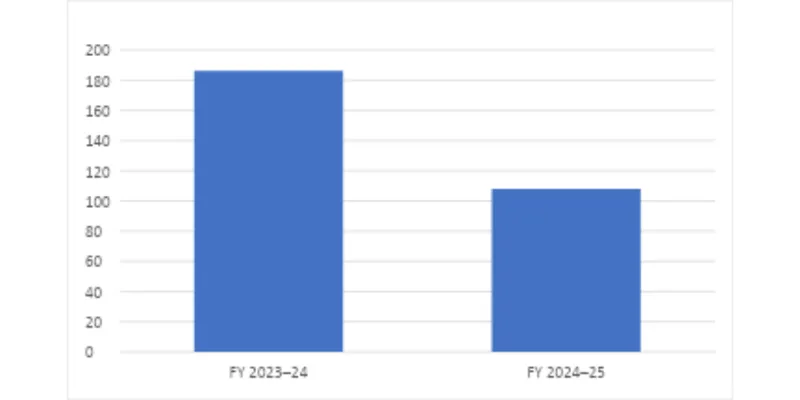
- Income Statement: Revenue from operations collapsed by 42%, falling from ₹186.36 Lakhs to ₹108.01 Lakhs. This decline flipped the previous year's marginal profit of ₹4.46 Lakhs into a net loss of ₹22.82 Lakhs.
- Balance Sheet: The company remains "asset-rich but cash-poor." Property, Plant, and Equipment is dominated by revalued land worth ₹2,610.89 Lakhs. Crucially, Capital Work-in-Progress (CWIP) stands at ₹323.09 Lakhs, representing the significant capital locked into the "Unique Turf" and infrastructure for the new Sports Academy.
- Audit Red Flags: A rigorous analysis reveals that the reported loss is likely understated. Per Notes 42 and 43, the company failed to book interest income or expenses on loans despite agreements specifying a 9.25% rate. Additionally, Point 17 of the Auditor's Report notes unpaid statutory liabilities, including TDS (₹6.59 Lakhs) and Provident Fund (₹0.80 Lakhs).
Three-Year Financial Summary
Metric | FY 2024–25 | FY 2023–24 | FY 2022–23 |
Revenue from Operations | 108.01 | 186.36 | N/A |
Total Revenue | 154.85 | 236.53 | N/A |
Net Profit / (Loss) | (22.82) | 4.46 | N/A |
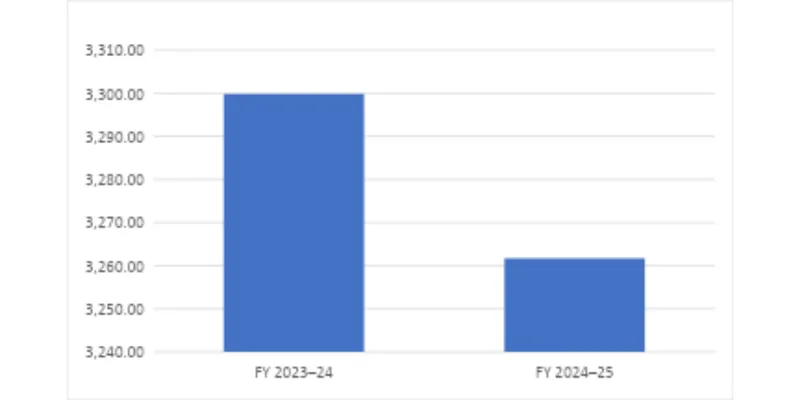
Total Assets | 3,261.66 | 3,299.87 | N/A |
Equity Share Capital | 980.17 | 980.08 | N/A |
Key Financial Ratios
Ratio | 2025 | 2024 | Impact/Interpretation |
Current Ratio | 0.72 | 0.86 | Technical insolvency risk; current liabilities exceed assets by ₹117.06 Lakhs. |
Debt-Equity | 0.13 | 0.13 | Stable leverage; relies heavily on related-party loans (SIPL Textile/United Leasing). |
ROE | -0.83% | 0.16% | Shareholder equity is actively eroding. |
Net Profit Margin | -21% | 2% | Deep operational strain; manufacturing volume failed to cover fixed costs. |
5. Key Insights & Interpretation
As a student-practitioner, it is interesting to note the contrast between RLF's low debt-to-equity ratio (0.13) and its liquidity crisis. The company’s primary strength is its freehold land, which acts as a safety net for creditors. However, the weaknesses are systemic. The current ratio of 0.72 and the excess of current liabilities (₹117.06 Lakhs) suggest the firm is operating on the edge of technical insolvency.
The pivot to sports (Pickleball and turf modules) is reflected in the high CWIP, but this sector has a long gestation period. A significant risk factor is the reliance on related-party transactions and the monetization of assets as a survival strategy. One must ask why a leadership team with LSE/Oxford pedigree overlooked the basic accounting of interest income and statutory dues. This suggests that management's focus has shifted entirely to the "Sports Academy" future, perhaps at the expense of current regulatory and operational rigor.
6. Conclusion
My final verdict on RLF Limited is nuanced. While FY 2024–2025 was a loss-making year, the company is not in a terminal state. It is a "turnaround story" in the making, but one that currently carries the hallmarks of a cautionary tale. The balance sheet's land value provides a long runway, and the strategy to monetize assets offers a clear path to liquidity. However, until management addresses the accounting "red flags" and moves the Sports Academy from "work-in-progress" to "revenue-generating," investors should remain cautious. The pedigree of leadership suggests the vision is there; the financial statements suggest the execution is currently strained.
Source: RLF Limited 45th Annual Report (FY 2024-2025).