Recycled Polyester Fabric: From Plastic Bottles to Your Wardrobe
Tanvi Munjal
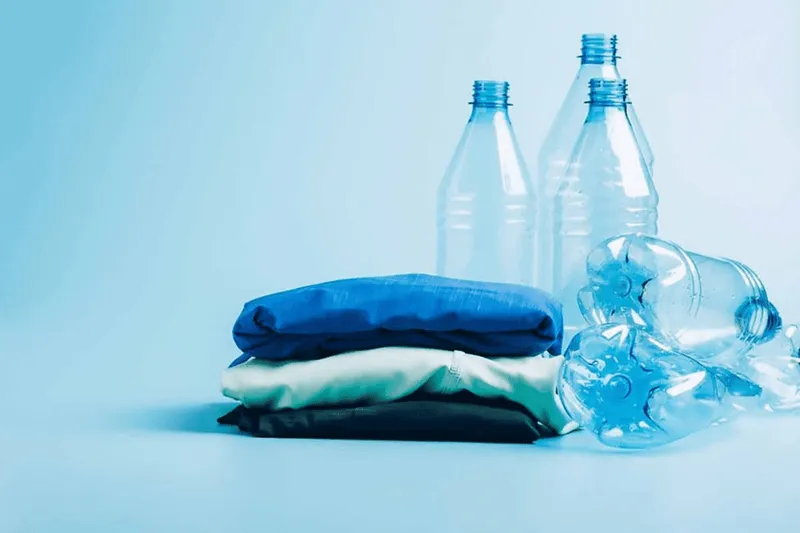
Every day, millions of plastic bottles end up in trash bins around the world. But what if these bottles could get a second life as the shirt you're wearing or the cushion on your sofa? That's exactly what's happening with recycled polyester fabric, and it's changing how the textile industry thinks about making clothes.
What Is Recycled Polyester?
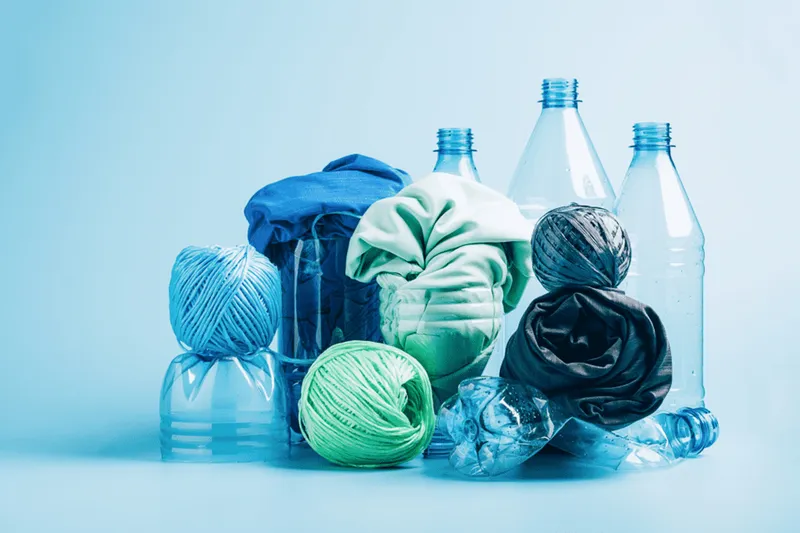
Recycled polyester (often rPET) is a polyester fibre made using recycled PET, for example, plastic bottles, industrial polyester waste or textile waste, instead of making fibre solely from new, virgin petroleum-derived raw materials. The recycled material is collected, cleaned, processed and then spun into new fibre and fabric. Think about it: approximately 49% of all clothing worldwide contains polyester. That's nearly half of everything hanging in closets and stores. But here's the problem: regular polyester doesn't break down naturally, and currently only 1% of old clothes get recycled into new ones. The rest? About 92 million tons of textile waste each year, heading to landfills or incinerators.
The Money Side: Market Size and Growth
The recycled polyester business is booming. The global market was worth about $15.5 billion in 2024, and experts predict it'll nearly double to $26.18 billion by 2030. That's growing at roughly 9.25% every year, faster than most textile segments. (Source: Recycled Polyester Market (2025 - 2030)) Why the rush? Big brands are making bold promises. Companies like Patagonia, Adidas, H&M, and Nike are switching to recycled materials. PUMA wants 30% of its polyester from recycled sources by 2030. Even fast-fashion giant Shein is investing in better recycling technology. When industry giants move, the whole market follows. Asia Pacific leads the charge, holding nearly 48% of the market in 2024. Countries like China, India, and Vietnam are both making and using the most recycled polyester. (Source: Towards Chem & Materials: Recycled Polyester Market)
How Plastic Bottles Become Fabric: The Production Process
The journey from trash to textile happens in several clear steps: Step 1: Collection and Sorting: The process begins at recycling centres, where post-consumer PET bottles (like water and soda bottles) are collected and baled. Roughly 99% of recycled polyester feedstock comes from these bottles. The bales are opened, and bottles are sorted using both manual and optical systems to remove caps, labels, metals, PVC, and coloured plastics. Step 2: Cleaning and Shredding: After sorting, bottles are washed in stages: pre-wash, hot-wash (around 2% sodium hydroxide), and rinse, to remove dirt, labels, and glue. The clean bottles are then shredded into PET flakes, usually 8–12 mm in size, which form the base raw material for recycled polyester. Step 3: Drying and Melting: Dried PET flakes go into a twin-screw extruder, heated to around 260–280°C. Inside, the flakes melt and are filtered through fine metal screens to remove impurities. This molten polymer is either pelletized for storage or directly sent to spinning units. Step 4: Spinning into Fibre: The filtered molten polymer is pumped through a spinneret with hundreds of fine holes, forming continuous filaments. As the filaments emerge, they are rapidly cooled by air and solidified. This melt-spinning process is continuous and produces long, thin fibres ready for drawing and texturing. Step 5: Creating Yarn: The solidified fibres get stretched and twisted to increase strength. Industrial spinning machines turn these fibres into yarn. Some yarns stay pure polyester; others get blended with cotton or other materials to create specific textures. Step 6: Making Fabric: Finally, the yarn goes to weaving or knitting machines. These create the actual fabric. Additional treatments (dyeing, printing, or special finishes) might be added depending on what the final product needs to be.
Two Main Recycling Methods
The industry uses two approaches: Mechanical Recycling is the traditional and most common route. It’s a physical process: collecting, cleaning, melting, and reshaping plastic into new fibres. It’s cheaper and simpler but slightly reduces fibre quality each time. To keep fabrics strong, manufacturers often mix in a bit of virgin polyester. Chemical Recycling is a newer technology. Instead of just melting, it breaks polyester down to its basic molecules (monomers), purifies them, and rebuilds them into polyester that’s as good as new. Some firms are developing catalytic or hydrothermal PET recycling processes. However, this method is still expensive and not yet widely used on a large scale.
Who's Making It: Leading Manufacturers
- Indorama Ventures
- Far Eastern New Century
- Unifi Inc.
- Reliance Industries Limited
- Sinopec Yizheng Chemical Fibre
- Alpek Polyester
- Zhejiang Jiaren New Materials Co., Ltd.
- Polyfibre Industries Pvt. Ltd.
- Bottloop
- Margasa Group
(Source: Towards Chem & Materials: Recycled Polyester Market)
Where It's Used
Recycled polyester isn't just for eco-warriors. It's everywhere. Recycled polyester is used across multiple applications. Apparel remains a major end-use segment (often cited as the largest or one of the largest). Other applications include home textiles (curtains, upholstery, cushions), automotive interiors and industrial uses (e.g., geotextiles, filters).
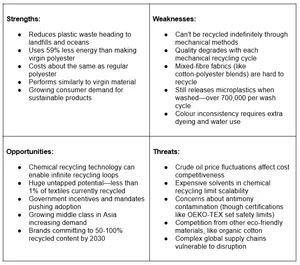
The Good, The Bad, and The Challenges: SWOT Analysis
Current Trends and What's Next
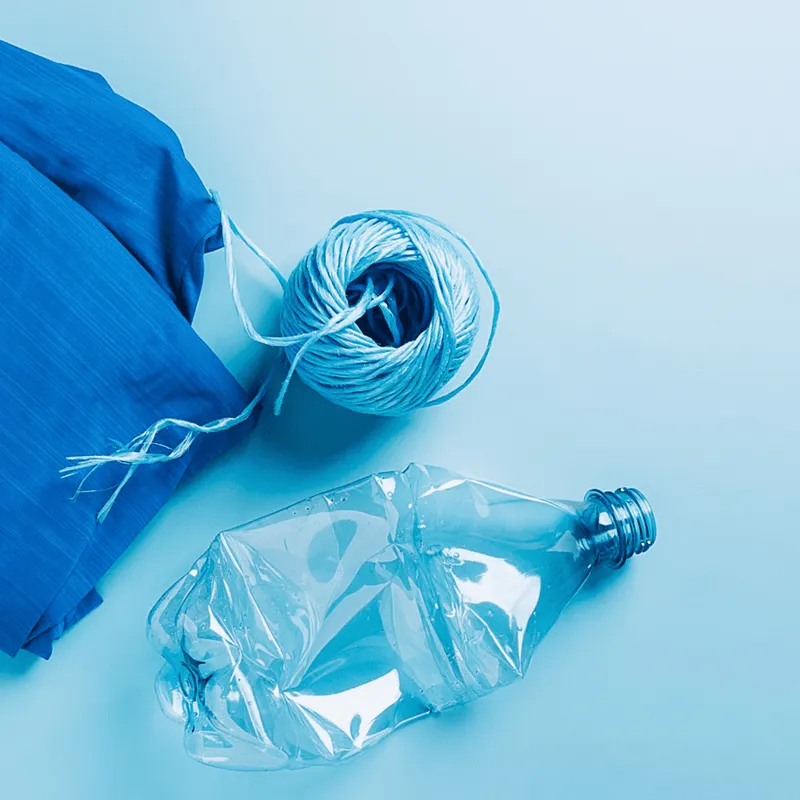
The industry is evolving fast. Here's what's happening now:
- Fibre-to-Fibre Recycling is the hot topic. Instead of just bottles, companies want to recycle old clothes into new clothes. It's harder as mixed materials and dyes complicate things, but innovators are cracking the code. Syre is building a plant in North Carolina capable of 10,000 tons annually.
- Certification Matters: Brands want proof. Global Recycled Standard (GRS) and OEKO-TEX certifications verify that products are genuinely recycled and safe.
- Blending Innovation: Mixing recycled polyester with other materials, such as CiCLO-enhanced polyester that biodegrades faster, helps address the microplastic problem.
- Government Push: India's PLI scheme offers incentives for synthetic fibre investments. European countries mandate minimum recycled content in products.
The Real Impact
Five plastic bottles make enough fibre for one t-shirt. One recycling plant can divert millions of bottles from landfills yearly. The math is compelling, and the textile industry is paying attention. But it's not perfect. The microplastic issue remains real; filter washing bags can help. Quality consistency challenges persist; however, better sorting and chemical recycling can help address this issue. And truly circular fashion needs better infrastructure for collecting and processing old clothes, not just bottles.
What This Means for the Industry
The shift toward recycled polyester isn't just about being green; it's smart business. With crude oil prices unpredictable and consumers demanding sustainability, recycled materials offer stability. The technology exists. The market is growing. Major brands are committed. For textile manufacturers, the message is clear: recycled polyester isn't the future, it's the present. Companies investing in recycling capacity, forming partnerships across the value chain, and obtaining certifications are positioning themselves for long-term success. The journey from plastic bottle to fabric is no longer fiction; it's becoming standard. And as technology improves, especially chemical recycling, we're moving closer to truly circular fashion, where nothing goes to waste and everything has value.