Recycled Fibers Market to Reach USD 52.74 Billion by 2034
The global push for sustainability has significantly accelerated the adoption of recycled fibers across multiple industries. As eco-conscious manufacturing becomes a global priority, recycled fibers are gaining prominence for their ability to reduce landfill waste, cut carbon emissions, and promote circular economy practices.
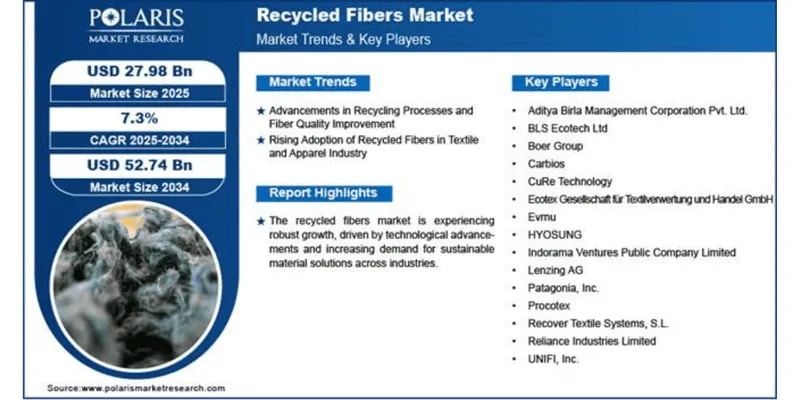
According to Polaris Market Research, the recycled fibers market was valued at USD 26.12 billion in 2024 and is projected to grow at a CAGR of 7.3%, reaching USD 52.74 billion by 2034.
What Are Recycled Fibers?
Recycled fibers are regenerated materials processed from used or discarded textiles, plastic bottles, packaging waste, or industrial scrap. These fibers include recycled polyester, recycled cotton, recycled wool, and recycled cellulose fibers. The process involves collecting, cleaning, and converting the waste into reusable materials that retain strength and flexibility—making them ideal for textile manufacturing, packaging, and construction applications.
Key Types of Recycled Fibers:
- Recycled Polyester:
Made from PET bottles and textile waste, this fiber is used in activewear, upholstery, and packaging due to its durability and reduced environmental impact. - Recycled Cotton:
Sourced from pre-consumer scraps or worn garments, it significantly reduces water usage and is often blended with virgin fibers to maintain quality. - Recycled Cellulose & Paper Fibers:
Derived from newspapers, cartons, and office paper, they are used in tissue products, packaging, and molded fiber trays.
Market Growth Drivers:
- Circular Economy Adoption:
Brands are increasingly integrating recycled materials to align with circular economy principles, minimizing reliance on virgin resources. - Eco-Conscious Consumer Trends:
Millennials and Gen Z consumers are actively seeking sustainable fashion and eco-friendly home products, prompting brands to adopt recycled fibers. - Environmental Regulations:
Global policies are pushing industries to reduce their carbon footprint, encouraging the shift to recycled alternatives.
Emerging Trends and Innovations:
- Textile-to-Textile Recycling:
Companies are adopting chemical recycling methods to regenerate new fibers from old garments, making recycling truly circular. - Closed-Loop Production Systems:
Manufacturers are developing systems to reclaim and reuse internal waste, reducing raw material dependency. - Digital Traceability:
Tools like blockchain and RFID tagging are being used to verify the source and sustainability of recycled materials—boosting consumer trust.
Conclusion:
The recycled fibers industry is playing a vital role in shaping a sustainable future. From textiles to packaging, the demand for eco-friendly materials is growing rapidly. Supported by innovation, regulatory compliance, and a shift in consumer behavior, recycled fibers are no longer just an alternative—they are the future of sustainable manufacturing.
For detailed market insights, visit:
Polaris Market Research Report