Ready-to-Wear vs Custom Tailoring: Where Is the Market Headed?
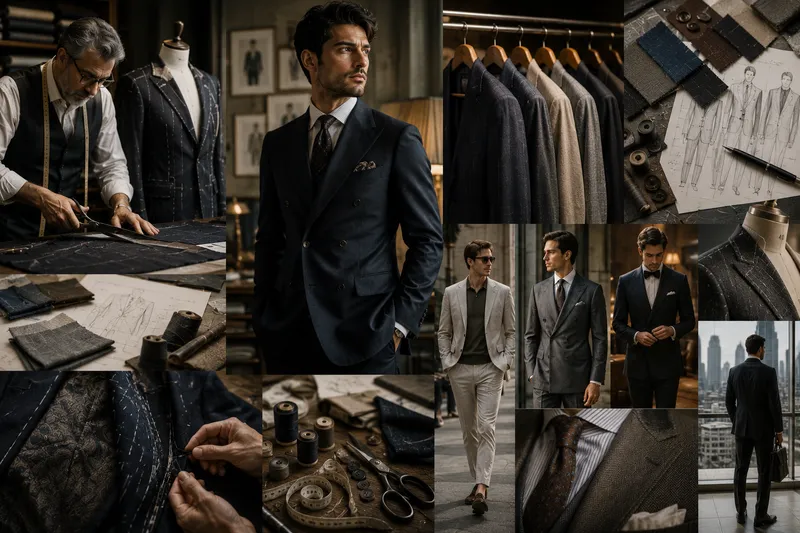
Part 3 of the Series: The Evolving World of Men’s Tailored Wear
-300x338.webp?2026-06-02T20:25:35.834Z)
Vivek Mehta
CEO and Managing Director,
TextilesBazaar.com
The menswear industry has long viewed ready-to-wear and custom tailoring as competing formats. One represented scale, speed, and accessibility; the other symbolised craftsmanship, individuality, and superior fit. For many years, the market operated on this binary logic.
Today, that distinction is becoming less rigid. The modern consumer is not choosing between ready- to-wear and custom tailoring in absolute terms. Instead, he is selecting different solutions for different occasions, lifestyles, and budgets. As a result, the future of menswear is unlikely to be defined by one format replacing the other. It is more likely to be shaped by the coexistence of ready- to-wear (RTW), made-to-measure (MTM), and selective bespoke experiences, each serving distinct needs.
For mills, brands, retailers, and manufacturers, understanding this shift is essential to building relevant and profitable business models.
The Growth of Ready-to-Wear Suits and Jackets
Ready-to-wear has undergone a remarkable transformation over the past two decades. What was once seen as a compromise option has evolved into a sophisticated category offering strong design, better fits, improved fabrics, and immediate accessibility.
Several factors have accelerated the growth of RTW suits and jackets.
Urban lifestyles have become faster and more convenience-driven. Consumers increasingly prefer products that are available instantly, without the waiting period associated with tailoring. Business travel, destination events, and time-sensitive purchases have further strengthened demand for ready solutions.
At the same time, brands have significantly improved pattern engineering and size grading. Modern RTW collections are better adapted to diverse body types than in the past. Stretch fabrics, softer constructions, lighter canvassing, and refined silhouettes have also enhanced comfort and wearability.
Another important shift is the growing popularity of separates. Consumers are no longer buying only formal suits; they are purchasing jackets, trousers, and versatile pieces that can be styled across occasions. This has expanded the role of RTW beyond traditional formalwear into business casual and smart luxury wardrobes.
For younger consumers entering the category, RTW often becomes the first step into tailored clothing.
Why Custom Tailoring Still Holds Emotional Value
Despite the growth of RTW, custom tailoring continues to hold powerful relevance. Its value is not only functional but emotional.
A tailored garment offers a sense of ownership that off-the-rack clothing rarely replicates. The process of selecting fabric, choosing details, refining fit, and participating in creation builds a stronger connection between the customer and the final product.
Custom tailoring also remains highly relevant for customers with non-standard body proportions, posture variations, or fit frustrations that are difficult to address through standard sizing. For many, the experience of finally wearing a garment that feels truly personal creates lasting loyalty.
In markets such as India, custom tailoring carries additional cultural significance. Weddings, celebrations, milestone occasions, and family ceremonies often involve garments that are expected to feel special and individual. Tailoring, therefore, retains an aspirational and emotional role beyond pure practicality.
Globally, too, many professionals and enthusiasts continue to value tailoring as a marker of identity, refinement, and self-expression.
Convenience vs Craftsmanship: A False Choice
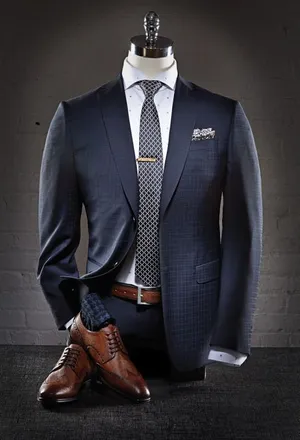
The industry often frames RTW and tailoring as a choice between convenience and craftsmanship. In reality, this contrast is increasingly outdated.
Consumers today do not reject craftsmanship; they reject inconvenience. Likewise, they do not reject ready-to-wear; they reject poor fit or generic experiences.
This creates a clear opportunity. Brands that can combine tailoring principles with modern convenience are likely to win. A customer may appreciate hand-finished details, premium construction, and better fit, provided the process is efficient, transparent, and timely.
The future, therefore, lies less in defending old categories and more in redesigning them around customer realities.
The Role of Fit Technologies
Fit has historically been the greatest advantage of custom tailoring and the greatest challenge of RTW. Technology is now narrowing that gap.
Digital measurement systems, body scanning tools, mobile measurement apps, and data-driven fit algorithms are helping brands improve both RTW and MTM models. Customers can increasingly identify their ideal size, preferred silhouette, and alteration needs with greater accuracy.
For RTW brands, this means lower return rates, better customer confidence, and improved repeat purchases. For MTM businesses, technology enables faster onboarding, more accurate pattern adjustments, and scalable personalisation.
In the coming years, fit technology is likely to become a defining competitive advantage. The brand that best understands body data and translates it into wearable comfort will command strong loyalty.
Margin Structures and Scalability
From a commercial perspective, RTW and custom tailoring operate on very different economics.
Ready-to-wear offers scalability. Production can be planned in volume, systems can be standardised, and retail operations can be replicated across multiple locations. Strong inventory management and brand power can create significant margin leverage.
However, RTW also carries inventory risk. Unsold stock, markdowns, size imbalance, and seasonal pressure can erode profitability if forecasting is weak.
Custom tailoring, especially MTM, often offers healthier gross margins on individual orders because products are made against demand. Inventory exposure is lower, and premium pricing is easier to justify through personalisation.
The challenge lies in operational complexity. Measurement capture, production coordination, fit control, and customer service require disciplined systems. Without structure, scalability becomes difficult.
This is why many successful businesses are moving toward blended models using RTW for volume and traffic, while using MTM for margin enhancement and loyalty.
The Future Coexistence of RTW and MTM
The next phase of menswear is unlikely to be winner-takes-all. Instead, RTW and MTM are expected to coexist in complementary ways.
RTW will remain strong for:
- immediate purchases
- entry-level tailored wardrobes
- trend-led seasonal products
- separates and everyday smart dressing
MTM will grow in:
- fit-conscious consumers
- premium occasions
- repeat customers seeking personalisation
- professionals wanting wardrobe consistency
Many brands are already integrating both formats under one roof. A customer may buy an RTW jacket today, place an MTM trouser order tomorrow, and eventually graduate to a fully personalised wardrobe relationship.
This layered engagement creates stronger lifetime value than relying on a single format.
What This Means for Indian Industry Players
For Indian mills, garmenters, retailers, and brands, the evolving landscape presents clear opportunities.
Mills should develop fabrics suitable for both RTW and MTM applications, combining appearance, consistency, comfort, and processing reliability.
Retailers should consider hybrid models where RTW drives footfall while customisation builds loyalty and profitability.
Brands should invest in fit systems, sharper merchandising, and omnichannel experiences that allow customers to move seamlessly between ready products and custom services.
Manufacturers with flexible capacities can become strong partners to domestic and international brands looking for small-batch RTW, MTM programs, or capsule tailoring collections.
India’s tailoring culture, combined with its manufacturing depth, positions it well to serve both sides of the market.
Conclusion: The Future Is Choice, Not Competition
The debate between ready-to-wear and custom tailoring is no longer about replacement. It is about relevance.
Consumers want different solutions at different moments: speed when time matters, personalisation when identity matters, and value when practicality matters. The brands that understand this behaviour and build flexible models around it will shape the future of tailored menswear.
Ready-to-wear will continue to grow. Custom tailoring will continue to matter. Between them lies the most promising space of all: intelligent hybrid models that combine convenience with craftsmanship.
That is where the market is headed.
Series Introduction Note
This article is the third in a 12-part editorial series exploring the evolving world of men’s tailored wear. The series examines domestic and international markets, ready-to-wear and custom models, fabric innovation, quality benchmarks, trend forecasting, sustainability, technology, branding, and India’s growing role in the global tailoring ecosystem.