Re-START Alliance Unveils Cluster Collective, Its First Flagship Project in India
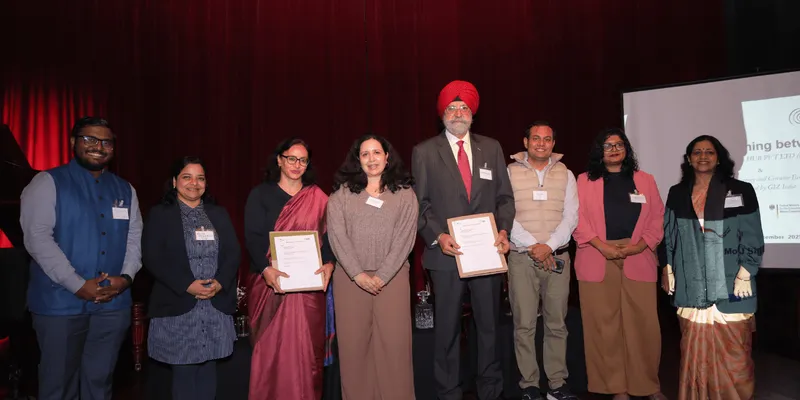
A four-year, cluster-led initiative to scale textile-to-textile recycling, infrastructure, and circular market demand\
The Re-START Alliance has officially launched Cluster Collective, its first flagship programme in India, marking a major step toward unlocking the economic and environmental potential of textile-to-textile (T2T) recycling. The four-year initiative will be led and implemented by founding partner IDH, using a cluster-based model to strengthen recycling infrastructure, formalise labour, and improve coordination across India’s fragmented textile ecosystem.
Designed to operate at the heart of India’s industrial textile hubs, the programme will initially focus on the Ludhiana and Indore clusters, with plans to expand to two additional clusters over time. From the outset, Cluster Collective has been structured to be socially inclusive and aligned with climate targets, responding to both domestic sustainability priorities and rising global regulatory pressure.
Building Infrastructure and Collaboration at Cluster Level
At its core, Cluster Collective aims to scale critical infrastructure, particularly advanced sorting and recycling technologies, while improving feedstock flows and enabling efficient waste collection, aggregation, and processing. By concentrating efforts within defined industrial clusters, the programme seeks to unlock economies of scale, shared investment opportunities, and stronger collaboration among aggregators, recyclers, manufacturers, and brands.
India currently generates approximately 7.8 million tonnes of textile waste annually, placing it among the world’s largest contributors to textile waste. With regulatory initiatives increasingly demanding compliant and traceable recycled materials, the programme positions textile waste not as a liability, but as a significant economic opportunity.
Blended Finance and Market Integration at the Core
Cluster Collective brings together three interlinked pillars. The first is a jurisdiction-based collaborative model designed to create long-term value for all stakeholders within each cluster. The second is a blended finance technical assistance (TA) fund, managed by Navaka Social Business Fund, which plans to deploy €13 million through grants, concessional loans, and patient capital. These funds will support infrastructure development, traceability technology integration, and the strengthening of local entrepreneurial ecosystems.
The third pillar focuses on deep market integration, aimed at accelerating demand for circular textiles. This includes early market linkage through Letters of Interest (LOIs) from brands and recyclers, co-development of circular material specifications, and the establishment of offtake agreements to ensure long-term commercial viability.
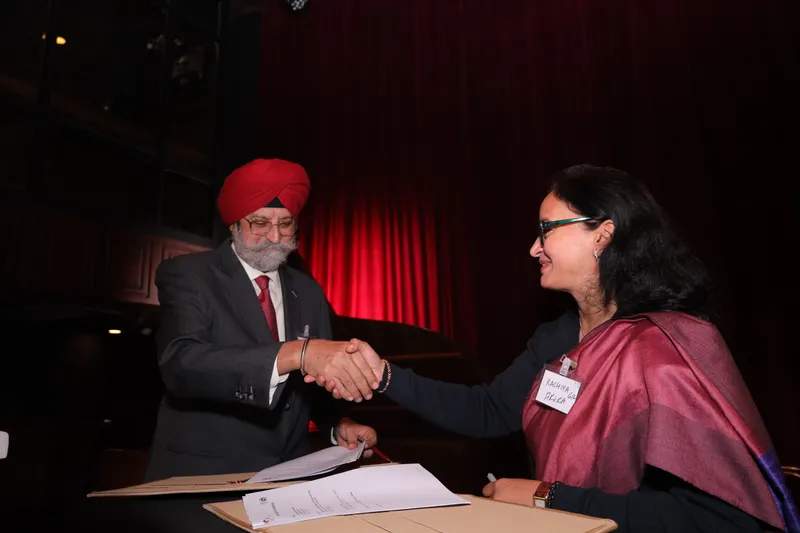
Industry Perspective on Organising the Textile Waste Ecosystem
Commenting on the launch, Jagjeet Singh Kandal, Country Director, IDH, said:
“Circular textiles have significant economic potential in India. However, one of the biggest challenges to overcome is that India’s textile ecosystem is fragmented, which has led to a lack of coordination and unrealised potential. That’s why we are launching the Cluster Collective programme, which aims to focus on organising the textile waste ecosystem through a cluster-based model, in a way that is socially inclusive and aligned with climate targets.”
He further noted:
“Cluster approaches are already proven and widely used in other sectors. By focusing on existing textile hubs that are already processing and producing, this approach will connect aggregators, recyclers and manufacturers in a coordinated and structured manner and in a way that creates long-term value for all stakeholders. As a result, clusters will be able to benefit from shared infrastructure, shared investment opportunities and market linkages to accelerate scale. Moreover, those sourcing in the region will benefit from improved traceability, access to a fully connected supply chain and access to collective demand for recycled textiles.”
A Milestone for Re-START’s Circular Textile Ambition
Re-START is a textile recovery alliance convened by Laudes Foundation, with founding partners Canopy, Fashion for Good, and IDH. While the alliance has so far focused on convening and aligning India’s textile recycling ecosystem to reduce duplication and fragmentation, Cluster Collective marks its first official flagship project.
The programme will play a critical role in supporting Re-START’s ambition to bring 1 million tonnes of additional recycled fibres back into textile supply chains. Additional projects are expected to be launched over the next 12 months through the alliance’s founding partners.
Current partners of the Cluster Collective Programme include Deutsche Gesellschaft für Internationale Zusammenarbeit (GIZ) GmbH in India, operating under the EU–India Resource Efficiency and Circular Economy Initiative.