Punjab Cotton Seed Subsidy Scheme Sees Lower Farmer Participation Amid Pest and Weather Challenges
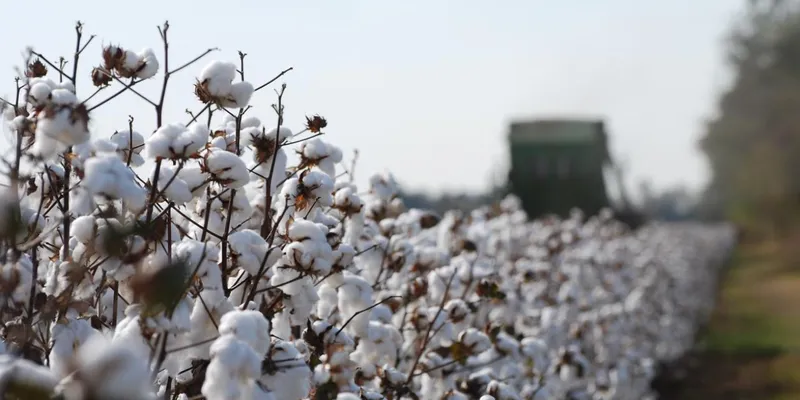
Registrations decline 63% as pest attacks, untimely rainfall and irrigation issues continue to impact cotton cultivation across Punjab's cotton belt.
The Punjab government's initiative to encourage cotton cultivation by offering a 33% subsidy on certified cotton seeds has recorded a lower response from farmers this year, with enrolments dropping substantially compared to 2025.
According to the Punjab Agriculture Department, 19,000 farmers have registered under the scheme this year, compared with 52,000 in 2025, representing a 63% decline. Officials attribute the reduced participation primarily to repeated pest attacks and unfavourable weather conditions that have affected cotton cultivation since 2021.
The subsidy programme, introduced in 2023, provides a 33% subsidy on certified BT cotton hybrids and desi cotton seed varieties recommended by Punjab Agricultural University (PAU). The financial assistance is available for cultivation on up to 5 acres per farmer.
Despite entering its fourth year, the scheme has not significantly increased cotton cultivation in Punjab's south Malwa region, where cotton was once considered a major crop for the semi-arid districts. Cotton is generally sown in April and harvested by October.
Charanjeet Singh, Deputy Director (Cotton) in the Punjab Agriculture Department, said that, according to updated figures, cotton has been sown on 80,000 hectares this year, compared with 1.19 lakh hectares during the previous year.
He added that untimely rainfall over the past month is expected to reduce the cultivated area further.
“Field inputs for cotton cultivation reveal a discouraging picture. Not only has the acreage gone down, the number of farmers growing crops has also decreased,” said Singh.
According to Singh, several parts of the cotton-growing region experienced rainfall soon after sowing in April, resulting in the formation of "krand", a hard soil crust that prevented cotton seedlings from emerging properly.
“Such a situation causes plant mortality and farmers are unlikely to resow due to the higher cost input after the recommended sowing window. Field reports show inadequate availability of canal-based water supply also discouraged farmers from sowing cotton. During the sowing period, the canal water was delayed due to cleaning operations. Breaches in minor irrigation channels in Bathinda, Mansa and Muktsar also affected the timely availability of canal water,” Singh added.
During a visit to Bathinda on Friday, Punjab Agriculture Minister Gurmeet Singh Khudian said the department had not sufficiently promoted the desi cotton variety PBD88.
“Developed and recommended by PAU, PBD88 could have been a breather for this agriculture belt, which has seen a decline in cotton area. Besides being resistant to several pest attacks, the new variety is less labour-intensive and gives a high yield,” he said.
Pest-Resistant Cotton Variety Under Evaluation
Experts indicated that cotton acreage may improve only after the next generation of pink bollworm-resistant (PBW) genetically modified (GM) cotton becomes commercially available.
A scientist at Punjab Agricultural University (PAU) said:
“Various Indian institutes, including PAU, are undertaking trials for Bollgard-III on behalf of the Genetic Engineering Approval Committee, a central agency. The central government will take a final call for commercial availability of the hybrid after evaluating the outcomes of the trials.”