PolyU Advances Human-Safe Magnetorheological Fibres for Smart Textile Applications
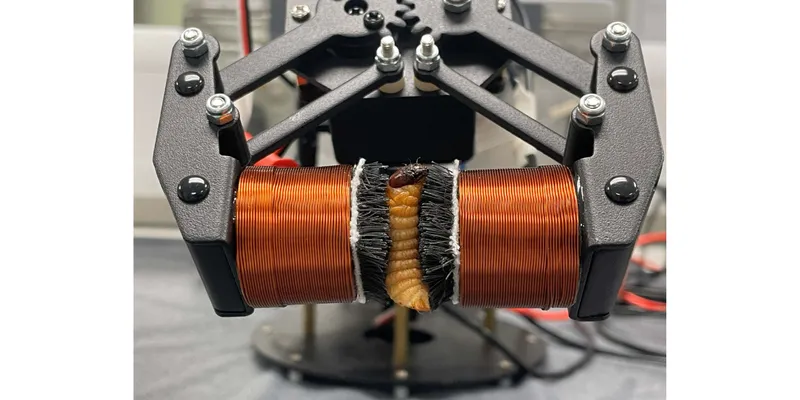
Researchers at The Hong Kong Polytechnic University have developed soft magnetorheological textile fibres that respond to low-strength, human-safe magnetic fields, opening new possibilities for wearable technology, soft robotics and immersive haptic systems.
A research team from The Hong Kong Polytechnic University (PolyU) has reported a major advance in smart material engineering with the development of soft magnetorheological textile fibres capable of reversible deformation and tunable mechanical behaviour under low-intensity magnetic fields. Designed to retain key textile properties such as flexibility, light weight and breathability, the materials are suited for use in smart wearables, soft robotics, virtual reality systems and emerging metaverse applications.
Addressing Limitations of Conventional Magnetorheological Materials
Conventional magnetorheological materials have typically relied on dense magnetic particles and high-strength magnetic fields, factors that limit comfort, flexibility and safety for wearable applications. According to Prof. Tao Xiaoming, Director of the PolyU Research Institute for Intelligent Wearable Systems and Chair Professor of Textile Technology at the School of Fashion and Textiles, the research focused on translating magnetorheological functionality into fibre form while maintaining softness and air permeability.
The objective was to enable precise, programmable material control without compromising wearability or posing potential health concerns associated with strong magnetic exposure.
-1-800x534.webp?2026-02-25T09:15:34.948Z)
Led by Prof. Tao Xiaoming, Director of the PolyU Research Institute for Intelligent Wearable Systems, Vincent and Lily Woo Professor in Textiles Technology and Chair Professor of Textile Technology of the School of Fashion and Textiles (left), together with Dr Pu Junhong, Assistant Professor (Research) of the School of Fashion and Textiles (right), the research team has successfully developed soft magnetorheological textiles that can flexibly deform and modulate mechanical properties under a human-safe magnetic field.
Fibre-Level Innovation and Fabric Integration
The team successfully produced soft magnetic polymer composite fibres with a diameter of approximately 57 micrometres by evenly dispersing magnetic particles within a low-density polyethylene matrix. This approach significantly reduces material weight while allowing accurate actuation under low-strength magnetic fields.
The fibres can be spun into yarns and assembled into multilayer textile structures, enabling large-area and directionally controllable deformation. The research received HK$62.37 million in funding under the Research Grants Council’s 2024/25 Theme-based Research Scheme and was published in Nature under the title “Vector-Stimuli-Responsive Magnetorheological Fibrous Materials”.
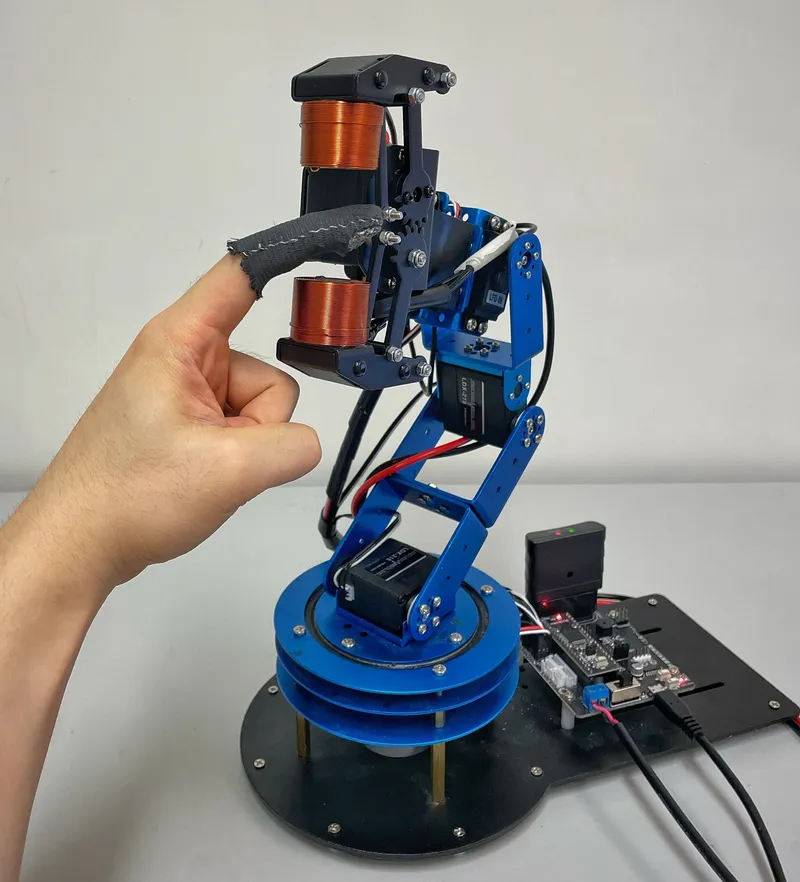
the Remote Emulation Haptic Finger Glove that can accurately replicate the surface textures and tactile hardness of different objects
Directional Control Enables New Smart Fabric Functions
Unlike traditional smart materials that respond to scalar inputs such as voltage or temperature, PolyU’s magnetorheological textiles respond to vector-based magnetic stimuli, allowing controlled directional motion. This capability supports the development of three key textile-based systems:
- Flexible Smart Grippers: Electrically controlled stiffness enables gentle handling of delicate or irregular objects, mimicking the adaptability of human fingers while reducing damage risk.
- Remote Haptic Finger Gloves: Lightweight, fabric-based gloves replicate surface textures and hardness, supporting applications such as remote surgical training, rehabilitation therapy and virtual fitting environments.
- Active Ventilation and Thermal Regulation Fabrics: By altering fibre structures through controlled magnetic fields, the textiles dynamically adjust air permeability to improve thermal and moisture comfort.
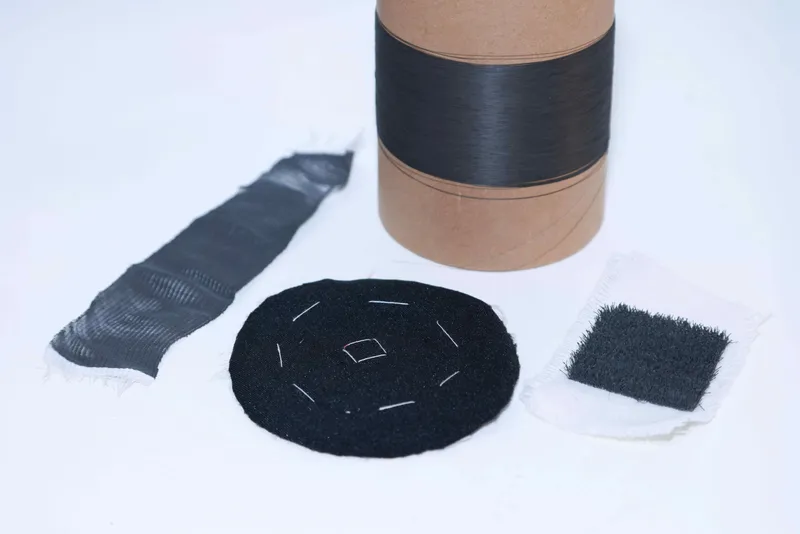
The research team has developed several innovative fabric materials using these novel fibres that offer unique directionally controllable responses.
Pathway to Industrial Application
Prof. Tao noted that the research demonstrates how rigid magnetic systems can be transformed into flexible textile-based alternatives, creating opportunities for future developments in soft robotics, electromagnetic devices and wearable systems.
From an industrial perspective, Dr. Pu Junhong, Assistant Professor (Research) at PolyU’s School of Fashion and Textiles, highlighted that commercially available raw materials and established processing methods were deliberately selected. This approach supports scalable production and accelerates potential adoption across sectors including food handling, medical rehabilitation and immersive digital interaction technologies.

the Active Ventilation and Thermal-Regulation Fabrics that can intelligently adjust air permeability by driving fibre structure deformation through electronically controlled magnetic fields