Performance Fabrics Market to Hit $116.5B by 2034
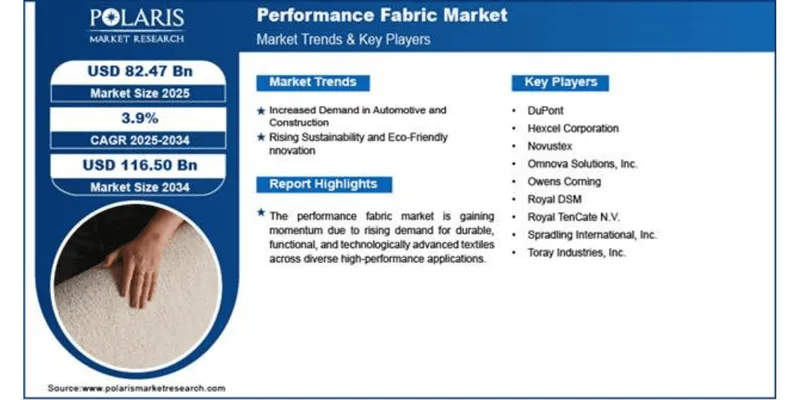
Whether tackling intense workouts, braving unpredictable weather, or commuting in style, one factor can significantly influence performance and comfort: the clothing you wear. Performance fabrics have quietly revolutionized the way people move, sweat, and live, merging innovation with comfort to meet modern lifestyle demands. These textiles are no longer just about appearance; they are designed to perform as hard as their wearers.
What Defines Performance Fabric?
Performance fabric refers to advanced textiles engineered to deliver functional benefits beyond aesthetics and durability. These fabrics are developed to enhance the user experience with features such as breathability, moisture-wicking, stretch, quick-drying capabilities, UV protection, odor resistance, and long-lasting durability. They are widely used in sportswear, uniforms, outdoor gear, home furnishings, and protective apparel. Typically, they are crafted using blends of natural and synthetic fibers, often enhanced with advanced treatments or technologies to suit high-performance needs.
Market Snapshot
- The global performance fabric market was valued at USD 79.44 billion in 2024 and is projected to hit USD 116.50 billion by 2034.
- The industry is set to expand at a CAGR of 3.9% from 2025–2034.
- Growth is driven by increased use in industrial and protective wear, advances in smart textiles, and growing demand in automotive and construction applications.
Key Material Types in Performance Fabrics
- Polyester: Known for its moisture resistance, quick-drying nature, and color retention, polyester is extensively used in sportswear, uniforms, and outdoor apparel. Its cost-effectiveness and adaptability make it suitable for both everyday and high-performance clothing.
- Nylon: Renowned for tensile strength, abrasion resistance, and elasticity, nylon is a popular choice for activewear, swimwear, and compression clothing. Often blended with other fibers, it enhances durability and flexibility.
- Spandex (Elastane): Famous for its exceptional stretch and recovery, spandex is vital in athletic, dance, and medical compression wear. Even in small quantities, it improves mobility and comfort.
- Wool (Merino): Particularly merino wool is gaining prominence in performance fabrics due to its natural ability to regulate temperature, manage moisture, and resist odor. It is widely used in hiking gear, travel wear, and sustainable fashion.
- Cotton Blends: While pure cotton offers limited performance features, its blends with synthetics like polyester or spandex enhance durability, comfort, and moisture control. These blends dominate activewear and everyday performance wear.
Future Outlook of Performance Fabrics
The market is undergoing rapid evolution, fueled by sustainability, smart textiles, and multifunctional designs. Recycled fibers, low-impact manufacturing, and biodegradable options are gaining momentum, while intelligent fabrics capable of temperature regulation and biometric sensing are shaping the future. Performance fabrics are moving beyond sports into fashion, healthcare, industrial, and protective sectors.
Conclusion
The performance fabrics sector is experiencing robust growth as consumers demand textiles that provide functionality alongside style. With rising emphasis on eco-friendly production and technology-driven innovation, these fabrics are transforming industries by offering durability, comfort, and adaptability. The market’s trajectory underscores the increasing importance of responsive and sustainable fabrics in daily life.