PATEL RETAIL LIMITED
Introduction
In 1984, a man with vast dreams from Dudhai, Gujarat, migrated to Ambernath to fulfill the dreams visioned by him, and successfully Patel Retail Limited was incorporated in 2008, which was earlier recognized as Patel enterprises. It is a supermarket chain focused on value retail in tier 3 and suburban areas. It has its various brands. The company manages over 43 stores. It gives cottages for the private label manufacturers.
Company Overview
Patel retail market is a value-oriented supermarket chain that deals with foods, non-food (FMCG) products, apparel, and house items. It has been categorized into four categories. Indian chaska, patel fresh, patel essentials, and blue nation.
The business model for the Patel retail market is a value chain model with B2B activities that provides services to retail families.
Promotor and Founder Introduction
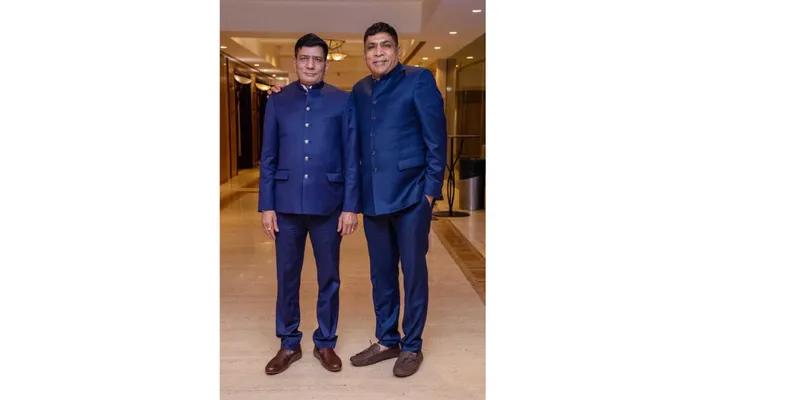
Patel Retail Market is a family business
that was founded by
Dhanji Raghavji Patel,
who is the current managing director
and chairperson of the company.
The key promoter and the
whole-time director of the company is
Bechaji Raghavji Patel,
who is involved in the business run.
With more than 25 years of experience, Patels tried to blend the different sectors into one and provide the services at once. This has created a brand value, uniqueness and high operational efficiency.
Financial Statement Analysis
Income Statement
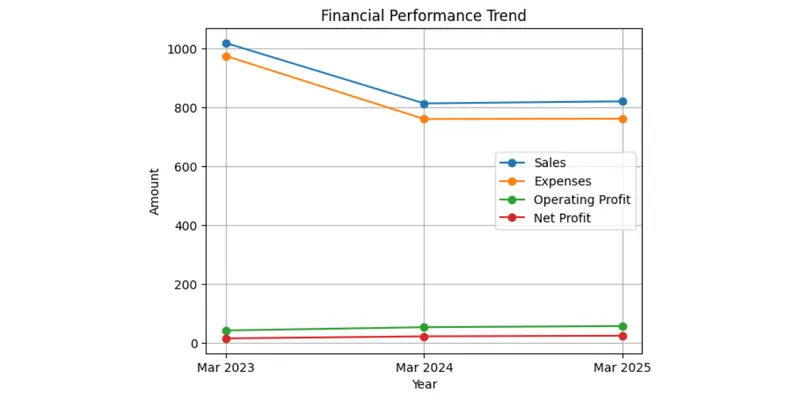
Particulars | Mar 2023 | Mar 2024 | Mar 2025 |
Sales | 1,019 | 814 | 821 |
Expenses | 975 | 761 | 762 |
Operating Profit | 43 | 54 | 58 |
OPM % | 4% | 7% | 7% |
Other Income | 1 | 4 | 5 |
Interest | 12 | 16 | 18 |
Depreciation | 10 | 10 | 12 |
Profit Before Tax | 22 | 31 | 34 |
Tax % | 26% | 26% | 26% |
Net Profit | 16 | 23 | 25 |
EPS (₹) | 42.99 | 9.24 | 10.16 |
Dividend Payout % | 0% | 0% | 0% |
Balance Sheet
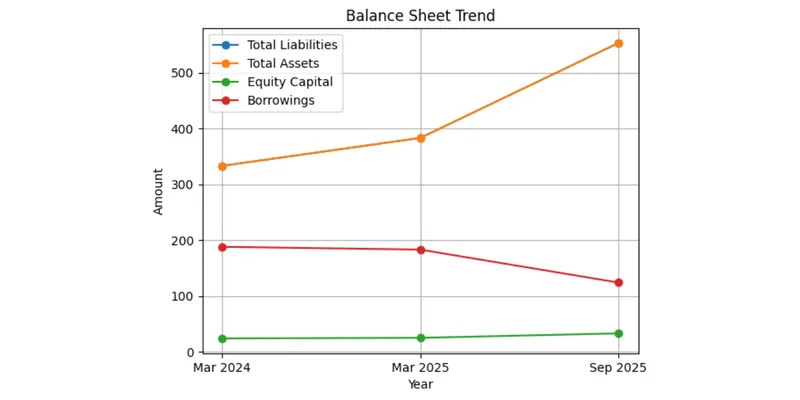
Particulars | Mar 2024 | Mar 2025 | Sep 2025 |
Equity Capital | 24 | 25 | 33 |
Reserves | 70 | 110 | 335 |
Borrowings | 188 | 183 | 124 |
Other Liabilities | 51 | 66 | 60 |
Total Liabilities | 333 | 383 | 553 |
Fixed Assets | 60 | 65 | 65 |
CWIP | 4 | 0 | 0 |
Investments | 0 | 0 | 0 |
Other Assets | 268 | 318 | 488 |
Total Assets | 333 | 383 | 553 |
Cash flow statement
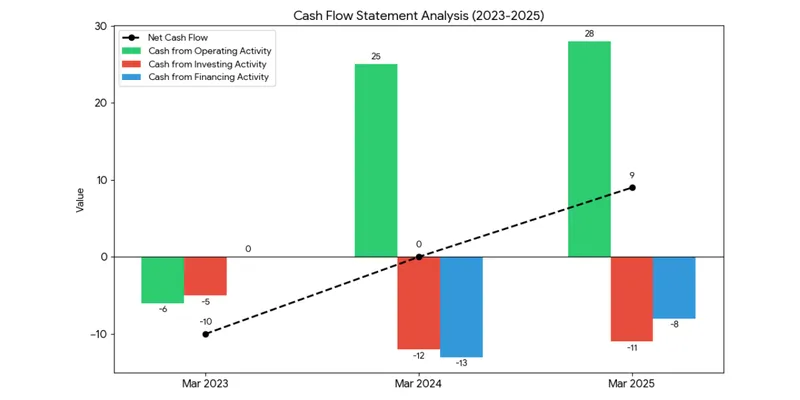
Particulars | Mar 2023 | Mar 2024 | Mar 2025 |
Cash from Operating Activity | -6 | 25 | 28 |
Cash from Investing Activity | -5 | -12 | -11 |
Cash from Financing Activity | 0 | -13 | -8 |
Net Cash Flow | -10 | 0 | 9 |
Ratio analysis
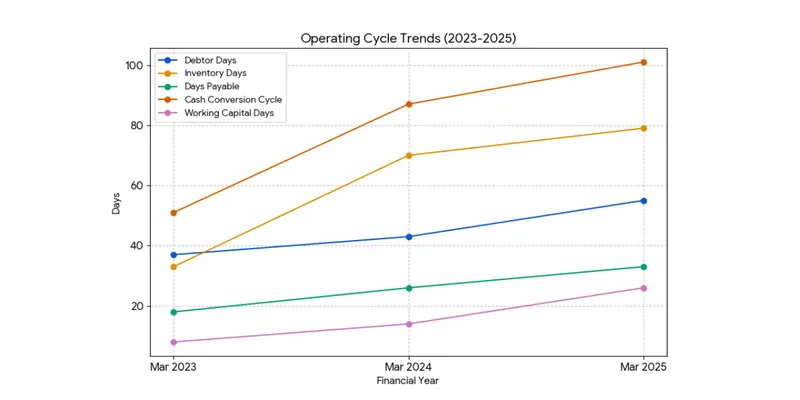
Particulars | Mar 2023 | Mar 2024 | Mar 2025 |
Debtor Days | 32 | 43 | 55 |
Inventory Days | 33 | 70 | 79 |
Days Payable | 18 | 26 | 33 |
Cash Conversion Cycle | 51 | 87 | 101 |
Working Capital Days | 8 | 14 | 26 |
ROCE % | 14% | 17% | 17% |
Key Interpretations and Insights
Strengths
As per the financial statements, the company has an increasing EBITDA margin. It has a private label focus.
Weaknesses
It shows constant or no rising revenue growth. Also it requires high working capital
Risk factor
High competition in the sectors it is involved in. The company carries a debt level. Dependency on the raw material, which results in a longer chain.
Future Outlook
As the retail sector in India is growing rapidly, the company is aiming for expansion. The company is targeting the investment in in-house production for the private label brands.
Conclusion
As per the financial statements, the company has an increasing EBITDA margin. It also defines an expansion strategy as the total assets and total liabilities of the company have increased. The company is a financially stable company with gaining profitability. Although it has negative cash flows, which majorly describes a focus on future growth.
Sources