Paddy Straw Helps Keep Ludhiana’s Textile Dyeing Units Operational Amid Global Fuel Shortages
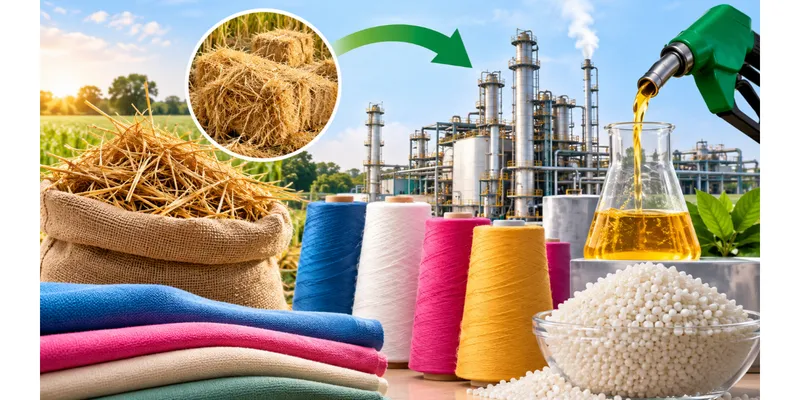
Around 3,000 dyeing units and other textile processors have shifted towards agricultural waste and biomass, reducing dependence on conventional fossil fuels and gas.
Textile dyeing units and garment manufacturers in Ludhiana have maintained operations amid rising conventional fuel costs and concerns over gas supplies linked to the West Asia conflict. The industry has increasingly turned to agricultural waste, including paddy straw, rice husk and other biomass materials, as alternative energy sources.
The shift has helped manufacturers manage fuel-related disruptions while creating demand for crop residues that might otherwise be burned in fields.
Agricultural Waste Becomes an Alternative Industrial Fuel
With conventional fuel costs rising and gas supplies under pressure, textile units have adopted a mix of rice husk, paddy stubble, pulse residue and municipal green waste to operate boilers used for steam and power generation.
Industrialist Vishal Jain said factory owners use a combination of agricultural waste and biomass rather than depending on a single source of crop residue. These materials include rice husk, crop stubble, pulse residue and green waste.
According to Jain, around 3,000 dyeing units, along with hosiery, knitwear and textile processing facilities in Ludhiana, have successfully moved away from conventional fossil fuels and gas towards biomass options.
Industry representatives said the transition, initially adopted to manage fuel shortages, has developed into an approach to improving energy self-reliance.
Paddy Straw Offers Cost Advantages
Rahul Verma, director of the Punjab Dyers Association (Focal Point), said dyeing units had shifted from coal and wood to rice husk several years ago, while crop stubble has now emerged as a primary alternative.
The price difference between conventional rice husk and agricultural residue has also influenced fuel choices. Verma said rice husk generally costs between ₹600 and ₹900 per quintal, while high demand for farm waste such as stubble has kept its price between ₹1.25 and ₹2.4 per kg.
He said the availability of alternative industrial fuels has been important in keeping factories operational.
“Had we not diversified our fuel sources in time, many units would have been forced to shut down. Agro-waste has provided both price stability and operational security,” Verma said.
Regulatory Requirements Encourage Residue Use
Under regulatory mandates, industrial units in Punjab are required to use agricultural residue for 15% to 20% of their total fuel consumption.
Textile facilities are consequently testing different blends of agricultural waste to meet energy requirements and reduce dependence on external fuel supply networks.
Storage and Fire Safety Remain Challenges
Despite the growing use of paddy straw, bulk storage and safety management remain significant operational challenges for manufacturers.
Jain noted that factory owners lease land themselves to store stubble, as this is a more economical option overall.
Verma said units located near rural areas often have to lease open agricultural plots to store bales for year-round use. This adds to operating costs through land rents and also creates fire-safety risks.
“Storage is the single biggest hurdle with stubble,” Verma said. “If land leasing and fire-safe storage infrastructure are supported by state agencies, a majority of industrial units in Punjab would switch to paddy straw as their primary fuel.”