Open-end Spinning Mills Hit by Rising Raw Material Costs
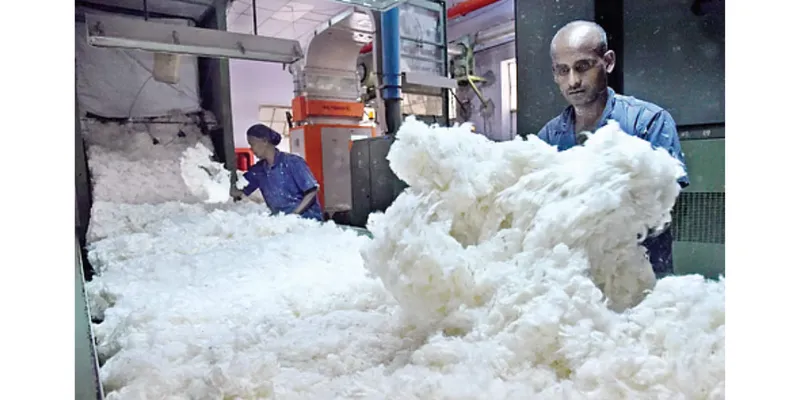
Industry bodies call for export controls on waste cotton as higher raw material costs affect spinning mills and downstream textile sectors
Open-end spinning mills in Tamil Nadu have raised concerns over the rising price of waste cotton, stating that increasing raw material costs are affecting their operations at a time when the sector is also facing a growing need for modernisation.
The Openend Spinning Mills Association and the Recycle Textile Federation have urged the Union government to regulate exports of waste cotton in order to stabilise domestic availability and prices.
According to the industry bodies, the price of waste cotton has declined by ₹20 per kg in recent days and should reduce by another ₹10 per kg so that manufacturers using waste cotton yarn can benefit.
Modernisation Driving Higher Demand
Industry representatives said that most open-end spinning mills in northern India have modernised their facilities, while nearly 40% of the open-end spinning mills in Tamil Nadu also need to upgrade their operations.
They noted that modernisation has resulted in increased yarn production, which has also led to higher demand for waste cotton.
Waste cotton, a byproduct generated by textile mills, is generally priced at 65% of the cotton price. However, according to industry representatives, increased exports of comber noil and higher domestic demand have pushed prices upward.
Impact on Downstream Textile Sectors
The price of waste cotton (comber noil) reached ₹140 per kg in May, according to the industry.
G. Arulmozhi, President of the Openend Spinning Mills Association, said that if open-end spinning mills increase the price of yarn produced from waste cotton, downstream industries such as home textile manufacturers in Karur and powerloom weavers would be affected because they are unable to absorb the additional costs.
Industry representatives reiterated that waste cotton is a byproduct of textile mills and is typically priced at 65% of the cotton price, but higher exports and increased domestic demand have contributed to the recent rise in prices.