nova-Institute Study Supports Bio-based Plastics Role in EU Packaging Policy
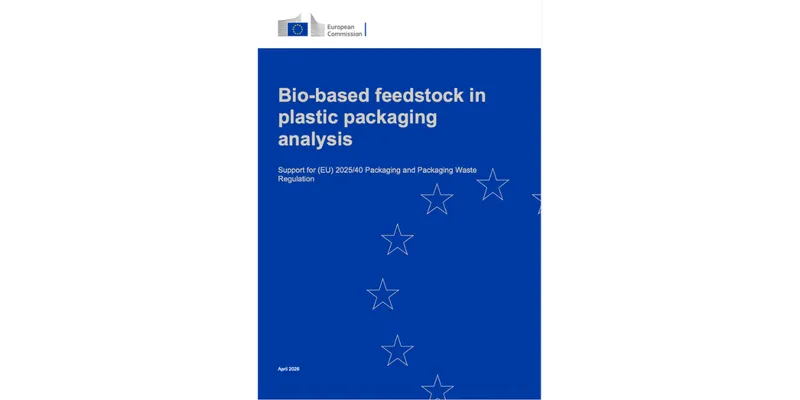
The nova-Institute, a research and consultancy organisation focused on renewable carbon, has conducted an analysis for the European Commission on the use of bio-based feedstocks in plastic packaging under the Packaging and Packaging Waste Regulation (PPWR). The study, published on 27 April 2026, was authored by Michael Carus, Christopher vom Berg, Pia Skoczinski, Olaf Porc, Narendar Poranki and Gillian Tweddle.
The report examines the current state of bio-based plastics, noting that plastics remain over 99% fossil-based while bio-based polymers account for approximately 1% of the global market. It identifies 17 bio-based polymers that are commercially available and states that there are no fundamental technical barriers to their use in packaging applications.
The analysis addresses a gap in the PPWR framework, which sets binding recycled content targets but does not fully define the role of bio-based carbon. The study outlines the potential of bio-based feedstocks to contribute to defossilisation by introducing renewable carbon into the system, complementing recycled materials that retain existing carbon within the loop.
The report highlights greenhouse gas emission reduction potential associated with bio-based plastics and emphasises the need for harmonised sustainability criteria aligned with the Renewable Energy Directive. It also discusses the importance of recognising the complementary roles of bio-based and recycled carbon in achieving a circular carbon system.
In terms of scalability, the study identifies challenges including higher production costs, limited infrastructure, and uneven policy support compared to biofuels. It recommends measures such as binding targets for bio-based content, development of sustainability standards, and increased investment in recycling and processing infrastructure.
“For more than 30 years, we have been working on defossilising the chemicals and materials sector,” says Michael Carus, founder and senior advisor of the nova-Institute. “Our analysis shows that a climate neutral packaging sector will require a balanced mix of bio-based carbon, CO₂ utilisation and recycling. When it comes to packaging, this means increasing both the share of bio-based content and the use of recycled materials. Only by combining these approaches can we fully keep carbon in the loop and successfully transition from fossil to renewable carbon.”
The report also outlines the need for a balanced policy framework that supports both recycling and the integration of bio-based feedstocks. It states that while recycling is essential, it cannot alone meet the demand for non-fossil carbon required for long-term climate targets.
“We welcome that the European Commission has chosen to draw on independent scientific advice from nova-institute,” says Dr. Lars Börger. “In complex transformation processes, policy needs an unbiased view of the best available scientific evidence. This is what makes Europe strong and it is also what nova stands for”.
The nova-Institute continues to provide research, data, and consulting services related to renewable carbon, supporting stakeholders in transitioning from fossil-based to sustainable carbon sources.