NIFT Hosts Curtain Raiser for International Conference 2026 as Part of NIFT@40
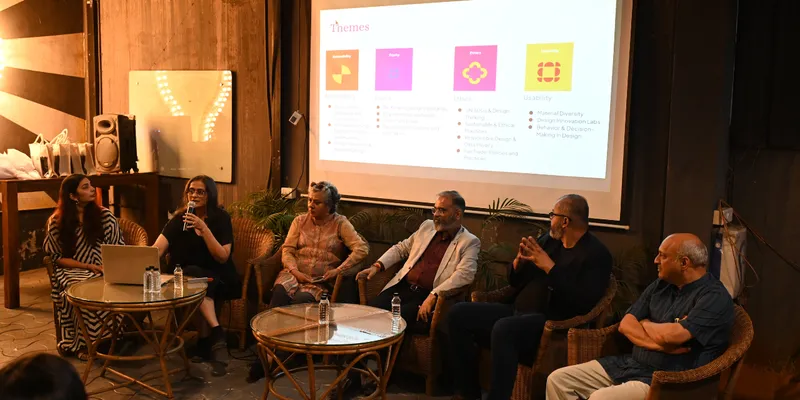
As part of its NIFT@40 celebrations, the National Institute of Fashion Technology (NIFT) hosted the Curtain Raiser for the NIFT International Conference 2026 at Lokus Design, Pune, on January 9, 2026. The programme formally initiated academic preparations for the international conference scheduled to take place on January 22–23, 2026, at the NIFT Mumbai campus, marking the concluding academic initiative of NIFT’s 40th Foundation Year.
Designed as a reflection of NIFT’s four-decade academic journey, the upcoming conference underscores the institute’s ongoing focus on design education, research advancement, and interdisciplinary academic exchange. The Curtain Raiser was led by Prof. Dr. Ajit Kumar Khare, Director, NIFT Mumbai, and Prof. Dr. Rupa Agarwal, Conference Chair, NIFT International Conference. The event brought together academic leaders and design practitioners, including Prof. Prasanna Halbe, Mr. Shekhar Badve, Founder and CEO of Lokus Design, and Ms. Anita Iyer, Founder of Ekansh Trust.
The conference is being organised under the patronage of Prof. Dr. Sharmila Dua, Former Dean, NIFT, and Dr. Sudha Dhingra, Professor, NIFT, and Director, Centre of Excellence for Khadi. Prof. Dr. Sharmila Dua will also contribute as a Senior Reviewer, reinforcing the peer-review process and academic rigour of the conference.
In his address, Prof. Dr. Ajit Kumar Khare traced NIFT’s evolution from its establishment in 1986 to its current national presence across 20 campuses. He noted that the international conference will serve as a platform for academics, professionals, students, and alumni to engage through research presentations, keynote sessions, fashion showcases, and collaborative academic exchanges.
Outlining the academic direction of the conference, Prof. Dr. Rupa Agarwal highlighted the central theme, “Design for Inclusive Futures,” which aligns with NIFT’s broader institutional values. She explained that the conference will explore inclusive design beyond fashion, focusing on systems and practices that engage diverse communities. The four thematic tracks—Accessibility, Usability, Ethics, and Equity—are supported by a structured peer-review framework to ensure scholarly depth and interdisciplinary dialogue.
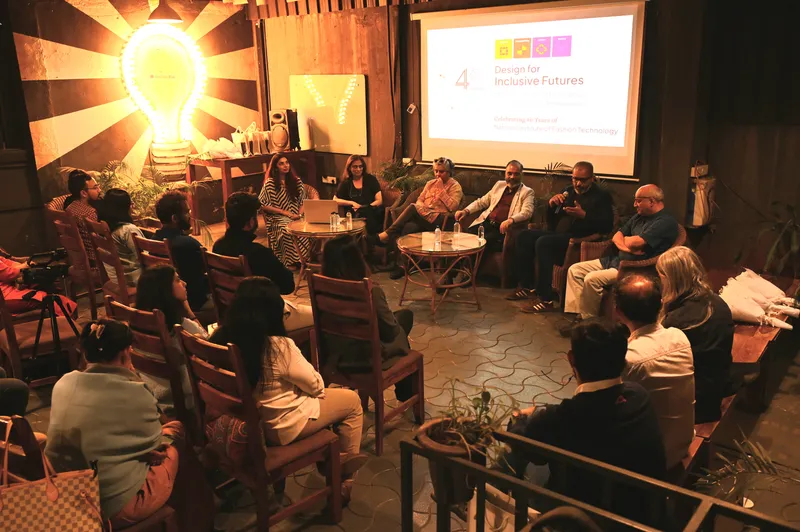
Reflecting on the quality of academic submissions, Prof. Prasanna Halbe observed strong research maturity across areas such as craft and culture, sustainability, inclusivity, digital experiences, and advanced design technologies. He noted that NIFT’s research approach integrates theoretical inquiry with field engagement, data analysis, and technology to address practical design challenges.
Mr. Shekhar Badve discussed the evolving interpretations of sustainability, ethics, and inclusivity within the Indian design landscape. He emphasised the importance of critical reflection on the beneficiaries of development processes and suggested that outcomes such as policy-oriented white papers could enhance the contribution of design to governance and sustainable development.
Addressing inclusivity and accessibility, Ms. Anita Iyer highlighted the need to embed accessibility across all dimensions of design and event planning, including physical spaces, communication methods, and digital platforms. She stressed the importance of person-first language and institutional practices that promote inclusive participation across sectors.
The Curtain Raiser also formed part of NIFT’s wider NIFT@40 academic and industry engagements, which include participation in Bharat Tex, curriculum review initiatives, craft and cluster programmes such as Chhaap, and alumni-led academic interactions. The event reinforced NIFT’s position as a knowledge institution committed to research-driven, ethical, and inclusive design practices, setting the stage for continued dialogue and collaboration as the institute completes four decades of contribution.