Nesterra: Where Less is More in Sustainable Home Design
Nesterra, a premium home furnishings brand from Sutlej Textiles & Industries Ltd. (K. K. Birla Group), recently showcased its innovative and sustainable fabric collections at Bharat Tex 2025 in New Delhi. Nesterra is redefining the home textiles landscape with a "consumer-first approach," blending aesthetics with responsible manufacturing.
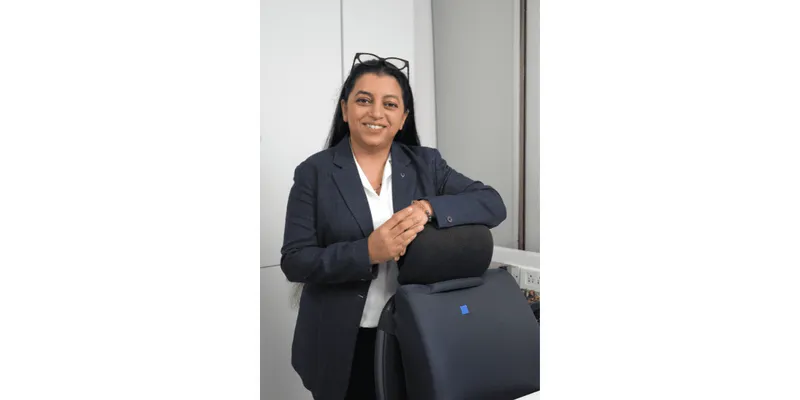
Smita Joshi, Vice President of Home Textiles and Exports at Nesterra
As TVC Media Team explores the future of home textiles, we delve into a conversation with Smita Joshi, Vice President of Home Textiles and Exports at Nesterra, to uncover the brand's vision, sustainable practices, and commitment to innovation. With over two decades of experience, Mrs. Joshi provides invaluable insights into navigating the evolving demands of the global textile market, with a particular focus on Nesterra's role in positioning India as a global textile leader.
Could you share your journey since joining Sutlej Textiles as Vice President in 2019 and how your leadership has shaped Nesterra’s growth in the home textiles segment?
Since joining Sutlej in 2019, my primary focus has been to establish Nesterra as a distinctive voice in a market that was largely dominated by formal, European-style aesthetics. We identified a clear gap- home furnishings that truly resonated with the evolving tastes in their late 20s and early 30s. This audience, shaped by global influences and an emerging sense of self-identity, was looking for something more relaxed, expressive and reflective of their lifestyle.
We built Nesterra to speak to this segment- individuals stepping into independent lives, designing their own homes, and making bold choices. Our aim was to deliver collections that felt personal—sometimes serene, sometimes vibrant, but always reflective of who they are.
To support this, I led key initiatives such as vertical integration to enable sustainable practices, curated exclusive collections with a youthful design language, and created a younger, more diverse team to challenge traditional aesthetics by introducing bold experimentation.
Nesterra emphasises a “consumer-first approach.” How do you ensure that the brand’s collections resonate with individual personalities and modern consumer demands?
The answer to this would be convenience and emotional connection. We simplify the buying experience through curated, coordinated catalogues that help consumers envision complete looks. Each collection is designed to mirror the evolving moods and personalities of our audience- minimalist, expressive, and deeply personal.
By understanding that our consumers buy expressions of their identity, we ensure that our collections offer both aesthetic harmony and personal relevance.
Sustainability is a key focus for Nesterra. Could you elaborate on the sustainable practices integrated into your manufacturing processes, such as the Green Fiber initiative?
Sutlej has always stood by a core green practice in the industry, which is ‘responsible manufacturing’. One of our key initiatives at the Sutlej Green Fibre plant, where we recycle PET bottles into yarns used in our fabrics. This not only reduces plastic waste but also promotes circularity in textiles.
Through vertical integration, we’ve gained greater control over our supply chain, allowing us to minimise our environmental impact across production stages. Our commitment also extends to functionality, aligning with the principles of mindful consumption and sustainability.
With Nesterra’s Collection, what trending and innovative design elements have been introduced to redefine modern home décor?
In our collections, we focus on showcasing the individuality of today's consumers who effortlessly carry a strong sense of self, made of varied sensibilities. Hence, we blend global influences in our designs, taking inspiration from diverse cultures, experiences, and landscapes. Through this customer-centric approach, we curate our collections wherein we strive to give diversity, amalgamating the distinct colours, emotions, and stories — after all, each home should be as unique as their personality.
Personalisation is a growing trend in home décor. How does Nesterra cater to this demand while maintaining scalability and efficiency?
At Nesterra, less is more is our foundation. We design with the individual in mind, believing every personality deserves fabrics that reflect their unique story. To maintain this ethos while remaining efficient, we carefully curate limited collections each year.
This approach helps us retain a sense of exclusivity and stay agile in responding to evolving consumer preferences- proof that less truly is more.
Sutlej Textiles has a legacy of responsible manufacturing. How does Nesterra leverage this heritage to align with global sustainability trends?
Our adherence to global standards of sustainable practices includes controlling the production process end-to-end. Via the operation model, i.e., vertical integration, we have and will continue to reduce waste. Our plans in this focus area are ethical sourcing and more intensive R&D efforts in recyclable materials and other sustainable practices.
What are your long-term goals for Nesterra, particularly in terms of expanding its global footprint and further integrating sustainability into its operations?
While we have carved out a niche in the market, we would like to expand our footprint by tapping into other gaps in the market in terms of aesthetics. This, I believe, would be key in attracting a larger demographic.
Further, to expand our eco-friendly practices, we will continue to measure our impact and innovate around areas of improvement we discover in the process.
As a leader with over two decades of experience in home textiles, what key lessons have you learned about navigating challenges and driving innovation in this dynamic industry?
Over the years, I’ve learned that innovation isn’t just about doing something new; it's always about doing something meaningful. In an industry that constantly evolves, staying relevant requires not only embracing change but also being deeply attuned to consumer behaviour, cultural shifts, and sustainability demands.
One of the biggest lessons has been the power of agility- being open to unlearn, adapt, and reimagine what’s possible. I’ve also learned that leadership is as much about listening as it is about leading. Some of our best ideas have come from collaborative conversations, not just from the drawing board.
Lastly, I believe true impact lies in purpose-driven innovation. When every collection and every initiative is rooted in a deeper value- be it sustainability, self-expression, or functionality- it naturally resonates with people. That’s where long-term value is built.