Mushroom Leather: Weaving the Future of Sustainable Textiles
Tanvi Munjal
The textile industry, long reliant on traditional materials like animal leather and petroleum-based synthetics, is constantly seeking innovation. Driven by growing environmental awareness and a desire for ethical alternatives, a fascinating new contender has emerged from an unexpected source: fungi. Enter mushroom leather – a revolutionary biomaterial poised to reshape how we think about fabrics, fashion, and sustainability.
Introduction: What Is Mushroom Leather?
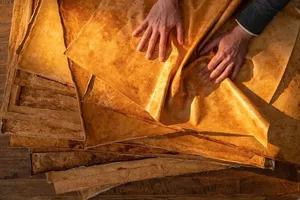
Mushroom leather is crafted from mycelium, the vegetative root structure of fungi. Mycelium grows underground as a network of fine filaments, absorbing nutrients and forming dense, interconnected fibers. These fibers can be processed into a material that mimics traditional leather in texture, appearance, and durability. Unlike conventional leather, which relies on animal agriculture and chemical-intensive tanning processes, mushroom leather is entirely plant-based and biodegradable. It has gained traction among luxury fashion brands seeking to align with sustainability goals
The Idea Behind Mushroom Leather
The concept of mushroom leather stems from the need for sustainable alternatives to animal-based and synthetic materials. Traditional leather production contributes significantly to greenhouse gas emissions, water consumption, and chemical pollution. Synthetic leathers, though animal-free, are often derived from petroleum-based plastics, which are non-biodegradable and harmful to ecosystems. Mushroom leather addresses these issues by utilizing agricultural waste as a substrate for fungal growth. This innovative approach not only reduces waste but also minimizes resource consumption during production.
The Need for Mushroom Leather
The appeal of mushroom leather stems from the significant drawbacks of conventional materials:
- Animal Leather: Requires raising and slaughtering animals, raising ethical concerns for many consumers. The livestock industry is a major contributor to greenhouse gas emissions, deforestation, and massive water consumption (estimates suggest around 17,100 liters of water per kilogram of leather). The tanning process often involves harsh chemicals like chromium, which can pollute waterways.
- Synthetic Leather (Pleather/PU Leather): While animal-free, most synthetic leathers are derived from plastics like polyurethane (PU) or polyvinyl chloride (PVC) – fossil fuel products. Their production can be energy-intensive, involve toxic chemicals, and they contribute to microplastic pollution. Furthermore, they are generally not biodegradable and often lack the breathability and natural feel of genuine leather, sometimes carrying a distinct chemical odor.
Mushroom leather offers a potential solution that addresses many of these issues simultaneously.
From Spore to Swatch: The Production Process
While specific techniques are proprietary and continually evolving, the general process of creating mushroom leather involves several key steps:
- Cultivation: Mycelium spores (from species like Oyster mushrooms or Agaricus bisporus) are introduced to a substrate – typically agricultural or industrial waste such as sawdust, straw, wood chips, or hemp fibers. This substrate acts as food for the growing fungus.
- Growth: The mycelium is grown in controlled conditions (temperature, humidity, CO2 levels). It feeds on the substrate, rapidly expanding its network of filaments. Companies like MycoWorks employ techniques to "engineer" the mycelium as it grows, guiding the formation of specific interlocking structures to enhance qualities like strength, flexibility, and drape – essentially customizing the material at a microscopic level. Ecovative Design pioneered growing mycelium into specific shapes, initially for packaging and insulation, later adapting it for textiles.
- Harvesting: Instead of allowing the fungus to produce a mushroom fruit body, the dense mat of mycelium is harvested. This growth process is remarkably fast, often taking just days or a couple of weeks, compared to the years needed to raise an animal and the weeks needed to tan its hide.
- Processing: The harvested mycelium mat, often resembling a foamy sheet, is treated. This typically involves compressing it, drying it, and potentially tanning it using eco-friendly methods (unlike traditional chromium tanning). It might also be dyed using natural pigments or finished to achieve specific textures and appearances. Bolt Threads' Mylo™, for example, is processed to create a supple, leather-like material.
The result is a material that can mimic the look and feel of animal leather but is grown quickly using waste streams and significantly fewer resources.
SWOT Analysis: Mushroom Leather in Textiles
Companies Innovating with Mushroom Leather
Several companies are leading the charge in mushroom leather innovation:
- MycoWorks: Known for its Fine Mycelium technology that produces Reishi™, a luxury-grade mushroom leather with customizable traits.
- Bolt Threads: Developed Mylo™, used by brands like Stella McCartney for bags and clothing.
- Life Cykel: Focuses on eco-friendly production methods using sugarcane waste as substrate.
- Zvnder: Berlin-based brand creating wallets, shoes, and hats from mushroom-derived materials.
- MYCL (Mycotech Lab): Indonesian startup producing MYLEA™, a durable mushroom leather used in footwear.
Luxury brands such as Hermès and Balenciaga have also integrated mushroom leather into their collections, showcasing its potential in high-end fashion.
The Future is Fungal
Mushroom leather is more than just a novelty; it represents a significant step towards a more sustainable and circular textile industry. While challenges in cost and scale remain, the pace of innovation is rapid. Its ability to transform waste into a valuable, high-performing material with a dramatically lower environmental footprint is compelling. As technology matures, production scales up, and costs potentially decrease, we can expect to see mushroom leather move from high-end concept pieces to more mainstream applications in clothing, footwear, accessories, and beyond. It stands as a prime example of how harnessing biological processes – using nature's own recycling and building systems – can lead to solutions for some of our most pressing environmental challenges, weaving a truly innovative future for textiles. References:
- What Is Mushroom Leather & Why Do People Love It? (https://immaculatevegan.com/blogs/magazine/why-is-everyone-mad-about-mushroom-leather)
- Fungal mycelium as leather alternative: A sustainable biogenic material for the fashion industry (https://www.sciencedirect.com/science/article/pii/S2214993723001598)
- Are Mushrooms the Future of Alternative Leather? (https://www.nytimes.com/2022/12/14/business/leather-fake-mycelium-mushrooms-fashion.html)
- How Do You Make Leather From Mushrooms? (https://sentientmedia.org/leather-made-from-mushrooms/)
- Inside the lab growing leather from mushrooms (https://www.freethink.com/series/hard-reset/mushroom-leather)
- The Mycelium Revolution Is upon Us (https://www.scientificamerican.com/blog/observations/the-mycelium-revolution-is-upon-us/)