Multi-Layer Composite Fabric Architectures
Technical Overview
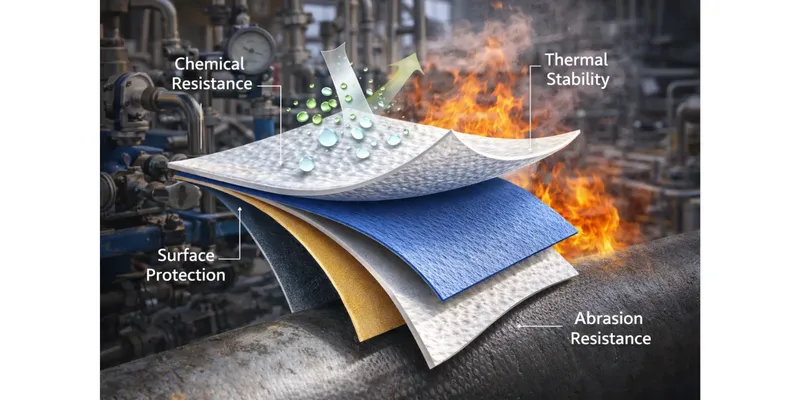
Multi-layer composite fabrics are engineered systems where thermal, chemical, and mechanical properties are distributed across layers, enabling simultaneous multi-functional performance.
This layered configuration allows each component of the fabric structure to address a specific engineering demand while contributing to the overall performance of the system. Instead of depending on one material to deliver all required properties, composite architectures separate functions across multiple layers to improve reliability, durability, and efficiency.
Such systems are widely used in technical applications where a combination of barrier protection, structural support, chemical resistance, and environmental stability is required under demanding service conditions.
Layer Functionality Breakdown
Layer | Role | Engineering Requirement |
Base Layer | Structural foundation | Tensile strength |
Reinforcement Layer | Load-bearing | Fatigue resistance |
Functional Coating | Chemical/thermal control | Adhesion + resistance |
Barrier Layer | Gas/vapor sealing | Permeability control |
Outer Layer | Protection | Abrasion + UV resistance |
Each layer in a composite fabric architecture performs a dedicated function that supports system-level performance. The base layer provides structural continuity and dimensional support, while the reinforcement layer absorbs stress and improves resistance to repeated loading.
The functional coating regulates interaction with heat, chemicals, or process media, making surface behavior a controlled design parameter rather than a passive characteristic. Barrier layers are introduced where vapor, gas, or fluid control is required, and the outer layer protects the internal structure against wear, environmental exposure, and surface damage. This separation of functions enables precise engineering according to application-specific demands.
Barrier Performance Comparison
Property | Single-Layer Fabric | Multi-Layer Composite |
Gas Permeability | High | Low |
Vapor Resistance | Moderate | High |
Chemical Protection | Limited | Multi-layer defense |
Mechanical Strength | Uniform | Optimized per layer |
Barrier performance comparison shows how composite structures improve control over transport and resistance properties. In a single-layer fabric, performance is typically limited by the inherent capability of one material, which creates compromises between strength, flexibility, permeability, and durability.
In a multi-layer composite, these properties can be optimized independently across layers. As this article shows, the idea behind Multi-Layer Stack Design Principles in Composite Fabrics is to assign each layer a specific role so the full system performs better as a whole. This leads to lower gas permeability, improved vapor resistance, and stronger protection against chemical exposure without requiring one material to perform every function. The result is a more balanced and application-driven performance profile with reduced risk of premature system failure.
Interlayer Adhesion Engineering
Factor | Impact |
Surface energy mismatch | De-lamination risk |
Thermal expansion difference | Micro-cracking |
Adhesive selection | Bond durability |
Pressure/lamination method | Structural integrity |
Interlayer adhesion engineering is one of the most critical factors in composite fabric performance because the interface between layers determines how effectively the system behaves as a unified structure.
Surface energy mismatch can prevent proper bonding and increase the risk of de-lamination under mechanical or thermal stress. Differences in thermal expansion may introduce internal stresses that result in micro-cracking, especially during cyclic loading or repeated temperature changes.
Adhesive selection directly affects long-term bond durability, while pressure and lamination method influence structural continuity, interfacial contact, and dimensional consistency across the full material system.
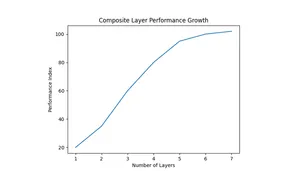
Trend:
● 1–2 layers → limited performance
● 3–5 layers → exponential performance gain
● 6+ layers → diminishing returns (weight vs benefit tradeoff)
Mechanical Durability Analysis
Stress Type | Composite Response |
Tensile | Distributed across layers |
Flexural | Absorbed via reinforcement |
Abrasion | Outer layer protection |
Fatigue | Layer redundancy prevents failure |
Mechanical durability analysis demonstrates how composite systems respond to different forms of stress through functional load sharing. Tensile stress is distributed across layers, which reduces concentration on any single component and improves structural stability.
Flexural forces are absorbed through reinforcement design, allowing the composite to maintain integrity under repeated bending or deformation. Abrasion is managed primarily by the outer protective layer, which shields internal layers from wear and surface damage. Under fatigue conditions, redundancy between layers helps delay failure progression, giving the system greater resistance to repeated mechanical cycling over extended service periods.
System-Level Performance Table
Parameter | Conventional | Composite Architecture |
Lifecycle | Low | High |
Failure Risk | High | Controlled |
Customization | Limited | High |
Multi-functionality | No | Yes |
Conclusion
Performance is no longer defined by a single material but by engineered layer synergy, where each layer contributes to a unified system response. The effectiveness of a composite fabric depends on how successfully these layers interact under real operating conditions, including mechanical stress, thermal variation, chemical exposure, and environmental aging. System design must therefore focus not only on individual material properties but also on interfacial stability, structural compatibility, and long-term service behavior.
A well-engineered multi-layer architecture improves protection, extends lifecycle, and allows performance to be tailored for complex industrial requirements with greater precision and reliability. As a trusted technical textiles manufacturer India, Supertech Fabrics supports advanced material solutions designed for high-performance, multi-layer applications.