Moving to Canada as a Textile Professional
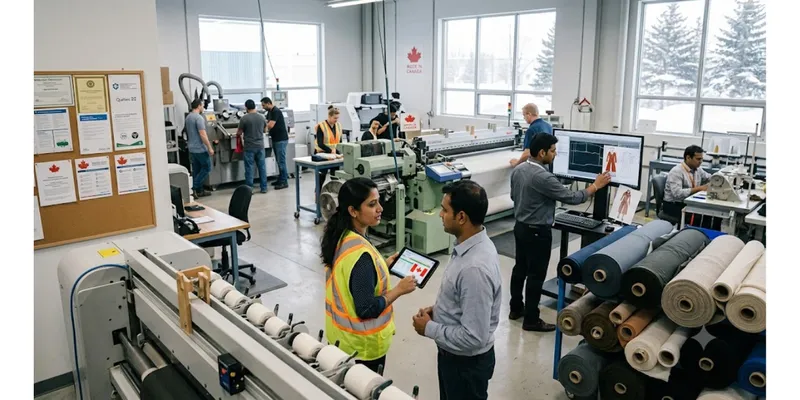
For many professionals in India's textile and apparel industry, years of experience in spinning,
weaving, dyeing, garment production, or design open doors far beyond the domestic market.
Canada is one of the countries that attracts steady interest, thanks to its skilled immigration
programs, diverse communities, and clear pathways from temporary work to permanent
residence.
Moving abroad, however, takes more than industry experience. Canadian immigration rules are
based on how your job is classified, your language ability, your education, and sometimes a job
offer. This guide explains how textile professionals can understand their options and prepare for
a successful move to Canada.
Textile and Apparel Jobs in Canada
Canada's textile and apparel sector is smaller than India's, but it remains active, particularly in
technical textiles, specialty fabrics, garment design, and manufacturing in provinces such as
Quebec and Ontario. Montreal has long been an important centre for apparel, while other
regions host companies producing industrial, medical, and performance textiles.
Roles that often match the experience of Indian textile professionals include production
supervisors, quality control specialists, fashion and apparel designers, patternmakers, textile
colour and dyeing technologists, and machine operators. Many professionals also move into
related areas such as merchandising, sourcing, supply chain management, and retail
operations, where their technical knowledge of fabrics and production is a strong advantage.
Finding Your NOC Code and TEER Category
Before looking at any immigration program, the first step is identifying your National
Occupational Classification (NOC) code. Canada uses the NOC system to classify every job,
and each code is assigned a TEER category, which stands for Training, Education, Experience
and Responsibilities. TEER levels range from 0 for management roles to 5 for jobs that usually
need only short-term training.
Some textile-related examples include:
Supervisors, textile, fabric, fur and leather products processing and manufacturing (NOC
92015): Classified as TEER 2, this code covers professionals who coordinate production
workers and schedules.
Theatre, fashion, exhibit and other creative designers (NOC 53123): This group includes fashion
designers who create garments, textiles, and accessories.
Patternmakers, textile, leather and fur products (NOC 53125): For professionals who create
master patterns for garment and product manufacturing.
Chemical technologists and technicians (NOC 22100): Textile colour technologists and master
dyers fall within this group.
Machine operators in textile processing and manufacturing: These roles are generally classified
as TEER 4.
Your code should be chosen based on your actual duties, not just your job title. A "production
executive" in one company may do very different work from one in another, so compare your
daily responsibilities with the official NOC descriptions carefully.
Express Entry for Textile Professionals
Express Entry is Canada's main online system for skilled workers seeking permanent residence.
It manages three programs: the Federal Skilled Worker Program, the Canadian Experience
Class, and the Federal Skilled Trades Program. Only occupations in TEER 0, 1, 2, or 3 count as
skilled work experience under Express Entry, which is why confirming your NOC code matters
so much.
For professionals applying from India, the Federal Skilled Worker Program is usually the most
relevant option. It generally requires at least one year of continuous, full-time skilled work
experience within the last ten years, a minimum language test result, an educational credential
assessment for foreign degrees, and proof of settlement funds. Candidates who meet the
requirements create a profile and receive a score under the Comprehensive Ranking System,
and those with the highest scores are invited to apply for permanent residence.
Some supervisory roles in manufacturing, including textile production supervisors, may also fall
under the Federal Skilled Trades Program, which has its own requirements such as a qualifying
job offer or a Canadian certificate of qualification. Because eligibility depends on several factors
working together, many applicants choose to get a professional assessment before creating a
profile. Regulated consultants, such as the team at sepimmigration.ca, can review your work
history, NOC code, and scores to identify the strongest pathway for your situation.
Provincial Nominee Programs for Skilled Workers
If your Express Entry score is not high enough on its own, a Provincial Nominee Program (PNP)
may be worth exploring. Most Canadian provinces and territories run their own immigration
streams to attract workers who meet local labour market needs.
Some PNP streams are linked to Express Entry. A nomination through one of these streams
adds 600 points to a candidate's score, which almost guarantees an invitation to apply. Other
streams operate outside Express Entry and have their own application process. Each province
sets different requirements, and some streams focus on candidates with a job offer from an
employer in that province, while others target specific occupations or experience. Checking
provincial program pages regularly is important, since streams can open, close, or change their
criteria.
Canada Work Permits and Job Offers
Another route is to start with a work permit and move to permanent residence later. Textile
professionals who secure a job offer from a Canadian employer may be able to apply for an
employer-specific work permit.
In most cases, the employer must first obtain a Labour Market Impact Assessment (LMIA),
which shows that hiring a foreign worker will not negatively affect the Canadian labour market.
Once approved, the worker can apply for a work permit tied to that employer. Canadian work
experience gained this way can later strengthen an application under the Canadian Experience
Class or a provincial program.
Be cautious with job offers found online. Genuine Canadian employers do not ask candidates to
pay for a job offer or an LMIA, and any request like this is a strong warning sign of fraud.
Language Tests and Credential Assessment
Language ability is one of the most important factors in almost every Canadian immigration
program. For English, accepted tests include IELTS General Training, CELPIP General, and
PTE Core. French speakers can take TEF Canada or TCF Canada, and strong French skills
can add valuable points. Higher scores can significantly improve an Express Entry profile, so
preparing well for the test is often one of the best investments an applicant can make.
Professionals with degrees or diplomas from India also need an Educational Credential
Assessment (ECA) for programs such as the Federal Skilled Worker Program. The assessment,
completed by a designated organization, confirms how your education compares to Canadian
standards. Starting this process early is wise, since it requires official documents from your
university or institute and can take several weeks.
Preparing Your Move to Canada
Strong preparation makes every step smoother. Collect detailed reference letters from current
and past employers that list your job title, duties, working hours, salary, and dates of
employment. These letters are essential for proving skilled work experience and matching it to
the correct NOC code.
It also helps to adapt your resume to Canadian expectations. Canadian employers typically
prefer concise resumes focused on achievements and skills, without personal details such as
date of birth, marital status, or a photograph. Joining professional networks, following Canadian
textile and apparel companies, and connecting with Indian professionals already working in
Canada can make the job search easier after arrival.
Finally, rely on official Government of Canada sources and licensed immigration professionals
rather than informal advice or unverified agents. With the right pathway and careful preparation,
experience built in India's textile industry can become the foundation of a new career in Canada.