Modi’s Australia Visit to Focus on Trade, Uranium Supply and Strategic Cooperation
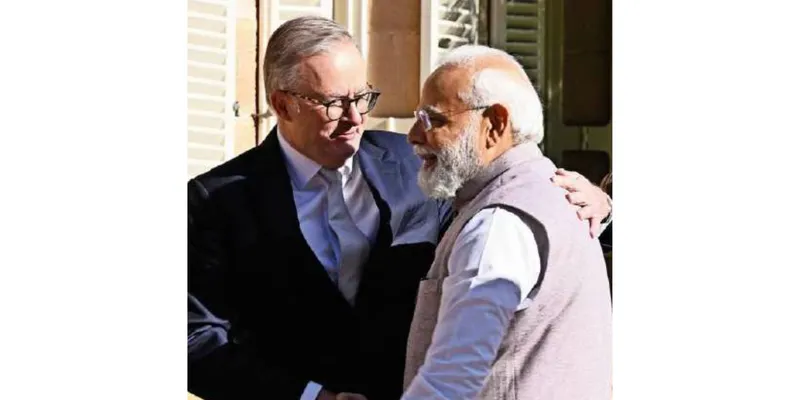
India and Australia expected to discuss uranium supply, critical minerals, clean energy and bilateral trade during Prime Minister Narendra Modi’s visit to Melbourne.
A uranium supply pact is expected to be one of the principal issues during Prime Minister Narendra Modi’s visit to Australia this week, as New Delhi seeks to expand its nuclear power programme.
Australia, which holds around one-third of the world’s known uranium reserves, signed a framework agreement with India more than a decade ago. According to people familiar with the developments, Modi’s visit to Melbourne could result in an agreement allowing Australia to supply uranium to India.
The two countries are also expected to conclude or strengthen agreements covering critical minerals, cybersecurity, emerging technologies, clean energy and supply chain resilience following the annual summit between Prime Minister Narendra Modi and Australian Prime Minister Anthony Albanese in Melbourne.
Prime Minister Modi is also scheduled to participate in the India-Australia CEOs Forum, where business leaders are expected to discuss investment opportunities across manufacturing, technology and clean energy sectors.
Economic relations between India and Australia have expanded significantly in recent years. Australia introduced "A New Roadmap for Australia's Economic Engagement with India" in February 2025 to strengthen its economic partnership with India.
The India-Australia Economic Cooperation and Trade Agreement (ECTA), which entered into force on December 29, 2022, provides immediate zero-duty access for 98.3% of Australian goods exported to India and grants free access for Indian exports to Australia.
India is Australia's fifth-largest trading partner, with bilateral trade in goods and services reaching $54.4 billion in FY25.
According to the report, sectoral gains under ECTA have become more diversified, with notable growth in exports across textiles, pharmaceuticals, chemicals and agricultural products. On the import side, the agreement continues to facilitate access to essential raw materials such as base metals, raw cotton, chemicals and fertilisers, as well as pulses, supporting India's manufacturing and industrial sectors.
The report adds that the complementary trade structure between the two countries has strengthened supply chain resilience while supporting domestic value addition and contributing to broader implementation of ECTA.