Melodi Diplomacy Shapes New Strategic Chapter in India–Italy Relations
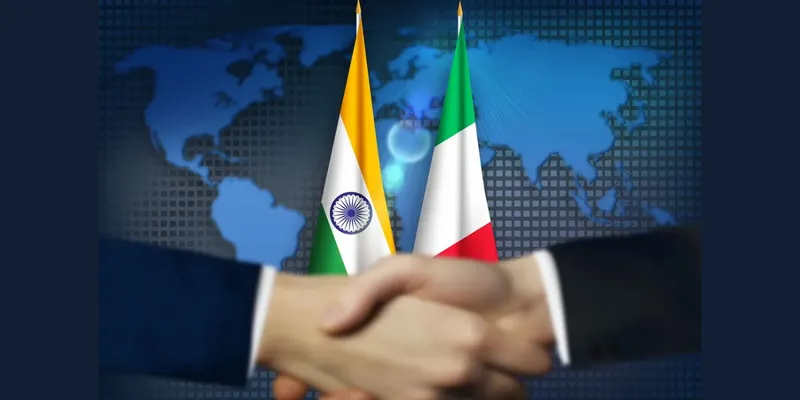
India and Italy deepen cooperation across technology, trade, defence, and green transition amid evolving global geopolitical shifts
What was once a cordial bilateral relationship between India and Italy has evolved into a more structured strategic partnership rooted in democratic values, civilisational confidence, and a shared ambition to influence future global frameworks. With traditional certainties of the international order weakening, factors such as economic nationalism, technological competition, energy insecurity, and geopolitical tensions are prompting countries to reassess alliances and diversify dependencies. Within this context, India and Italy are identifying both common interests and complementary strengths.
Italy contributes a globally recognised manufacturing ecosystem, design expertise, industrial engineering capabilities, and advanced research infrastructure. India, meanwhile, brings scale, speed, demographic strength, and one of the world’s most dynamic innovation ecosystems, supported by over 100 unicorns and nearly 200,000 start-ups.
The proposed India-European Union FTA is seen as a potential catalyst in strengthening this engagement. With both sides targeting bilateral trade beyond Euro 20 billion by 2029, opportunities span sectors including defence, aerospace, green technologies, automotive components, pharmaceuticals, textiles, and tourism. The alignment of “Made in Italy” and “Make in India” is contributing to the development of integrated value chains that can serve both European and Indo-Pacific markets.
The technological dimension of the partnership is also gaining prominence. Artificial Intelligence, quantum computing, advanced manufacturing, and resilient digital infrastructure are increasingly viewed as instruments of geopolitical influence.
Within this framework, India’s concept of “MANAV” — placing the human being at the centre of technological progress — aligns with Italy’s humanist tradition and its advocacy of “algor-ethics”. Together, both sides are shaping an alternative approach to AI governance that emphasises dignity, inclusion, and democratic accountability over unrestricted techno-commercial expansion.
India’s Digital Public Infrastructure model has demonstrated the potential of technology to enable inclusive access at scale. Italy offers expertise in ethical regulation, industrial application, and institutional frameworks that support governance and implementation.
The scope of cooperation extends beyond economics and technology into defence and maritime security, with growing relevance in the Indo-Pacific and Mediterranean regions. The traditional separation between Europe and Asia is gradually reducing, as trade routes, energy corridors, digital cables, and logistics networks increasingly connect both regions into an “Indo-Mediterranean” strategic space.
In this context, the India-Middle East-Europe Economic Corridor (IMEC) is described as more than an infrastructure initiative. It is positioned as a geopolitical framework aimed at building resilient supply chains, modern transport systems, and secure digital connectivity between India and Europe. Italy’s role in the Mediterranean and India’s expanding influence in the Indo-Pacific position both as key stakeholders in this emerging structure.
Energy cooperation further strengthens bilateral ties, spanning green hydrogen, renewable infrastructure, smart grids, and biofuels. Both countries acknowledge climate transition as an economic necessity. India’s renewable energy ambitions combined with Italy’s technological expertise are seen as supporting a broader green partnership with global implications.
India’s philosophy of “Vasudhaiva Kutumbakam” — the world is one family — is reflected alongside Italy’s Renaissance-rooted belief in universal human potential. In an increasingly polarised global environment, such partnerships are presented as models for cooperative global engagement rather than solely national interest-driven arrangements.