Mauritius Economic Update September 2025: Tourism & Trade
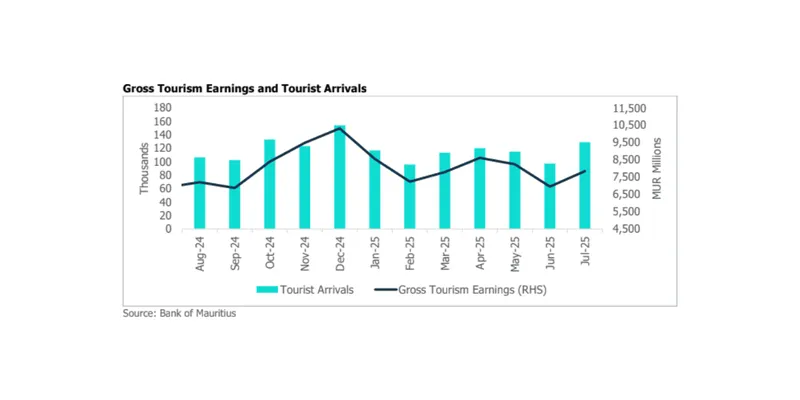
Tourist arrivals in Mauritius surged in July 2025, recording a month-on-month growth of 32.8% to reach 129,206 visitors compared to June’s 97,273. This rebound reflects improved seasonal dynamics and strengthening global travel demand. Gross tourism earnings rose to MUR 7.8 billion in July, up from MUR 7.0 billion in June, indicating higher-value visitors and longer stays. Cumulative arrivals from January to July reached 788,115, a 3.3% YoY increase, while cumulative tourism earnings climbed 7.7% YoY to MUR 55.2 billion, outpacing arrivals growth. The outlook remains positive, supported by better air connectivity and government initiatives to diversify tourism into eco-tourism, cultural tourism, sports, and wellness offerings to reduce seasonality and boost sector resilience.
Inflation softened slightly in August 2025, with headline inflation declining to 4.8% YoY from 5.2% in July, suggesting the easing of fiscal-driven price pressures. However, core inflation rose to 7.4%, indicating persistent domestic cost pressures, especially from services and wages. The Bank of Mauritius expects headline inflation to average around 4.0% in 2025, but risks remain tilted to the upside due to tariff shocks, volatile commodity prices, and wage-driven inflation.
Mauritius’ trade deficit widened in June 2025 to MUR 19.1 billion, with exports contracting by 10.4% YoY to MUR 9.3 billion, led by declines in crude materials, manufactured goods, and chemicals. Imports rose 7.8% YoY to MUR 28.4 billion, driven by food and transport equipment. Risks persist from potential expiration of AGOA and global protectionism, which may challenge textile and manufacturing exports. However, resilient services exports and primary income flows are expected to narrow the current account deficit to 4.7% of GDP in 2025.
Mauritius’ gross official reserves fell slightly by 1.3% in August to MUR 431 billion, equivalent to 12.9 months of import cover, indicating a still-strong external position. The Bank of Mauritius continues to manage currency volatility by injecting USD into the market, helping stabilise the rupee, which averaged 46.2 per USD in August.