Manomay Tex India Limited

1. Introduction
Brief Company Overview
A fabric maker from India, Manomay Tex focuses on crafting denim and cotton thread. Its factory chain covers every step - spinning fibers, coloring threads, weaving cloth, then refining the final material. Built to handle it all under one roof, the operation moves seamlessly from raw fiber to finished textile.
Industry Overview
Right now, the business works within India’s vast fabric-making field - a major part of national output. This area pushes export numbers up while providing jobs across regions. Worldwide appetite for jeans keeps climbing, which helps mills focused on denim stay active.
Purpose of the Analysis
Looking at how well a business handles money means checking its profits, daily operations, then peeking ahead to what might grow. Numbers pulled from reports show patterns over time. These figures reveal more when turned into ratios. A clearer picture forms by linking past results with possible paths forward.
2. Company Overview
Background and History
In 1978, the Dhanlaxmi Group stepped into textiles, planting seeds for what would become Manomay Tex India Limited. That venture took legal shape in 2009, starting life as a private setup. Over time, it shifted gears - becoming public later down the road. By 2017, trading began on the SME segment of the Bombay Stock Exchange. From there, movement continued - transitioning up to the main exchange without pause.
Business Model
From field to fabric, the company handles each step itself. Because it oversees everything, quality stays consistent. Costs go down when processes link smoothly. Supply chains become easier to manage that way. Finished denim comes directly from raw material under one roof.
Key Products and Services
Among the items built here are
Denim fabrics used in garments such as jeans and jackets
Cotton yarn used in textile manufacturing
Blended fabrics with cotton and synthetic fibers
Market Position
Now standing firm, the company grows as a maker of denim fabric across India, reaching local buyers along with overseas ones. Efficiency in making things gives it an edge on costs, thanks to operations under one roof.
3. Promoter Founder Introduction
Growth took shape under Mangesh Subhash Rathi, who brought years of work in fabric making, steering long-term direction while shaping key moves forward. Operations found steady hands in Manish Shankarlal Rathi, a figure rooted in daily mill workflows, overseeing output and workflow rhythm. Numbers gained clarity through Sagar Rameshlal Kabra, drawing on corporate finance grounding, helping guide budget choices alongside planning steps ahead. Reviewing finances offered insight into performance, tracking income flow against spending patterns across periods shown.
4. Financial Statement Analysis
Income Statement Analysis
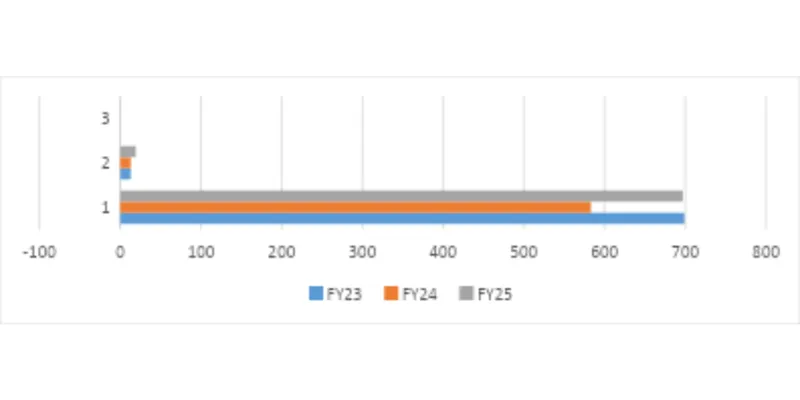
Manomay Tex India Limited saw its earnings climb consistently over the past few years. About ₹696 crore came in during fiscal year 2025, rising from ₹565 crore the year before, suggesting solid momentum ahead. Profits after expenses jumped too - landing at nearly ₹19 crore versus ₹13 crore earlier, which hints at sharper management behind the scenes. Performance gains likely stem from tighter spending, though results speak more than explanations here.
Year | Revenue | Net Profit | Revenue Growth |
FY22 | 589.53 | 7.71 | — |
FY23 | 698.88 | 12.95 | 18.60% |
FY24 | 583.09 | 13 | -16.60% |
FY25 | 696.92 | 19.25 | 19.50% |
Balance Sheet Analysis
Looking at the numbers, the firm owns lots of equipment because it builds products itself. Money tied up in property and tools is backed not just by owner funds but loans too. Expansion pushed asset values upward, though debts grew alongside them. Heavy borrowing suggests funding growth through creditors more than personal capital.
Cash Flow Statement Review 2025
That year, the business brought in solid cash from daily operations. Still, what flowed freely stayed tight since spending kept going toward bigger factories and better production setups.
Key Financial Ratios
Profitability Ratio:
Profitability sits around 12% when measured against money invested by owners. That figure reflects how much the business earns from its base of shareholder capital.
Liquidity Ratio:
Fresh cash flow keeps moving because supplies on hand shift into sold goods. Money owed by customers also helps stay liquid, pulling funds forward when needed.
Leverage Ratio:
A figure near 2.3 shows how much debt sits behind every part of ownership funding. That kind of balance often means borrowing plays a big role in keeping things running, fueling growth along the way.
Efficiency Ratio:
Efficiency in profit generation sits around 10 to 11% when looking at capital used - a sign of steady but unexciting performance. Though returns aren’t high, they show the business isn’t wasting resources either.
Year on Year Comparison ₹ in Crores
Year | Revenue | Net Profit |
|---|---|---|
FY 2023 | 699 | 12.95 |
FY 2024 | 565 | 13.00 |
FY 2025 | 696 | 19.25 |
5. Key Insights & Interpretation
Strengths
Vertically integrated textile manufacturing process
Increasing revenue and profit growth
Presence in both domestic and export markets
Weaknesses
High level of debt financing
Moderate profit margins compared to industry leaders
Risk Factors
Fluctuation in raw material prices such as cotton
Global demand changes in the apparel industry
Competition from domestic and international textile manufacturers
Future Outlook
Manomay Tex India Limited might head into calmer waters ahead. Should debt stay under control, room opens for steady progress. Denim output is climbing, which pairs well with rising interest in denim goods down the line.
6. Conclusion
Assessing Overall Financial Condition
Firm numbers inch upward at Manomay Tex India Limited, profits edge higher even as debt climbs from big outlays on growth moves. Yet the balance sheet bears weight - borrowing stretches wide under fresh buildouts across operations.Investment Returns Overview
A closer look at the numbers shows room for gains over time, yet staying alert to borrowing trends matters just as much. What happens in the sector can shift outcomes fast.