Malwa Cotton Spinning Mills
Executive Summary
Malwa Cotton Spinning Mills has been around since 1976, making it a pretty well-established name in India’s textile scene. Operating out of Punjab, they spin a bit of everything—cotton, acrylic, polyester, viscose, and various blended yarns—for both local and export markets. For a long time, the focus was on expanding their spindle capacity and upgrading their machinery to keep up with the times.
Lately, though, things haven't been easy. The company is dealing with some pretty heavy financial strain, mostly driven by a slump in sales growth, mounting debt, and really tight profit margins. Even with these setbacks, you can’t count them out just yet; fifty years in the business counts for something, and their diverse product line keeps them in the game.
Company overview

Malwa Cotton Spinning Mills (MCSML) has a massive history behind it, starting all the way back in 1976. It originally kicked off in Ludhiana, Punjab, as a joint venture between the state's industrial development corp and Oswal Woollen Mills. When it comes to manufacturing, they do a bit of everything—spinning cotton, acrylic, polyester, viscose, and all sorts of blends, on top of making sewing threads for both local shops and global buyers. Over the decades, they poured a massive amount of capital into building out their factories, upgrading old equipment, and setting up dedicated export hubs across Punjab.
But despite being a permanent fixture in the Indian textile world, things have been incredibly rough lately. Like a lot of legacy manufacturers, Malwa has run smack into some massive operational bottlenecks and cash flow roadblocks. It’s been a real grind, and those constant hurdles have seriously bruised their bottom line and put the brakes on their growth.
INDUSTRY OVERVIEW
Malwa Cotton Spinning Mills is a key player in the Indian textile world, which is easily one of the oldest and most vital backbones of the country's economy. It’s an industry that does it all—creating millions of jobs, driving massive exports, and keeping industrial growth moving forward. Because India is already a global powerhouse for cotton and yarn production, companies here have a massive head start with quick access to raw materials and a deeply rooted manufacturing network that covers everything from spinning and weaving to finished garments.
As a yarn manufacturer, Malwa feeds essential raw materials to apparel makers both locally and across the globe. While the sector gets a nice boost from rising apparel demand and helpful government initiatives, it's definitely not a smooth ride. Companies constantly have to juggle wild spikes in cotton prices, climbing overhead costs, fierce global competition, and unpredictable market shifts. To survive, the focus has heavily shifted toward modernising factories and cutting out operational waste. Even with those headaches, the future still looks incredibly promising, purely because local shopping habits and international demand aren't slowing down anytime soon.
FINANCIAL PERFORMANCE
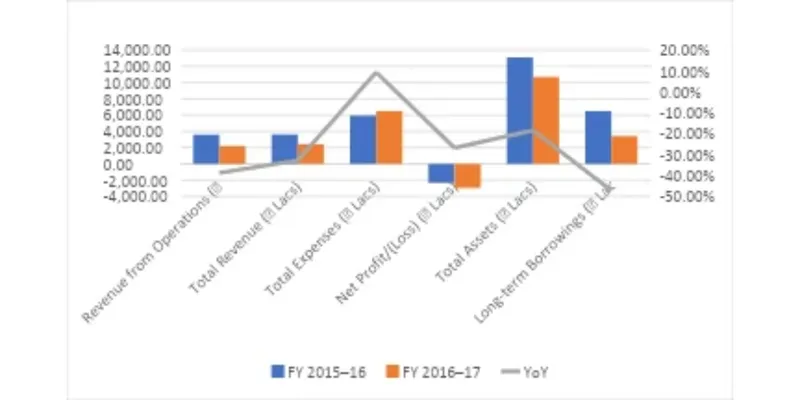
Particulars | FY 2015–16 | FY 2016–17 | YoY |
Revenue from Operations (₹ Lacs) | 3,602.86 | 2,206.80 | -38.75% |
Total Revenue (₹ Lacs) | 3,616.55 | 2,432.23 | -32.74% |
Total Expenses (₹ Lacs) | 5,950.75 | 6,512.65 | 9.44% |
Net Profit/(Loss) (₹ Lacs) | -2,334.20 | -2,958.76 | -26.76% |
Total Assets (₹ Lacs) | 13,109.03 | 10,708.76 | -18.31% |
Long-term Borrowings (₹ Lacs) | 6,494.56 | 3,433.39 | -47.14% |
Key financial Ratio
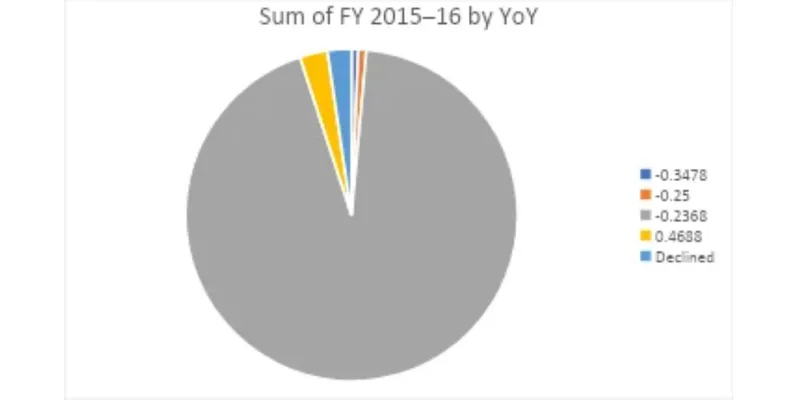
Ratio | FY 2015–16 | FY 2016–17 | YoY |
Current Ratio | 0.23 | 0.15 | -34.78% |
Net Profit Margin | -64.79% | -134.07% | Declined |
Return on Assets (ROA) | -17.81% | -27.63% | Declined |
Asset Turnover Ratio | 0.28 | 0.21 | -25.00% |
Inventory Turnover Ratio | 0.96 | 1.41 | 46.88% |
Earnings Per Share (₹) | -33.28 | -41.16 | -23.68% |
SWOT ANALYSIS
Strengths
| Weaknesses
|
Opportunities
| Threats
|
CONCLUSION
A Tough Road Financially: If we look at the numbers plainly, the business is in a really tight spot right now. We are dealing with some massive financial headwinds, including a negative return on capital employed (ROCE) and a painful, multi-year drop in sales that has wiped out over 40% of the top line.
. The company was the central player in a landmark Supreme Court case—Malwa Cotton and Spinning Mills Ltd. v. Virsa Singh Sidhu—which fundamentally changed the rules around executive accountability and bad checks under the Negotiable Instruments Act.
REFERENCES
Malwa Cotton Spinning Mills Limited. (2017). Annual Report 2016–17. https://www.malwacotton.com/