Maize Farmers Likely to Shift to Cotton, Soybean, Paddy and Ragi as Deficient Monsoon Looms: Crisil Report
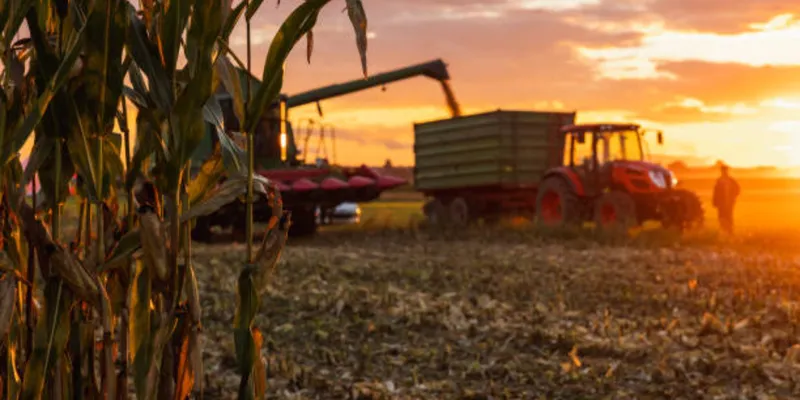
The overall kharif (monsoon season) acreage is expected to remain resilient despite predictions of a deficient monsoon. However, crop yields will depend on three key factors—spatial and temporal distribution of rainfall, pest and disease management, and fertilizer availability.
The outlook comes despite adequate water availability, which is expected to facilitate timely land preparation and sowing activities across major agricultural regions, according to a research report by Crisil.
The report notes that El Nino has historically posed significant risks to India's agriculture and water security. Since 1950, seven out of 16 El Nino years have resulted in below-normal monsoon conditions and widespread drought, making it a closely monitored weather phenomenon by the India Meteorological Department (IMD). It adds that the 2026 kharif season will be under the influence of El Nino conditions.
Highlighting the importance of the June-September monsoon period, which contributes 70-80 per cent of India's annual rainfall, the report says that deviations in rainfall will have significant implications for agricultural production. The IMD forecast indicates a predominance of below normal rainfall conditions across most parts of the country.
"Amidst anticipation of below normal rainfall conditions, farmers will be prompted to make more strategic crop choices guided not only by the rainfall outlook but also by relative profitability, procurement support and prevailing market conditions," the report said.
With the overall maize cultivation area expected to decline, the pattern of crop substitution is likely to vary across states, said Pushan Sharma, lead author of the report. According to him, the shift is expected towards paddy in Punjab, soybean in Rajasthan, chilli and cotton in Telangana, and ragi in southern Karnataka. In Madhya Pradesh, the largest producer of soybean, cotton acreage is expected to increase due to a shift from both maize and soybean.
Food Output Risk
Maize production reached a record 55.09 million tonnes (mt) in 2025-26, registering a 27 per cent increase from 43.41 mt in 2024-25.
The government has also fixed a lower production target of 52.50 mt for 2026-27.
According to another report by ICICI Bank, the food production outlook faces significant risks due to below normal monsoon conditions in the North-West, Central and Southern regions. Rain-fed crops including pulses, coarse cereals, oilseeds and spices could be affected.
The bank further noted that irrigation coverage for coarse cereals ranges between 19-42 per cent of total sown area, making these crops highly vulnerable. For pulses, most production is concentrated in Central India (48 per cent of total), followed by the North-West (27 per cent) and the South Peninsula (14 per cent), with all these regions expected to receive below normal rainfall.