Mainframe Modernization Market to Reach USD 18.64 Billion by 2034
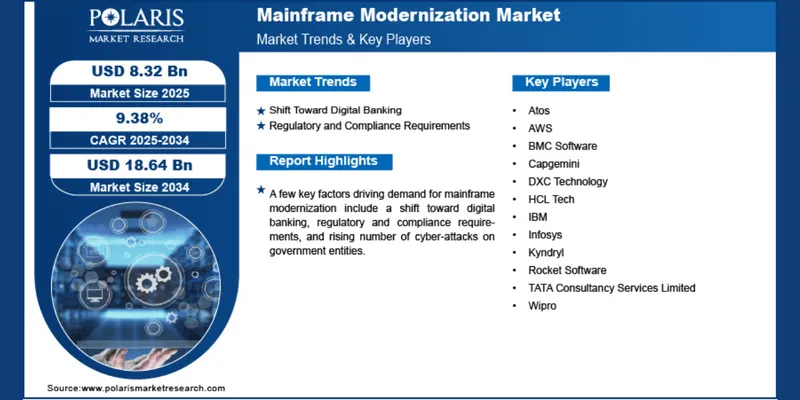
Modernizing legacy systems to enhance performance, flexibility, and digital readiness.
The global shift toward upgrading traditional mainframe systems is accelerating as enterprises seek improved performance, lower costs, and seamless integration with modern digital platforms.
Many U.S. and global enterprises continue to depend on mainframe platforms built several decades ago. These systems power essential operations across major banks, government institutions, retailers, and large corporations. But as digital expectations rise and business models evolve, organizations are seeking modern ways to upgrade their long-standing systems without interrupting day-to-day processes. This shift is accelerating demand for mainframe modernization—an approach that preserves the stability of existing systems while enhancing performance, flexibility, and long-term scalability.
Understanding Mainframe Modernization
Mainframe modernization involves transforming legacy mainframe environments so they work seamlessly with today’s technologies. Rather than replacing the entire system at once, modernization allows organizations to upgrade specific components step by step. This might include improving application structure, migrating selective workloads to more flexible platforms, or enhancing system integrations with modern digital tools. The objective is to keep the parts that perform well while replacing outdated elements, ultimately creating a more efficient, manageable, and responsive system. For most companies, this leads to reduced costs, faster operations, and improved agility.
Market Snapshot
The mainframe modernization market was valued at USD 7.62 billion in 2024 and is expected to grow at a CAGR of 9.38% from 2025 to 2034.
Key Modernization Methods
Rehosting
Rehosting involves transferring applications from legacy hardware to newer, more adaptable environments without altering how the application operates. It is often chosen by organizations seeking quick results with minimal operational disruption. This method reduces operating expenses while preserving system stability.
Refactoring
Refactoring focuses on restructuring and optimizing existing code to boost performance and improve maintainability—without changing the original functionality. It helps organizations protect critical features while preparing their infrastructure for future advancements.
Rebuilding
Rebuilding means creating an entirely new version of an existing system using modern development tools and frameworks. Though more time-intensive, it offers long-term benefits, improved efficiency, and enhanced user experience.
Where Modernization Adds Value
Banking and Financial Services
Banks depend heavily on mainframes for transaction processing and customer data management. Modernization improves service speed, strengthens security, and supports the digital banking tools customers rely on today.
Government and Public Sectors
Government bodies using mainframes for taxation, benefits, and records management can handle greater data demands, improve public services, and simplify system maintenance through modernization.
E-commerce and Retail
Retailers modernize their mainframes to enhance online purchasing systems, accelerate payment processing, and streamline supply chain management. Updated systems help manage higher customer loads and maintain accurate inventory operations.
Healthcare and Insurance
Hospitals and insurers benefit from modernization through improved system reliability, easier upgrades, and better management of claims and patient data at scale.
Learn more at:
https://www.polarismarketresearch.com/industry-analysis/mainframe-modernization-market/request-for-sample
What’s Fueling Market Growth?
Cost Reduction and Lower Maintenance Needs
Maintaining outdated mainframes is costly. Modernization reduces long-term expenses by improving efficiency and minimizing the need for rare legacy skillsets.
Shortage of Mainframe Experts
As mainframe specialists become scarce, organizations are turning to modernization to ease dependence on outdated skill requirements.
Digital Transformation Momentum
Industries moving toward digital-first ecosystems need systems that connect easily with modern tools. Modernization bridges traditional mainframes with today’s digital platforms.
Rising Security and Compliance Demands
With cyber threats growing more complex, modernized systems offer stronger security features, better monitoring, and streamlined compliance management.
Emerging Market Trends
- Step-by-step modernization is gaining traction, helping companies reduce risk and manage changes in phases.
- Greater emphasis on training and skill development ensures smooth long-term system management.
- Mid-size companies are increasingly adopting modernization to improve efficiency and cut operational costs.
Conclusion
As organizations recognize the value of updating legacy systems while preserving their core strengths, mainframe modernization is becoming a strategic priority. It enhances speed, reduces costs, and supports the digital readiness required in today’s competitive landscape. With more businesses seeking the balance between established reliability and modern technology, mainframe modernization will remain vital to shaping future organizational performance.