Maharashtra’s ‘Farm to Foreign’ Vision Targets Global Textile Competitiveness
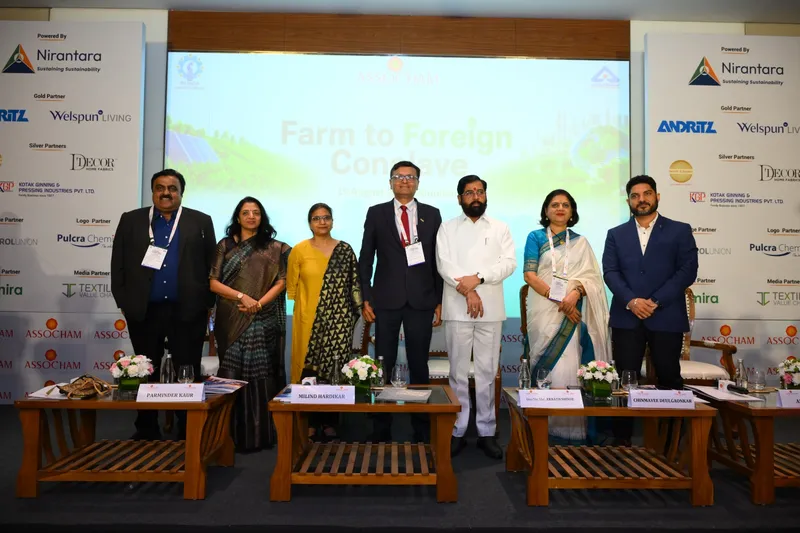
Maharashtra is seeking to strengthen its textile industry’s global competitiveness through a ‘Farm to Foreign’ approach that connects farmers, fibre producers, manufacturers, entrepreneurs and the international fashion market.
Speaking at the Farm to Foreign Conclave 2026 at Jio World Centre, Mumbai, Maharashtra Deputy Chief Minister Eknath Shinde said the state is advancing the Government’s 5F vision: Farm to Fibre to Factory to Fashion to Foreign, with a focus on sustainable, traceable and value-added textile production.
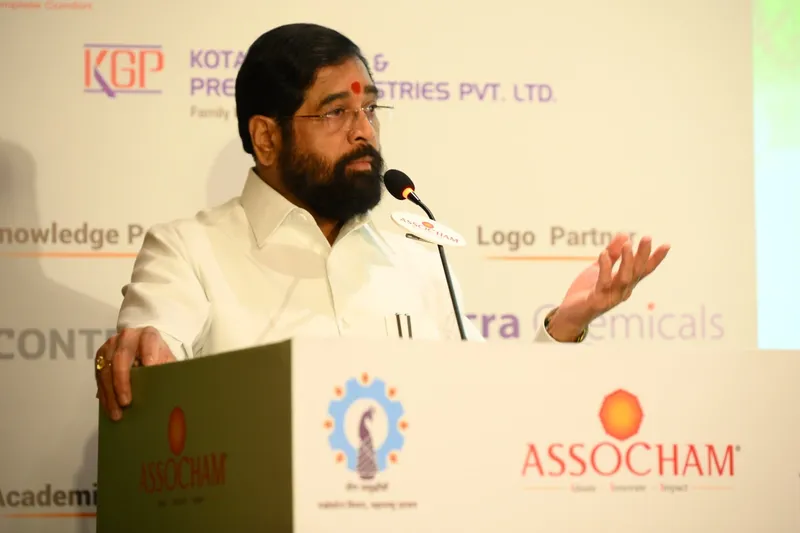
Organised by the ASSOCHAM Maharashtra State Council under the theme “Advancing India’s 5F Vision for Sustainable & Traceable Textile Value Chains,” the conclave brought together policymakers, industry leaders, manufacturers, sustainability experts and other stakeholders. Discussions centred on climate-resilient fibre production, sustainable manufacturing, traceability, circularity and strengthening India’s position in global textile markets.
Shinde said Maharashtra’s objective is to move beyond processing agricultural raw materials and develop globally recognised products and brands from the state’s cotton, silk, jute and other agricultural resources. He linked the approach with the broader goal of Viksit Bharat @2047, emphasising that future manufacturing must be green, digital and transparent.
“From Maharashtra’s farms to the world’s markets, our textile journey must create value at every step. Our vision is not merely to produce more, but to produce sustainably, traceably and competitively so that every fibre carries the strength of our farmers, the innovation of our industry and the identity of a New India. The 5F vision gives us the roadmap to turn Maharashtra into a global hub for textiles, innovation and value-added manufacturing.”
Shri Eknath Shinde, Hon’ble Deputy Chief Minister of Maharashtra
Strengthening Maharashtra’s Textile Base
Maharashtra is leveraging its established textile ecosystem while investing in new infrastructure and industrial clusters. The PM MITRA Park in Nagpur and the Amravati Textile Cluster are expected to provide fresh momentum to textile manufacturing, investment and employment.
The state is also promoting ready-made garment clusters in key textile centres such as Ichalkaranji and Bhiwandi, creating opportunities for manufacturing, entrepreneurship and job creation.
Focus on Women’s Economic Participation
Women’s skill development also featured in the state’s textile agenda. Initiatives linked to the ‘Ladki Bahin’ scheme are being used to provide women with modern tailoring and garment-making skills, with the aim of connecting training with employment and entrepreneurship opportunities.
Taking Maharashtra’s Heritage to Global Markets
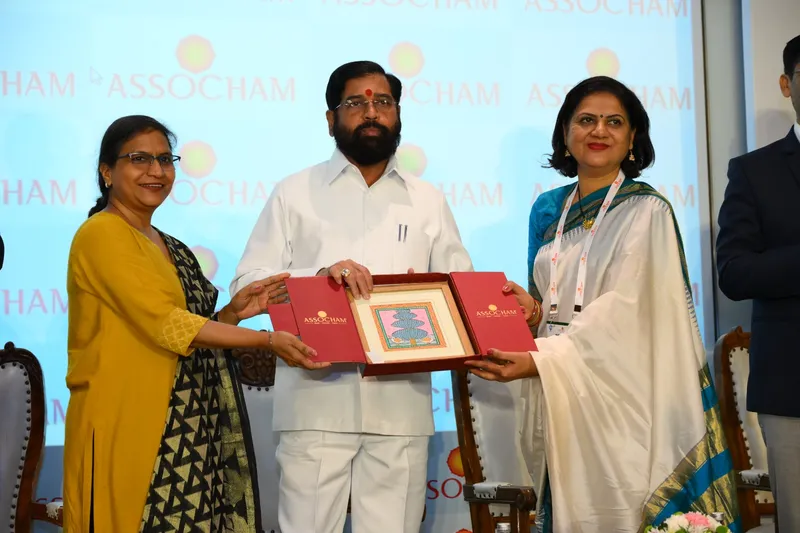
The conclave also highlighted the international potential of Maharashtra’s traditional textile and craft products. Paithani sarees and Kolhapuri footwear are being promoted for global markets, while a Textile, Craft and Cultural Museum is being developed at the historic India United Mill site in Byculla to showcase the state’s textile, handicraft and cultural heritage.
Improved connectivity is expected to further support export-oriented growth. The Samruddhi Mahamarg, Navi Mumbai International Airport and JNPA are set to strengthen logistics and help products manufactured in Maharashtra reach domestic and international markets more efficiently.
Sustainability as a Competitive Advantage
Milind Hardikar, Chairman, ASSOCHAM Maharashtra State Council, said Maharashtra’s industrial base, entrepreneurial ecosystem, manufacturing capabilities, logistics infrastructure and textile sector give it a strong foundation to advance the 5F vision.
He noted that global competitiveness will increasingly depend not only on production capacity and productivity, but also on responsible sourcing, environmental performance, social accountability and end-to-end supply-chain visibility.
“The 5F vision, Farm to Fibre to Factory to Fashion to Foreign, is far more than a sectoral roadmap; it is a blueprint for building an integrated, future-ready textile value chain.”
Milind Hardikar, Chairman, ASSOCHAM Maharashtra State Council
Hardikar called for greater integration and collaboration across the value chain, with sustainability viewed not simply as a compliance requirement but as a source of competitive advantage.
In her concluding remarks, Smt. Chinmayee Deulgaonkar, Chair, Sustainability Sector, ASSOCHAM Maharashtra State Council, highlighted the need for coordinated action among policymakers, industry, technology providers and sustainability stakeholders to build a resilient and globally competitive textile ecosystem.
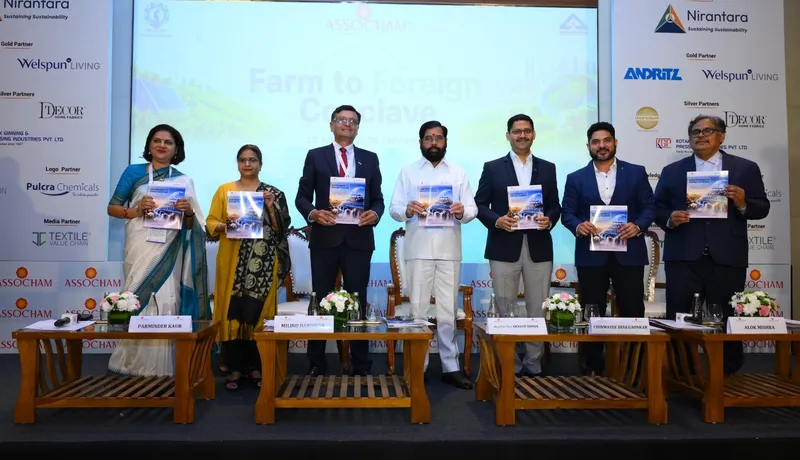
During the conclave, Deputy Chief Minister Eknath Shinde also released an ASSOCHAM Knowledge Paper prepared in collaboration with Control Union, reinforcing the chamber’s engagement with industry and policymakers on issues shaping India’s economic and industrial growth.