Magnetic Field Sensors: Transforming Industrial Applications and Driving Market Growth
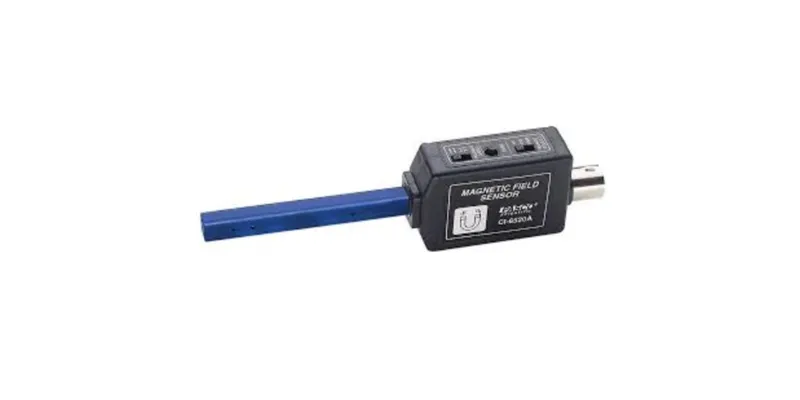
The magnetic field sensors market is growing rapidly due to rising demand across automotive, consumer electronics, healthcare, and industrial automation sectors. These sensors measure the strength and direction of magnetic fields, enabling accurate data for a wide range of applications.
The magnetic field sensors market is experiencing notable growth, driven by the adoption of advanced technologies in multiple sectors including automotive, consumer electronics, healthcare, and industrial automation. Magnetic field sensors detect and measure magnetic field strength and direction, supporting navigation, position sensing, control, and measurement tasks.
In 2024, the global magnetic field sensors market generated revenues of US$ 6,224.80 million. It is projected to grow at a CAGR of 6.0% from 2025 to 2032, reaching an estimated US$ 9,865.20 million by 2032.
Technological Advancements
Sensor technologies have improved significantly in recent years, enhancing accuracy and reliability. Newer technologies such as Hall effect sensors, giant magnetoresistance (GMR) sensors, and anisotropic magnetoresistance (AMR) sensors are replacing traditional sensors. Hall effect sensors are widely used in automotive applications for position and speed detection. GMR sensors provide higher sensitivity and resolution, suitable for navigation and data storage. MEMS-based magnetic sensors have enabled miniaturized, low-power sensors with high accuracy.
Integration with technologies like IoT and AI is making magnetic field sensors more adaptable, enabling smarter applications across different environments.
Applications
The automotive sector is a major driver of demand, with sensors used for speed and position sensing, electric power steering, and advanced driver-assistance systems (ADAS). The shift toward electric vehicles (EVs) and autonomous driving further increases the need for precise magnetic sensors.
In consumer electronics, magnetic sensors are employed in smartphones, wearables, and other devices for proximity detection, compass functionality, and motion sensing. In healthcare, they are used in patient monitoring, diagnostics, and medical imaging systems.
Industrial automation applications include non-contact position sensing, flow control, and safety systems. The growth of Industry 4.0 and automated operations is expected to further expand demand for these sensors.
Geographical Trends
North America, Europe, and Asia-Pacific are leading regions in the market. The United States benefits from innovation and a strong automotive sector. Europe’s automotive and industrial presence drives demand, particularly for precision applications and electric vehicles. Asia-Pacific is expanding rapidly due to electronics manufacturing growth, with China, Japan, and South Korea leading production and adoption.
Challenges
High costs of advanced sensor technologies may limit adoption in cost-sensitive applications. Integration complexity and reliability in harsh environments are additional technical challenges. Competition in the market requires continuous innovation and cost-effective, high-performance solutions.
Conclusion
The magnetic field sensors market is set for continued growth, supported by technological developments and increasing demand in automotive, consumer electronics, and industrial automation. While challenges such as cost and competition exist, ongoing innovation and emerging applications are expected to sustain market expansion.