Lenzing and partners launch Austria’s largest textile recycling project
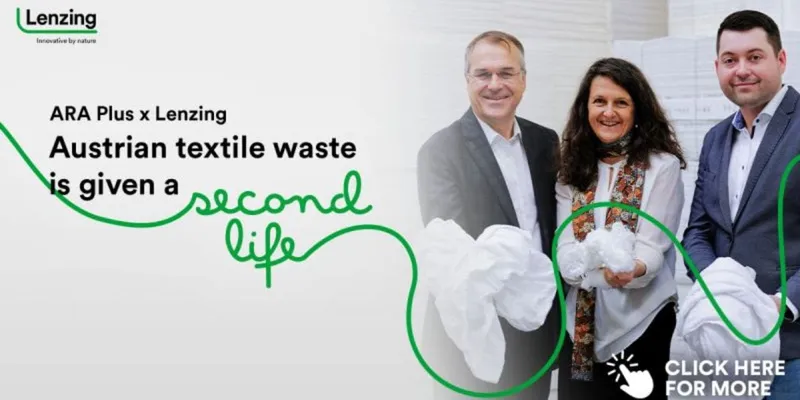
Lenzing, ARA, Salesianer Miettex, Caritas and Södra joining forces to drive forward the transition to circularity Joint project involving the collection, transport and sorting of used textiles for processing to make pulp and fibers Pioneering project with a strong social component Lenzing/Vienna/Pöchlarn/Växjö – The Lenzing Group, a world-leading provider of specialty fibers for the textile and nonwoven industries, has taken another big step towards achieving a circular future in collaboration with several partners. Austrian companies and not-for-profit organizations, including Lenzing’s logistics and sorting partner ARA (Altstoff Recycling Austria AG), the textile service provider Salesianer Miettex and Caritas, as well as the Swedish pulp producer Södra have joined forces to collect used household and clothing textiles for reprocessing to produce pulp and, ultimately, new lyocell and viscose fibers. In this pilot project, used textiles collected by Salesianer Miettex that are not suitable for reuse will be passed on to ARA, before being delivered to Caritas for sorting by hand at a recycling plant. The Caritas recycling facility provides secure employment to more than 70 people with disabilities. After the sorting process, the textiles will be delivered to Södra for recycling and processing to produce OnceMore® pulp. This method is a world first in the industrial recycling of textile waste made from blended fibers. Lenzing will then apply its innovative REFIBRATM technology to produce new lyocell and viscose fibers. "One company alone cannot solve the pressing problem of textile waste. Proactive partnerships such as these allow us to make progress and accomplish real systemic change,” says Sonja Zak, Head of Textile Sourcing & Cooperations at Lenzing Group. “We work hard to make our industries more sustainable and promote the transformation of the textile business model from linear to circular. Continued action across the whole sector will be necessary to facilitate this transition.”