Kerala Accelerates Vizhinjam EXIM Operations to Strengthen South India’s Garment Exports
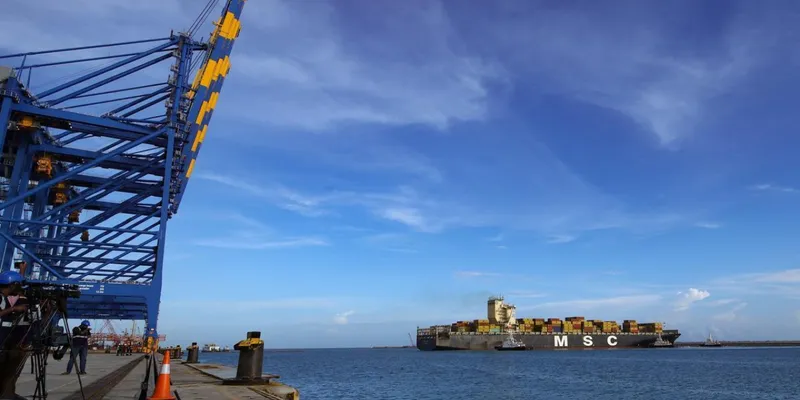
Direct EXIM services at Vizhinjam aim to improve export efficiency, reduce logistics costs, and support South India’s textile manufacturing ecosystem
Kerala Moves Ahead with Vizhinjam EXIM Operations
The 2026 election brought Chief Minister V. D. Satheesan back to power, following a decade of LDF governance that had left the state's finances under pressure with rising debt and a depleted exchequer. The new government has focused on leveraging Kerala’s coastline to strengthen trade and position the state beyond being viewed primarily as a consumer economy.
A significant step in this strategy begins on August 18, 2026, when Vizhinjam International Seaport moves from trial operations to functioning as a full-fledged EXIM port. Positioned as India’s premier deep-water port, Vizhinjam is intended to provide Kerala and South India with direct connectivity to international trade routes.
Following EXIM clearance from the Central Board of Indirect Taxes and Customs (CBIC), Indian manufacturers will be able to export cargo directly from India instead of routing domestic shipments through overseas transshipment hubs before final dispatch. The port is designed to accommodate the world's largest mother vessels, enabling direct cargo movement from South India.
Previously, most Indian public ports lacked sufficient depth for Ultra Large Container Vessels (ULCVs) ranging from 14,000 to 24,000 TEUs, resulting in dependence on feeder vessels transporting cargo to transshipment hubs such as Colombo, Singapore, and Port Klang. The commencement of EXIM services at Vizhinjam is intended to address this logistics challenge.
Unlike several other Indian ports that require continuous dredging, Vizhinjam has a natural depth exceeding 20 metres close to the coastline, allowing fully loaded large vessels to berth. The port is also located 10 nautical miles from the Suez–Far East international shipping route, enabling ultra-large vessels to call with minimal deviation from their regular voyage.
The successful berthing of MSC Irina, one of the world’s largest container vessels, has demonstrated the port’s operational capability to handle large ocean carriers without congestion, waiting periods, or additional logistical constraints.
South India remains a major centre for India's textile and garment industry. Manufacturing hubs including Tirupur, Coimbatore, Karur, Salem, Madurai, Bengaluru, and Surathkal account for a significant share of India's ready-made garment and knitwear exports.
Direct EXIM Gateway for South India’s Garment Industry
Global fashion brands operate within strict seasonal production and delivery schedules. Under the earlier logistics model, cargo from South India was transported to overseas transshipment hubs such as Colombo, Singapore, or Port Klang before being loaded onto international vessels. These additional transfers increased the risk of shipment delays, missed connections, penalties, higher air freight costs, and potential contract losses.
The introduction of direct EXIM operations at Vizhinjam is expected to reduce these transit-related challenges.
Direct mainline vessel calls from Vizhinjam allow exporters to avoid delays associated with overseas transshipment hubs. Cargo can be loaded directly onto mother vessels, reducing double handling and lowering the possibility of damage to fabrics and garments during multiple loading and unloading stages.
Lower logistics costs may also improve the competitiveness of South Indian textile exporters by enabling more competitive FOB pricing in comparison with exporting countries including Vietnam, Bangladesh, and Cambodia.
Reduced Transit Time and Logistics Costs
Under the previous shipping model, cargo destined for the US East Coast generally travelled through feeder vessels to Colombo or Singapore before being transferred to larger ocean-going vessels.
This process typically required 32 to 42 days, with additional uncertainty due to port congestion and missed vessel connections.
Direct sailings from Vizhinjam through the Suez/Atlantic corridor are expected to reduce transit time to approximately 24 to 28 days, providing an estimated saving of 5 to 10 days.
Exporters previously incurred additional feeder charges and double-handling costs of US$80 to US$150 per TEU at overseas transshipment ports. Direct EXIM operations from Vizhinjam eliminate these additional handling stages for domestic export cargo.
With fewer cargo transfers and reduced inventory buffering requirements, overall logistics costs are expected to decrease by 15% to 30%.
Impact Beyond the Textile Sector
The commencement of EXIM operations at Vizhinjam is also expected to support other export sectors across Kerala and Tamil Nadu.
Products such as seafood, spices, tea, rubber, and agricultural produce can access global markets through direct reefer connectivity without relying on overseas transshipment hubs.
Manufacturing clusters in Chennai, Bengaluru, and Hosur, producing automobiles, engineering products, and electronics, are also expected to benefit from access to a deep-water port capable of handling high-volume and oversized cargo.
At the national level, domestic handling of transshipment cargo is expected to reduce the outflow of foreign exchange currently spent on feeder services and cargo handling at overseas ports such as Colombo and Singapore.