Keep loom accessories traceable when shipping weaving machinery to Russia
S.E.Via Logistics team
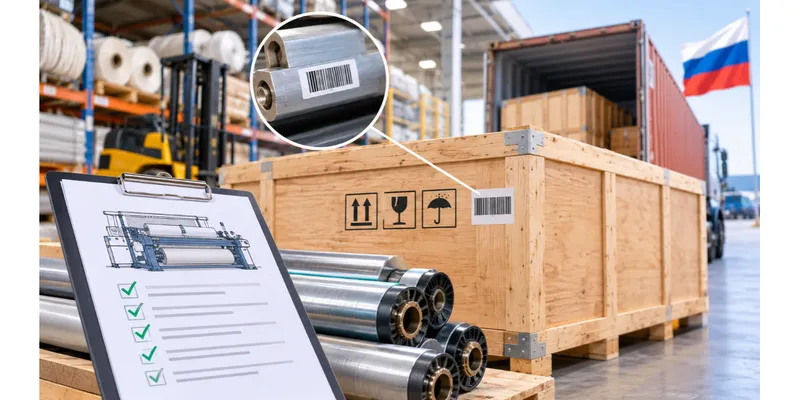
An Indian manufacturer is preparing to ship a loom to a textile mill in Russia. In this hypothetical order, two warp beams are included in the agreed loom package. The buyer has also ordered two spare beams separately. All four will fit in a single crate. By the time the crate reaches the loading bay, its label reads simply “warp beams, four pieces.” That label is accurate as a physical description, but it no longer tells the buyer which pieces belong to the original package and which were ordered as spares.
The warehouse can keep the single crate if it is suitable for the load. The document team needs a way to identify its contents without turning the warehouse’s count into an assumption about the invoice or customs treatment. The easiest time to set up that link is while the order and the physical parts are both available for checking.
Start with what the buyer ordered
Ask the sales and production teams for the accepted order and the machine’s agreed scope of supply before preparing the final packing list. In this example, one line in the order covers the loom and its two included beams, while a separate line covers the additional spares. Record the exact item names and quantities in those two lines. If the accepted order uses an internal model name or part reference, carry it into the supporting record so the buyer can trace each piece back to the same source.
Have someone from the workshop confirm what is physically available. Beams may share a description while differing in dimensions or in the loom models they fit. Photograph or record the references that the manufacturer already uses and note where those references can be found. Where a piece lacks a permanent mark, the warehouse can apply a packing identifier for traceability. Keep that identifier clearly separate from any maker’s serial number so the receiving team knows what it is checking.
Build a table the warehouse can use
Give the crate a unique package number. Under that number, list the beams included with the loom and the additional spares on separate rows, with a reference to the corresponding order line. A packing list can point to an attached schedule when there is too little room to show everything on one page. Put the same package number on the crate and the schedule.
What is physically packed | What the sales record says | What the handover should show |
|---|---|---|
The loom in its main package | The accepted order identifies the machine and agreed scope | Machine model or reference, package number and applicable technical sheet |
Two beams in the beam crate | These pieces are included in the machine package in this example | Individual packing marks and a reference to the machine order line |
Two spare beams in the same crate | These pieces were ordered separately in this example | Individual packing marks, separate order line and quantity |
Count one beam crate for the booking and retain four item references in the supporting schedule. Record the actual gross weight and outer dimensions of the closed crate for the booking. Keep any item weights in the supporting schedule, based on the manufacturer’s records and confirmed measurements. This lets the receiving team count the delivered packages before it opens them and checks their contents.
Share the record with the importer before booking
Send the buyer the current invoice draft, the packing list, the schedule cross-referencing the machine and accessories, and the manufacturer’s relevant technical sheet. Ask the buyer to flag any mismatch in quantities, naming or the way the spare items appear. If the warehouse substitutes or moves a beam after the buyer has reviewed the draft, record the change and send the revised set before the carrier receives its final instructions. Keep the earlier version with a note explaining which record supersedes it.
The buyer can also use the schedule to brief the receiving crew. In this example, the crew needs to identify the beams meant for the loom before the installers start work. Add the package number and the packing marks to the unloading plan. If the crate carries a large external label and smaller tags inside, include a copy of both in the handover. The crew can then check the received contents against the version the buyer approved.
Give the importer and its customs specialist the commercial description, technical information and actual configuration so they can assess how to declare the equipment and spares. The transport team can use the confirmed package count, dimensions and weights for the booking. One handover record gives both teams the details they need and makes it clear who is responsible for each decision.