Karnataka Minimum Wage Revision Pending for Garment, Beedi and 17 Other Sectors
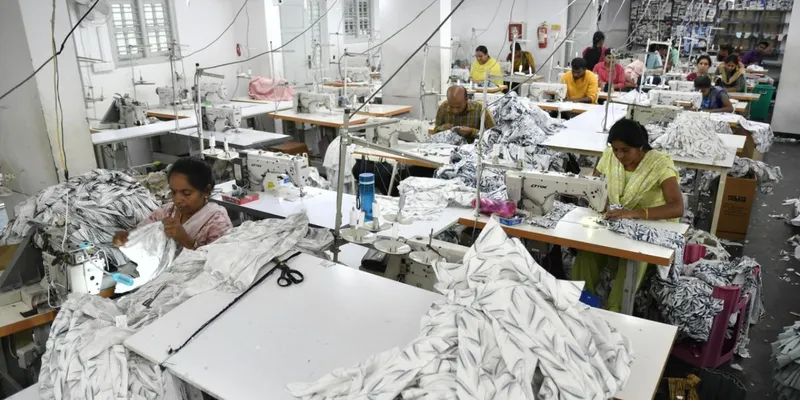
Over 10 lakh workers remain outside revised wage notification as employers consider legal challenge
The Karnataka government has revised and fixed minimum wages for 65 scheduled employments after a gap of 10 years, while wages for 18 employments have been fixed for the first time. However, workers in 19 sectors, including garment, beedi and plantation-related employments, are yet to receive revised wages.
The Karnataka government on Friday notified revised final minimum wages for scheduled employments across the State. However, revision for 19 sectors, including garment, beedi and plantation workers, is still pending.
The revised notification covers 65 scheduled employments, including four hazardous sectors. In addition, minimum wages have been fixed for the first time for 18 employments. These include non-teaching staff in educational institutions, employees of e-commerce and courier companies, and office staff of religious and social institutions such as temples, Mutts, churches, mosques and gurudwaras.
According to the final notification available on Saturday, minimum wages for the 83 scheduled employments range from ₹21,251 per month for unskilled workers in zone 3 to ₹34,225 per month for highly skilled workers in zone 1, which includes the Greater Bengaluru Area (GBA).
The revision is expected to cover more than one crore employees in the State. However, the 19 employments that remain outside the revision process account for more than 10 lakh workers.
The sectors yet to receive revised wages include handloom and powerloom workers, agarbathi rolling, agriculture and allied work, brick work, rubber, tea and coffee plantation workers, besides workers in the garment sector.
K. Maitreyi, State secretary of All India Central Council of Trade Unions (AICCTU), said, “Historically, beedi, plantation and garment factory workers have received lower wages. In fact, when a random revision of minimum wages was announced for garment workforce in January 2023, the revised wages was less than the minimum wages fixed for other employments in 2017. This is not only wage disparity, but also gender discrimination since garment factory workforce is predominantly women.”
According to Labour Department officials, individual committees are to be formed for each of the 19 employments to directly recommend wage revisions to the government.
“They will not come under the Minimum Wage Advisory Board. While some committees are in the process of finalising minimum wages, some are yet to be set up,” the officials said.
Expressing concern, Garments and Textile Workers’ Union (GATWU) president H.R. Prathiba said fresh wages should be notified on a par with revisions already implemented for other scheduled employments.
“The State government is deliberately discriminating against employments where women are dominant in the work force,” she alleged.
Meanwhile, the Joint Committee of Trade Unions (JCTU), an umbrella body of 11 trade unions in Karnataka, announced withdrawal of the agitation planned for May 27 while welcoming the final notification.
“Retrospective implementation of minimum wages from 2022 is the need of the hour as the real wage of the workers has eroded due to non-revision of wages since 2017,” the JCTU said.
The organisation further stated that despite the latest revision, more than 10 lakh workers in garment, beedi and plantation sectors have been left out of the notification.
Separately, employers’ associations indicated they may move court against the notification. B.C. Prabhakar, president of Karnataka Employers’ Association, said the final notification violated Karnataka High Court directions and the rule of law.
“We had opposed the minimum wage revision since it makes the operations unviable due to very high wage. Besides it could reduce flow of investments. With the four Industrial codes coming into force, this notification based on Minimum Wages Act, 1948, is void. We will approach the court,” he said.
A meeting of employers is expected to be held on Monday to discuss the future course of action.