Jingyi Deploys 3,600 Trützschler T-CAN Units to Automate Textile Material Handling
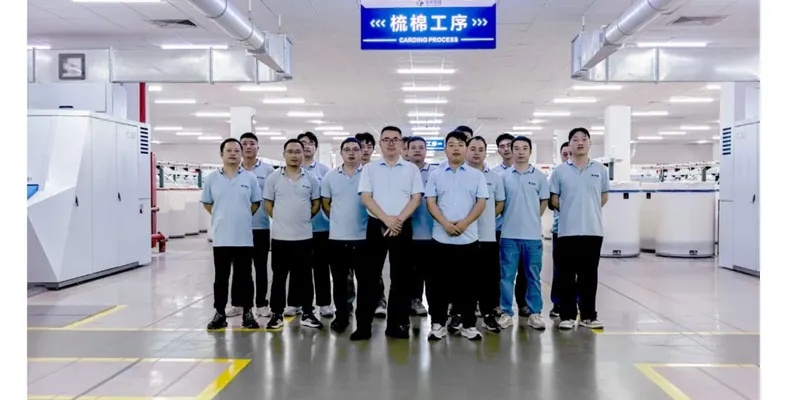
Automated Can Transport System Handles More Than 35,000 Movements Daily, Helping Jiangsu Jingyi Reduce Labour Requirements in Spinning Preparation by Over 60%
Jiangsu Jingyi Green Energy New Materials Technology Co., Ltd. has expanded its deployment of Trützschler's T-CAN automated can transport system to streamline material handling across its spinning preparation operations. Following a successful pilot installation, the company introduced approximately 3,600 T-CAN units, which now manage more than 35,000 can movements daily. The implementation has helped reduce manual transport activities and lower labour requirements in spinning preparation by more than 60%.
Automating Material Flow in Spinning Preparation
Textile manufacturers are increasingly exploring automation to address labour dependency while maintaining control over production processes. However, transporting cans manually between spinning preparation machines remains a labour-intensive activity that can also lead to human error.
Trützschler developed its T-CAN automated can transport system to address these challenges. The technology connects carding and drawing processes, as well as different drawing passages, to maintain material flow and minimise manual intervention.
Jingyi Expands T-CAN Following Successful Pilot
One of the early adopters of the technology was Jiangsu Jingyi Green Energy New Materials Technology Co., Ltd., part of Jingyi Group.
The company specialises in manufacturing recycled, biodegradable and functional vortex-spun yarns. Its manufacturing strategy includes investments in intelligent and sustainable textile production technologies.
To support its production requirements, Jingyi was seeking a solution to improve material handling and streamline manufacturing operations.
After evaluating the system through a pilot installation at its facility, the company proceeded with a larger deployment, introducing approximately 3,600 T-CAN units into series production.
More Than 35,000 Automated Can Movements Every Day
More than two years after the initial installation, the system is handling over 35,000 can movements daily at Jingyi, demonstrating its application in high-volume production environments.
According to the company, the automation has also changed workforce deployment across spinning preparation operations.
“By eliminating manual can transport, operators can focus on other value-adding activities. Today, one operator can handle twice as many cards as before. Similar improvements have been achieved in draw frame operations. Overall, this has reduced our labor requirements in spinning preparation by more than 60%,” says Kong Guoqing, Factory Director at Jiangsu Jingyi Green Energy New Materials Technology Co., Ltd.
The system uses automated dispatching and route planning to ensure that cans reach their designated destinations at the required time. Its 24/7 operating capability supports continuous material movement and production consistency.
Reducing manual transport also addresses operational challenges associated with labour shortages and high employee turnover in textile manufacturing facilities.
Additional 1,080 T-CAN Units Planned
Following the results of the initial deployment, Jingyi has decided to further expand its use of the automated transport system.
A follow-up project involving 1,080 additional T-CAN units is scheduled for installation later this year.
Automation in the Future of Spinning Preparation
The collaboration between Jingyi and Trützschler demonstrates the application of automated material handling in spinning preparation operations. By connecting production equipment through intelligent transport systems, textile manufacturers can coordinate machine operations and material movement while reducing reliance on manual processes.
As textile mills increasingly focus on production efficiency, workforce requirements and process reliability, automated transport technologies such as T-CAN are becoming an important consideration in the development of connected spinning facilities.